Last updated October 30, 2026
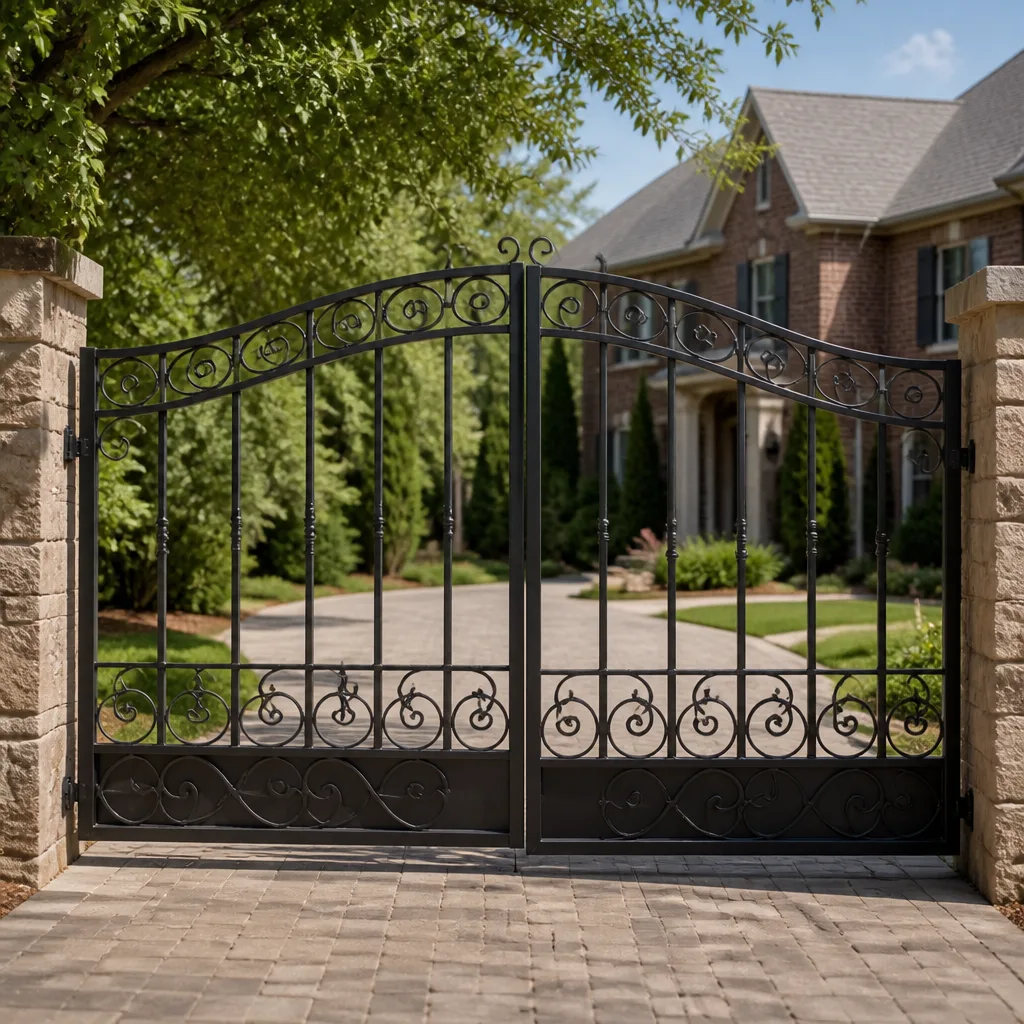 Wrought iron
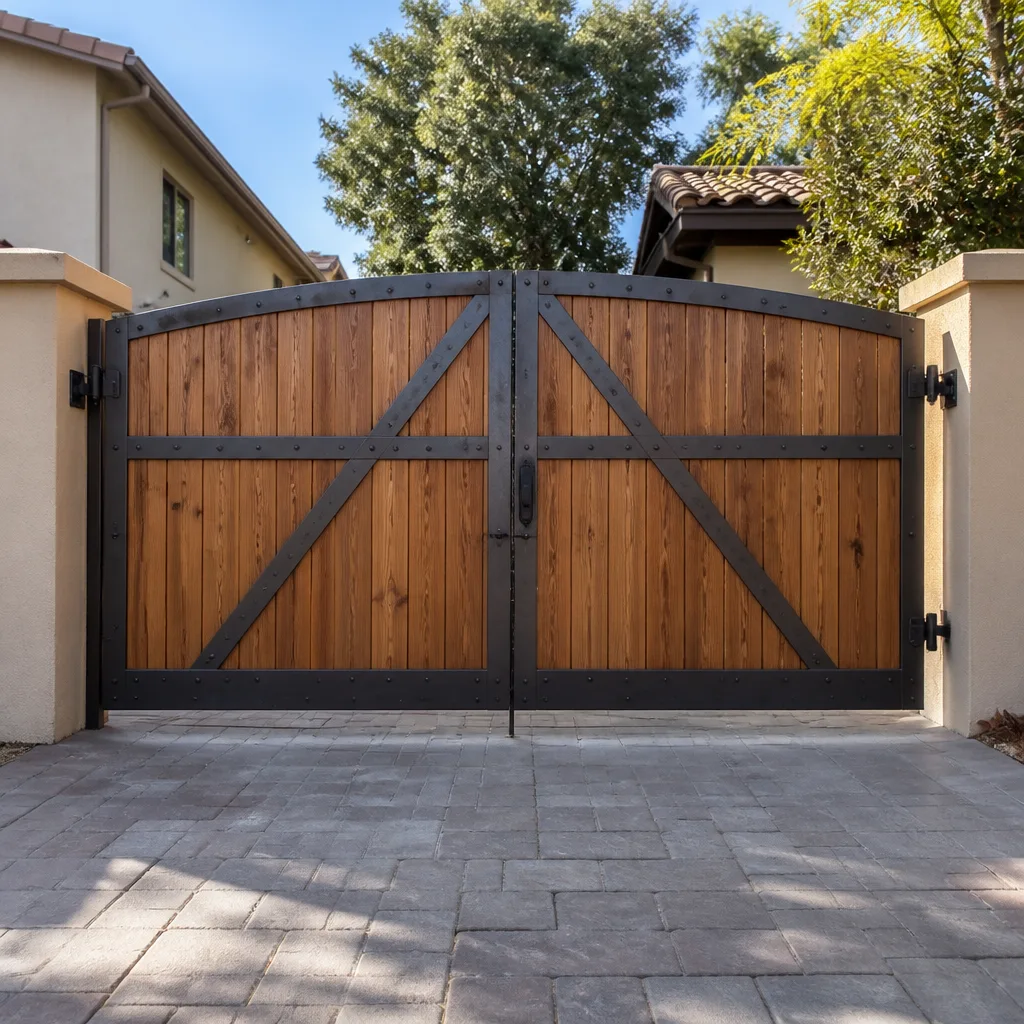 Wood & steel frame
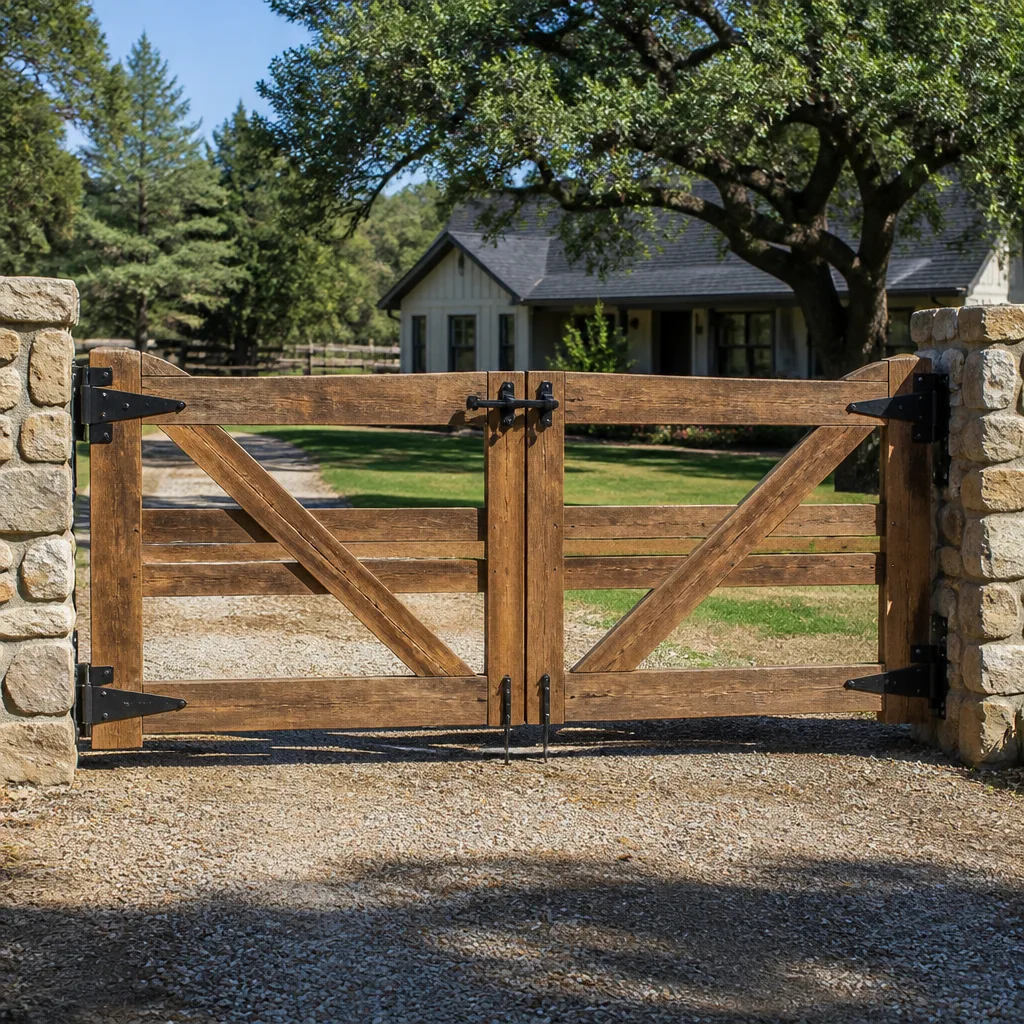 Farm & ranch
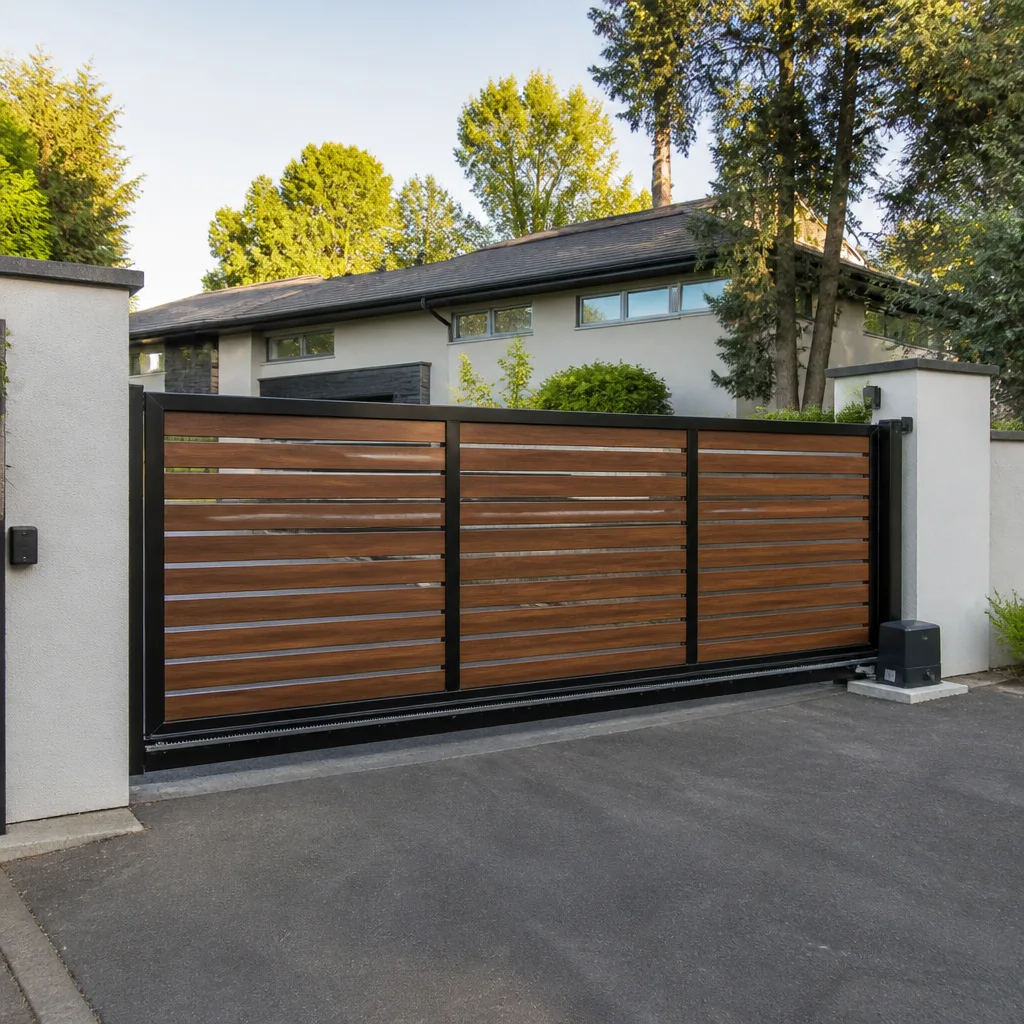 Sliding driveway gates
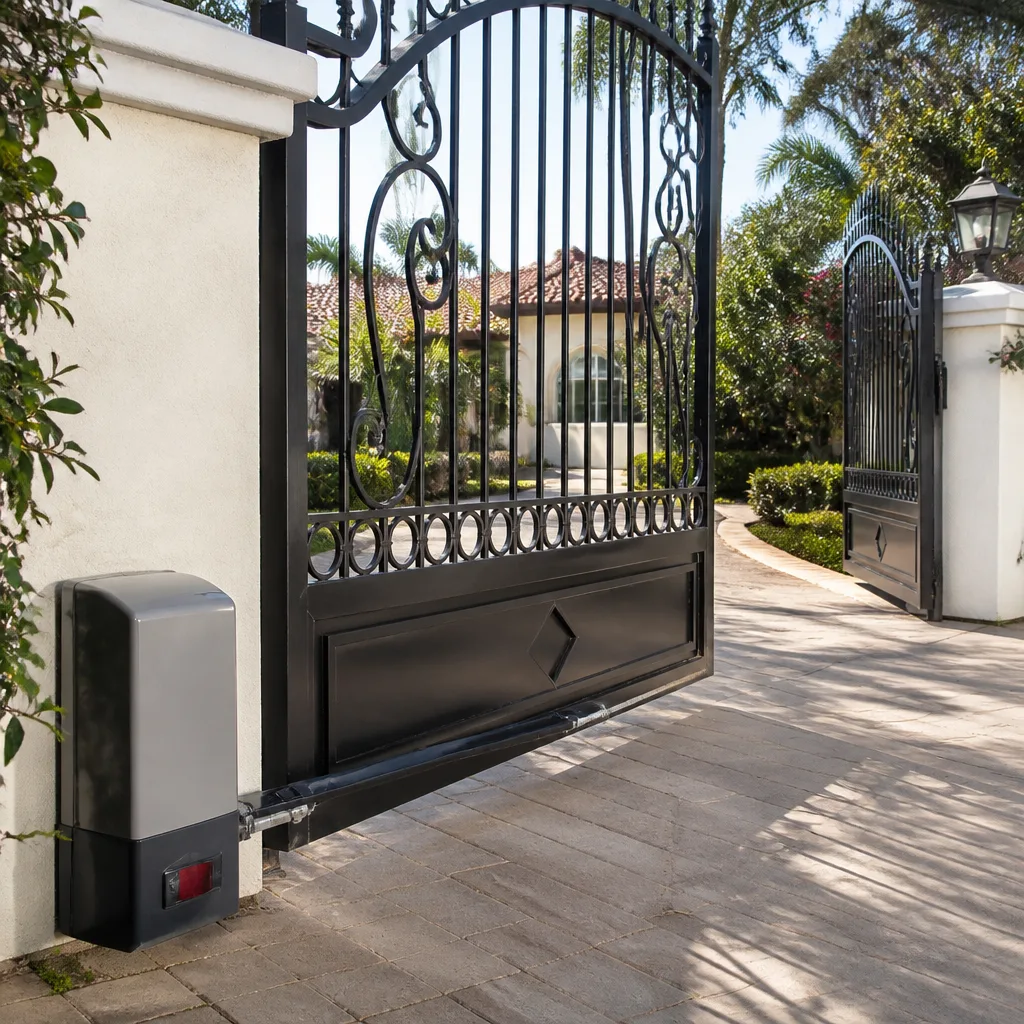 LiftMaster operators
Free on-site gate assessment - hinges, posts, and your LiftMaster or Nice gate operator checked before anything is quoted
The assessment is free and the quote is the invoice.
Get your free estimateChoosing the Right Gate Repair Brand: A Buyer’s Guide for San Diego
Here’s something most gate buying guides won’t tell you: the “best” brand on a spec sheet is often the worst brand to own in San Diego. That’s because a gate operator isn’t a toaster. It’s a mechanical and electronic system that will need parts, service, and a technician who actually understands it for the next 10 to 20 years. A LiftMaster operator with a great warranty means very little if the nearest stocking dealer is in Los Angeles and your local tech has to order a control board and wait a week while your gate sits open. This guide is written from the perspective of a San Diego gate repair company that works on every major brand. We’ll show you how to choose a brand based on what actually matters here: parts availability, local service coverage, and how the operator holds up in our specific coastal and inland environments.
Quick Answer
The right gate operator brand in San Diego is the one with reliable local parts availability and technicians who service it regularly. In our experience across San Diego County, LiftMaster, FAAC, and Elite have the strongest parts networks and dealer support in this region. LiftMaster is the safest default for most residential gates, FAAC is the go-to for heavy and custom estate gates, and Elite offers solid mid-range value with good parts access. DoorKing and Linear are also common here, but parts for some models take longer to source. The brand you choose should be matched to your gate’s weight, usage cycle, and distance to the coast, not just to a marketing sheet.
Styles & brands we work with
Table of Contents
- Why a Gate Brand Is a 10-to-20-Year Service Commitment
- Major Residential Gate Operator Brands Compared for San Diego
- How to Evaluate Parts Availability Before You Buy
- The Single-Brand Dealer Problem and How to Spot Unbiased Advice
- Residential-Duty vs. Commercial-Duty Operators: What San Diego Estate Gates Actually Need
- Coastal vs. Inland: How San Diego’s Microclimates Should Shape Your Choices
- Gate Frame and Hardware Material Choices for San Diego
- Common Mistakes to Avoid
- When to Call a Professional
- Frequently Asked Questions
Why a Gate Brand Is a 10-to-20-Year Service Commitment
When you buy a gate operator, you’re not just buying a motor and a control board. You’re marrying that manufacturer’s parts network, their dealer support structure, and the local technician base that knows how to work on their equipment. In San Diego, that commitment plays out in specific ways. A homeowner in Rancho Santa Fe with a 900-pound custom iron gate has different needs than someone in Clairemont with a 300-pound aluminum driveway gate. But both of them will eventually need a replacement part. The question is whether that part arrives in two days or two weeks.
We see this pattern regularly. A customer buys a gate operator from a national retailer because it was on sale. Three years later, a capacitor fails on the control board. The brand has no authorized distributor within 100 miles, and the only technician who knows the system is booked out for a month. The gate stays open, the dog gets out, and the security the gate was supposed to provide is gone. That’s the hidden cost of choosing a brand without thinking about serviceability.
San Diego has a dense market of gate installers and repair companies, but not all of them carry parts for every brand. The brands that have established distributor networks in Southern California – LiftMaster, FAAC, Elite, DoorKing, and Linear – tend to have parts available within one to two days. Others require shipping from out of state, which adds time and sometimes significant freight cost. When you’re choosing a brand, the smart question isn’t “How long is the warranty?” It’s “Who in San Diego stocks parts for this model, and how fast can I get service when it fails?”
Major Residential Gate Operator Brands Compared for San Diego
Here’s a practical breakdown of the brands we work on most frequently in San Diego, evaluated specifically for serviceability, parts availability, and how they perform in our local conditions. This is not a spec-sheet comparison. It’s what we see in the field.
LiftMaster
LiftMaster is the most common residential gate operator we service in San Diego, and for good reason. Parts availability is excellent. Their dealer network in Southern California is deep, and most gate technicians in the region are familiar with their swing and slide operators, including the LA400, LA500, and the newer residential models. If we diagnose a failed LiftMaster control board on a Tuesday, we can typically have a replacement installed by Thursday. That speed matters when your gate is the only thing securing your property from the street. LiftMaster operators also pair cleanly with MyQ accessories and common access control systems, which makes them a solid choice for homeowners who want remote monitoring.
FAAC
FAAC is the brand we recommend most often for heavy gates and high-use residential applications. These are the operators you find on estate gates in Rancho Santa Fe, Del Mar, and parts of La Jolla, where gates weigh 600 to 1,500 pounds and cycle dozens of times a day. FAAC builds hydraulic and electromechanical operators that handle that workload without burning out. Parts support in San Diego is strong, though not quite as fast as LiftMaster for smaller components. The real advantage is durability. We routinely service FAAC operators that are 15-plus years old and still running. If you have a heavy custom gate, FAAC is the brand we point to first.
Elite
Elite fills the middle ground well. Their operators, like the SL3000 and CSW200, are reliable and reasonably priced. Parts take slightly longer to source than LiftMaster or FAAC, but still usually within a week from regional distributors. Elite is a good choice for standard residential gates that don’t demand commercial-grade duty cycles. We’ve installed and repaired enough Elite operators in San Diego to know they hold up well in both coastal and inland settings, though the housings benefit from the same corrosion protection we recommend for all brands near the salt air.
DoorKing
DoorKing has a long track record in access control and gate operation, and many apartment complexes and gated communities in San Diego run on their equipment. Parts are available through regional distributors, and their slide operators are solid workhorses. However, DoorKing’s residential line is more limited than LiftMaster’s or FAAC’s, and some of their control boards are more finicky with newer access control integrations. For commercial and multi-family gates, DoorKing remains a strong choice. For single-family homes, we usually reach for other options first unless the property already has a DoorKing system in place.
Linear
Linear operators appear frequently in San Diego, especially in planned communities and builder-grade installations. The brand is serviceable, and parts are generally accessible. Where Linear falls short is in heavy-duty applications. Their residential swing and slide operators are fine for standard gates, but we see failures more quickly on high-cycle estate gates. If you have a moderate-use residential gate and a Linear operator is already installed, it makes sense to repair rather than replace. If you’re buying new, we’d steer you toward LiftMaster or FAAC for better long-term support.
Our view from the field: For most San Diego homes, a LiftMaster operator is the safest default. For heavy or ornate gates, FAAC is worth the premium. Elite is a sensible value option. DoorKing and Linear work, but each has limitations you should understand before committing. Mighty Mule and BFT also appear in San Diego, though less frequently, and parts for both tend to take longer to source locally.
How to Evaluate Parts Availability Before You Buy
Before you commit to a gate operator brand, there are a handful of questions you should ask any installer or dealer. These questions will tell you more about your future service experience than any brochure.
- “Where do you get parts for this brand?” The answer should be a specific regional distributor, not “we order online” or “from the manufacturer.” If your installer doesn’t have a parts source they can name, you don’t have a service plan.
- “How quickly can you get a replacement control board for this model?” A control board is the component most likely to fail. If the answer is longer than one week, ask why. In San Diego, the major brands should support one-to-three-day parts turnaround for common components.
- “Do you stock common parts for this brand in your vehicle?” Some companies carry capacitors, limit switches, and remote receivers for the brands they service most. If your installer doesn’t carry parts for the brand they’re recommending, that’s a red flag.
- “Have you worked on this specific model before?” A technician who has installed a brand ten times is not the same as one who has diagnosed and repaired that brand’s failure modes. Ask for specifics. What fails on this model? How do you typically fix it?
- “Who handles warranty service if something goes wrong?” If the answer is “the manufacturer,” that means you’ll be coordinating warranty claims yourself. A better answer is “we handle it for you, and we work with the distributor directly.”
These questions reveal whether you’re dealing with a company that actually services what it sells or one that installs boxes and disappears. In San Diego, the companies that can answer these questions confidently are usually the ones that have been working on gates for years, not the ones that added gate installation to their list of services last season.
The Single-Brand Dealer Problem and How to Spot Unbiased Advice
Here’s a structural issue that most gate buying guides ignore: if a dealer only sells one brand, their recommendation is predetermined. A single-brand dealer has a quota to meet and a manufacturer relationship to maintain. They are not evaluating which operator is right for your gate. They’re fitting your gate to their inventory.
This matters more than you might think. A single-brand dealer who carries only, say, LiftMaster will recommend LiftMaster even when a FAAC would clearly handle a heavy custom gate better. They might not even carry a comparison. The result is a gate operator that’s under-spec’d for the job, which leads to premature motor failure, burned-out control boards, and a shorter service life.
How do you spot unbiased advice? Look for these signals:
- They ask about your gate before recommending anything. Weight, material, length, usage cycles, location relative to the coast, and access control requirements should all come up in the first conversation.
- They can name at least three or four operator brands they install and service. A company that works across LiftMaster, FAAC, BFT, and Elite is choosing from a toolbox, not pushing a single product line.
- They can tell you why they’d choose one brand over another for your specific gate. The answer should reference your gate’s weight, duty cycle, or environment, not “it’s what we carry.”
- They don’t default to replacement when a repair is possible. A company that profits from selling new operators has a built-in incentive to replace rather than repair. Ask “Can this be fixed, or does it need to be replaced?” and listen carefully to the response.
At Cambridge Gate Repair home, we work on nine operator brands including LiftMaster, FAAC, BFT, Linear, Viking, Ghost Controls, DoorKing, Elite, and Mighty Mule. That’s not a marketing line; it’s the practical reality of being a gate-only company in a city where all of these brands are already installed. When we recommend an operator, the recommendation is driven by your gate, not by a dealership agreement.
Residential-Duty vs. Commercial-Duty Operators: What San Diego Estate Gates Actually Need
One of the most common problems we see in San Diego’s higher-end neighborhoods is a residential-duty operator installed on a gate that needed a commercial-duty operator. The difference isn’t just marketing. Residential-duty operators are designed for gates that cycle maybe 10 to 15 times per day. A typical home in Normal Heights or North Park fits that profile. The gate opens when you leave in the morning, when you come home, and a few times for deliveries. Fine.
But an estate gate in Rancho Santa Fe or a gated community near Del Mar can cycle 50, 80, or even 100 times per day. Families with multiple drivers, staff, landscapers, deliveries, and visitors put real strain on the motor, the control board, and the mechanical components. A residential-duty operator simply wasn’t built for that workload. It will fail early, usually at the worst possible time.
How do you know if your gate needs a commercial-duty operator? Here’s a simple checklist:
- Gate weight: If your gate weighs more than 500 pounds, start looking at commercial-duty or heavy-residential operators. A hand-built iron gate can easily exceed 700 pounds.
- Daily cycles: If the gate opens more than 30 times per day on a regular basis, that’s commercial-grade usage.
- Multiple users: Gated communities with shared gates or homes with more than three regular drivers put residential operators under constant strain.
- Wind load: Large solid gates in exposed locations, like ridgeline properties in Poway or open lots in Ramona, catch wind. A motor that struggles against wind resistance wears out faster.
For heavy gates, FAAC and certain LiftMaster commercial models are the right tools. Spending more up front on a properly spec’d operator typically saves thousands over the life of the gate. We’ve seen residential operators on heavy estate gates fail in under three years. A correctly chosen commercial-duty operator will run for fifteen or more.
Coastal vs. Inland: How San Diego’s Microclimates Should Shape Your Choices
San Diego isn’t one climate. It’s a patchwork of microclimates, and the difference between a beach-adjacent property and an inland one matters for gate components. Salt air is corrosive. It attacks exposed metal, electrical connections, and operator housings. A gate operator that runs for 12 years in Rancho Bernardo might show significant corrosion in La Jolla after six years. This isn’t a brand quality issue; it’s environmental chemistry.
If your property is within a few miles of the coast – Del Mar, La Jolla, Point Loma, Oceanside’s beach areas, Coronado – you should prioritize several things:
- Operator housing material: Look for operators with sealed or coated housings. Some brands offer marine-grade or coastal-duty options for this reason.
- Gate frame and hardware material: Aluminum and stainless steel hold up far better than raw steel in salt air. If you have a steel gate, it needs proper priming, coating, and regular maintenance.
- Electrical protection: Surge protection and weatherproof junction boxes are not optional near the coast. Salt and moisture accelerate electrical failures.
- Regular maintenance schedule: Coastal gates need lubrication, corrosion checks, and electrical inspection more often than inland gates. An annual service plan is cheap insurance.
Inland properties have different issues. Poway, Ramona, and parts of East County see extreme heat in summer and cooler winters. Electronic components don’t love prolonged heat exposure. Capacitors age faster. Lubricants break down. Gates on long, exposed driveways in these areas also deal with more dust and debris, which can clog tracks and limit switches. The right operator brand for an inland property is one with a reputation for robust electronics and easy access to replacement components when heat eventually takes its toll.
Gate Frame and Hardware Material Choices for San Diego
The operator is only half the equation. The gate itself, its frame, hinges, and hardware, determine how hard the operator has to work and how long the whole system lasts. In San Diego, material choice should follow the same coastal-versus-inland logic we just covered.
Wrought iron and steel: Beautiful and traditional. These gates are common in older neighborhoods like Mission Hills and Kensington. But steel is heavy and prone to rust if not properly coated. Near the coast, a steel gate needs professional powder coating or marine-grade paint, and it needs to be maintained. An uncoated steel gate in Point Loma will show rust within a year or two. The weight also demands a stronger operator.
Aluminum: Lighter than steel and naturally corrosion-resistant. Aluminum gates are the practical choice for coastal San Diego. They don’t rust, they’re easier on operators, and they can be powder coated to match any aesthetic. The tradeoff is that aluminum is softer and dents more easily than steel. For automated gates, though, the weight savings usually outweigh that concern.
Wood: Common for privacy and aesthetic reasons, especially in places like La Mesa and El Cajon. But wood gates are heavy, especially when wet, and they expand and contract with San Diego’s seasonal humidity shifts. That movement can affect gate alignment and put strain on hinges and operators. A wood gate needs frequent inspection and adjustment.
Vinyl and composite: Lightweight and low-maintenance. These gates are common in newer developments. They’re fine for automated operation as long as they’re reinforced with an internal frame. Without reinforcement, vinyl gates can flex and eventually fail at hinge points.
Whatever material you choose, the hardware matters as much as the frame. Hinges, rollers, and latch assemblies should be stainless steel or coated for corrosion resistance, especially near the coast. Cheap hardware is the most common cause of gate sag we see in San Diego.
For homeowners in areas like Gate Repair in Rancho Santa Fe, where custom iron and steel gates are common, we routinely pair heavy gates with FAAC operators and upgraded stainless hardware. The gate and operator have to be spec’d together to work as a system.
Common Mistakes to Avoid
- Choosing a brand based on a retail sale price. A cheap operator from a big-box store might save you $200 today and cost you $1,500 in repairs and replacements over five years. In San Diego, where parts availability varies by brand, that cheap operator might also mean a two-week wait for service.
- Letting a single-brand dealer spec your operator. If the person recommending your operator only sells one brand, you’re not getting a recommendation. You’re getting a sales pitch. Ask for alternatives and watch how they respond.
- Ignoring the gate’s actual weight and usage. We’ve seen homeowners put a residential-duty operator on an 800-pound gate and then wonder why the motor burned out in two years. The operator has to match the load. There’s no brand that overcomes a fundamental spec mismatch.
- Underestimating coastal corrosion. A gate system installed one mile from the ocean is in a different environment than one installed twenty miles inland. If you buy components without corrosion resistance and skip maintenance, you’re paying for early failure.
- Skipping surge protection on electric gates. San Diego gets marine layer moisture and occasional electrical storms. A power surge can fry a control board instantly. Surge protection costs a fraction of a replacement board.
- Not asking about parts availability before buying. The time to find out that your chosen brand has no local parts support is not the day your gate fails. Ask the questions in this guide before you spend a dollar.
When to Call a Professional
Gate operators involve heavy moving parts, electrical wiring, and control systems. A gate that weighs hundreds of pounds can cause serious injury if it falls or closes unexpectedly. If your gate is sagging, making unusual noises, moving erratically, or failing to respond to remotes, don’t attempt DIY repairs. High-tension springs and certain gate hardware are genuinely dangerous to work on without proper training and equipment. A professional gate technician has the tools to safely handle the gate, diagnose the actual problem, and source the right parts without guessing. Cambridge Gate Repair offers free estimates in San Diego. Call (833) 589-8195 and we’ll assess your gate and operator, tell you exactly what’s wrong, and quote a price before any work starts. For electric gate issues specifically, our team has deep experience with control boards, loop detectors, safety sensors, and access control systems. Learn more at Electric Gate Repair in Rancho Santa Fe.
Frequently Asked Questions
For most San Diego homes, LiftMaster is the safest default because of its strong parts availability and the large number of local technicians familiar with the brand. FAAC is the better choice for heavy estate gates, and Elite is a solid value option for standard residential gates. The best brand for you depends on your gate’s weight, usage, and distance from the coast.
A typical residential gate operator replacement in San Diego runs from $800 to $2,500 for the operator and installation, with higher-end FAAC or commercial-duty operators running $3,000 to $6,000 or more depending on the gate and access control requirements. Call (833) 589-8195 for an exact quote. Estimates are free, and the price is quoted and agreed before any work starts.
In most cases, yes. We repair control boards, motors, limit switches, and mechanical components across LiftMaster, FAAC, BFT, Linear, Viking, Ghost Controls, DoorKing, Elite, and Mighty Mule operators. Replacement is only recommended when the operator has failed mechanically beyond economical repair or when the existing unit is undersized for the gate.
For coastal properties within a few miles of the ocean, we recommend an annual service inspection to catch corrosion and electrical issues early. Inland properties can usually go 18 to 24 months between service checks. Regular lubrication, hardware tightening, and control board inspection extend the life of any operator brand.
Yes. We install both manual and automated gates, including full operator systems, safety sensors, and access control integration. Our team specs the operator to your gate’s weight and usage, handles the electrical run and safety edges, and tests the full system before we leave. Learn more at Gate Installation in Rancho Santa Fe.
First, check whether the operator has power and whether the remote battery is dead. If the gate is stuck, making grinding noises, or moving partially, stop using it and call a professional. A gate that is off its track or has a failed component can be dangerous to operate. We respond to gate failures throughout San Diego and can usually diagnose the issue on the first visit.
The Bottom Line
Choosing a gate operator brand in San Diego isn’t about finding the “best” brand on a comparison chart. For additional help, check out our Complete Guide to Gate Repair in San Diego. It’s about finding the brand that will still be serviceable in five, ten, or fifteen years, with parts you can get locally and technicians who know the system. LiftMaster is the default choice for most homes. FAAC is the right call for heavy gates. Elite offers solid value. Parts availability, local service coverage, and environmental fit matter more than warranty wording. Ask the right questions before you buy, spec the operator to your gate’s actual weight and usage, and you’ll get a system that works for decades. Skip those steps, and you’ll be calling us for a replacement far sooner than you expected.
For a full evaluation of your gate and operator options in San Diego, call Cambridge Gate Repair at (833) 589-8195. We work on the gate you have, recommend based on what it actually needs, and stand behind our diagnosis with a written quote before any work begins.
Written by the team at Cambridge Gate Repair, serving San Diego since 2014.
See the difference
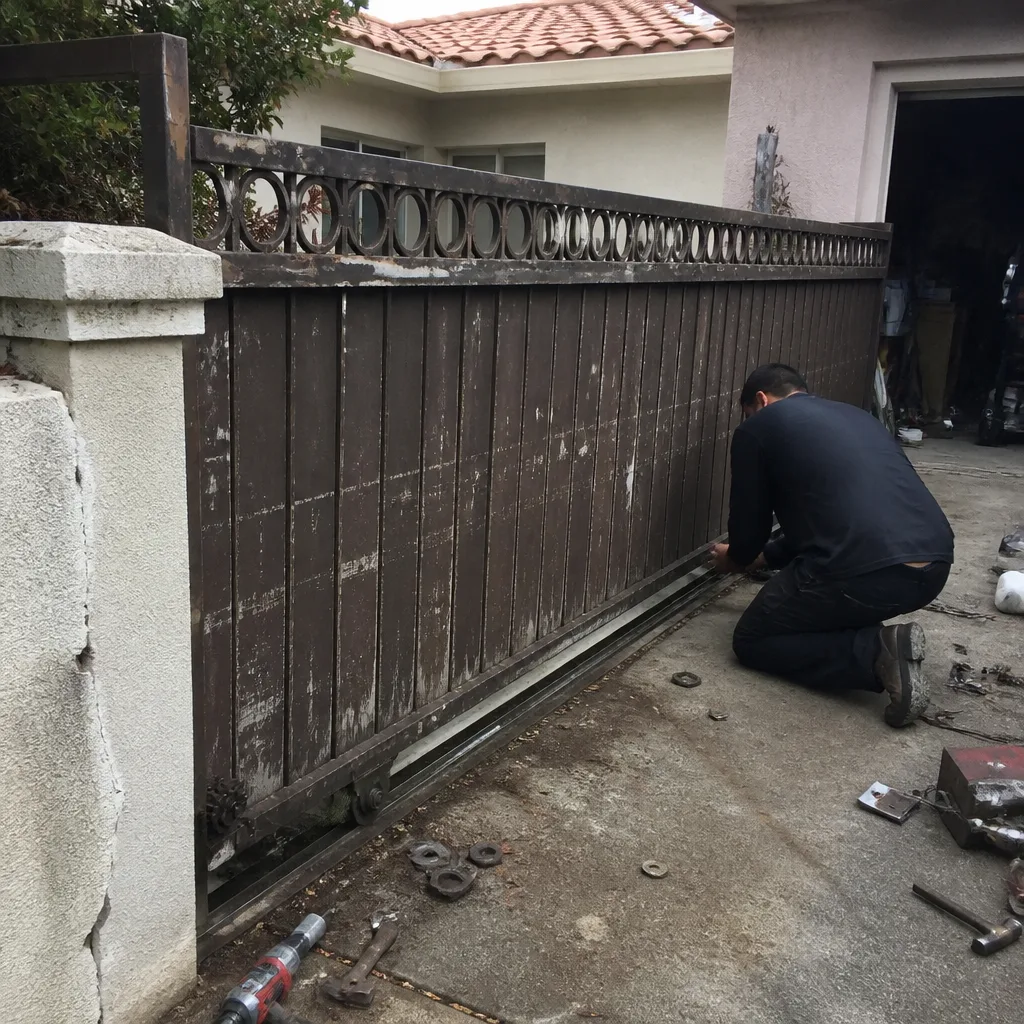 Before
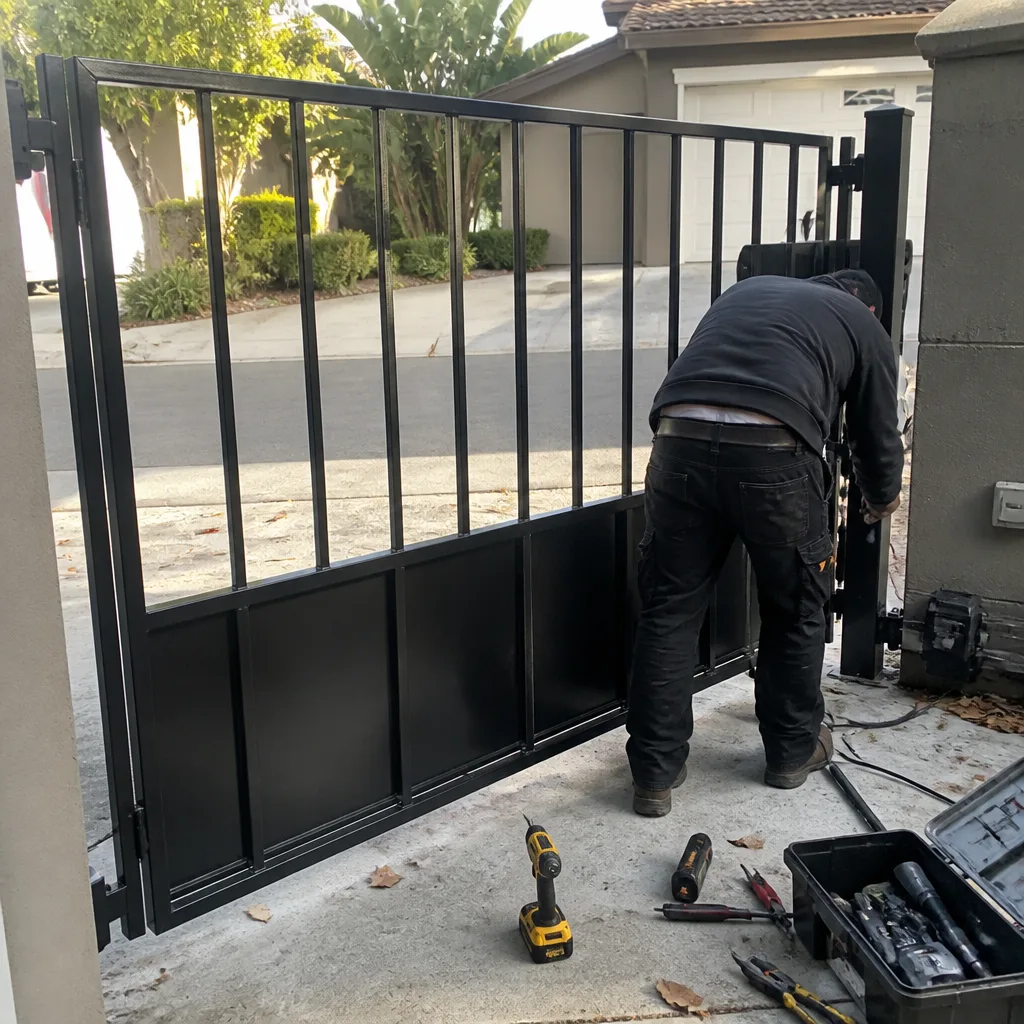 After
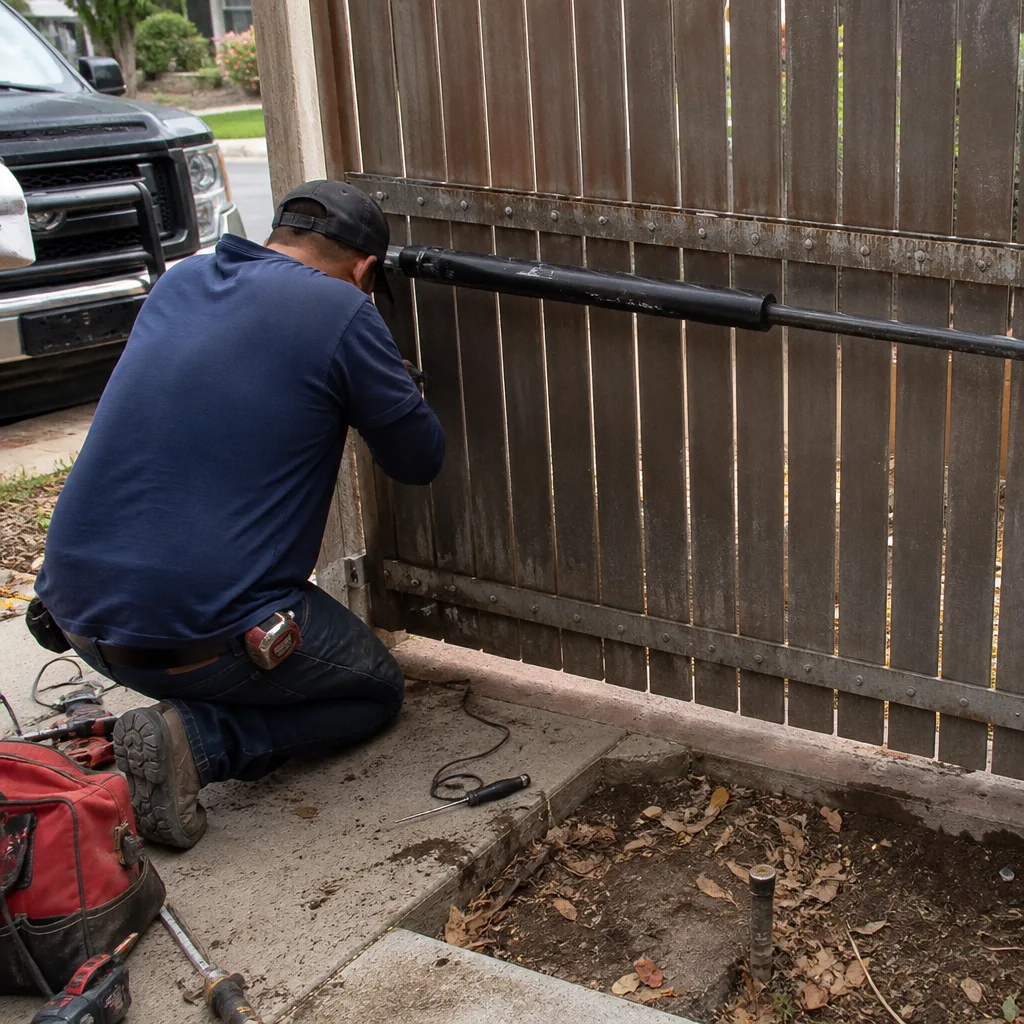 Before
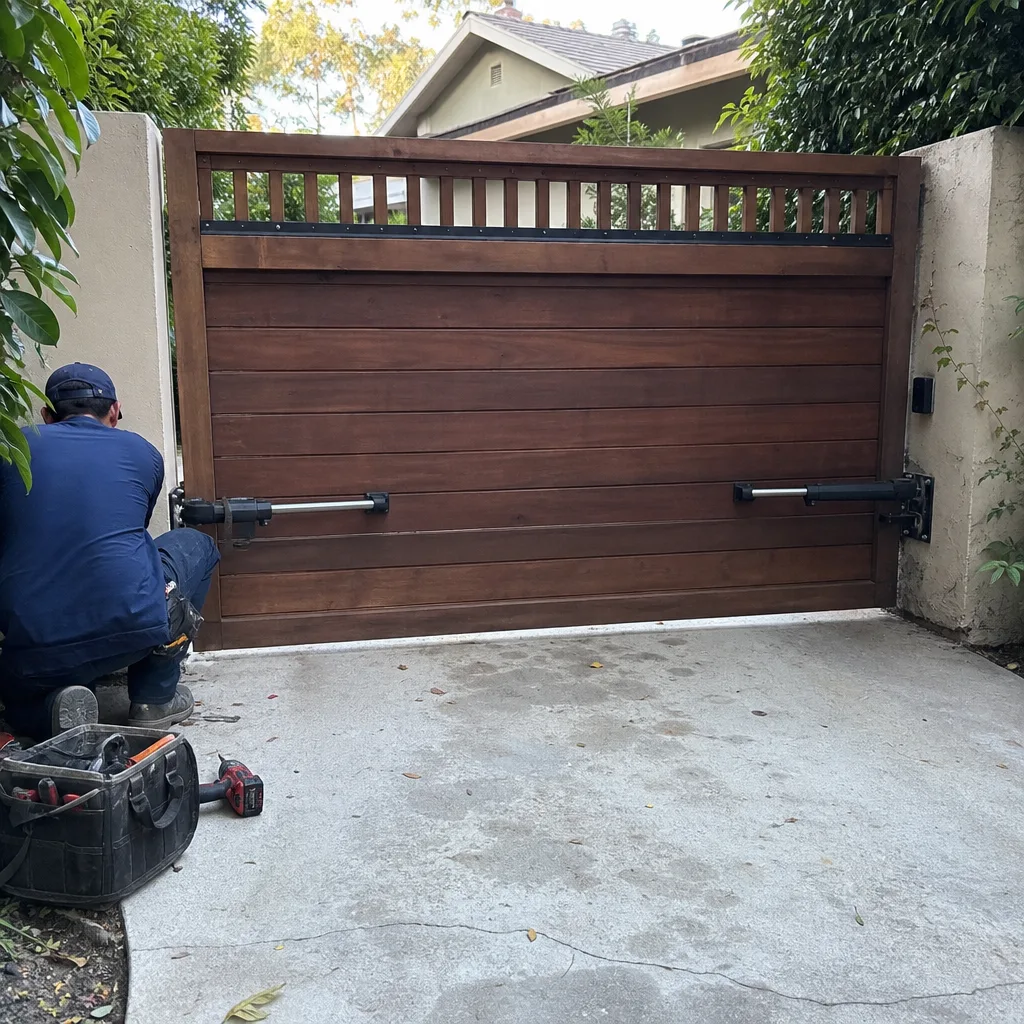 After
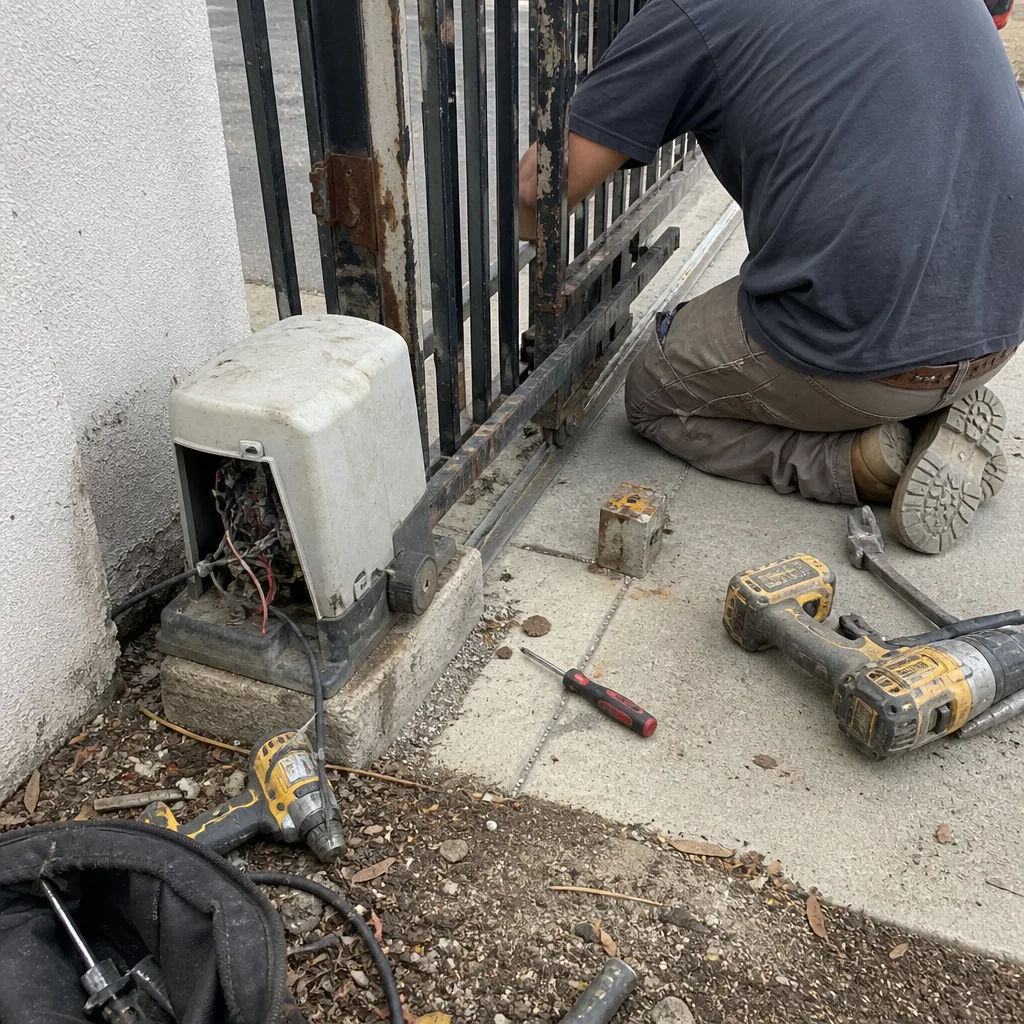 Before
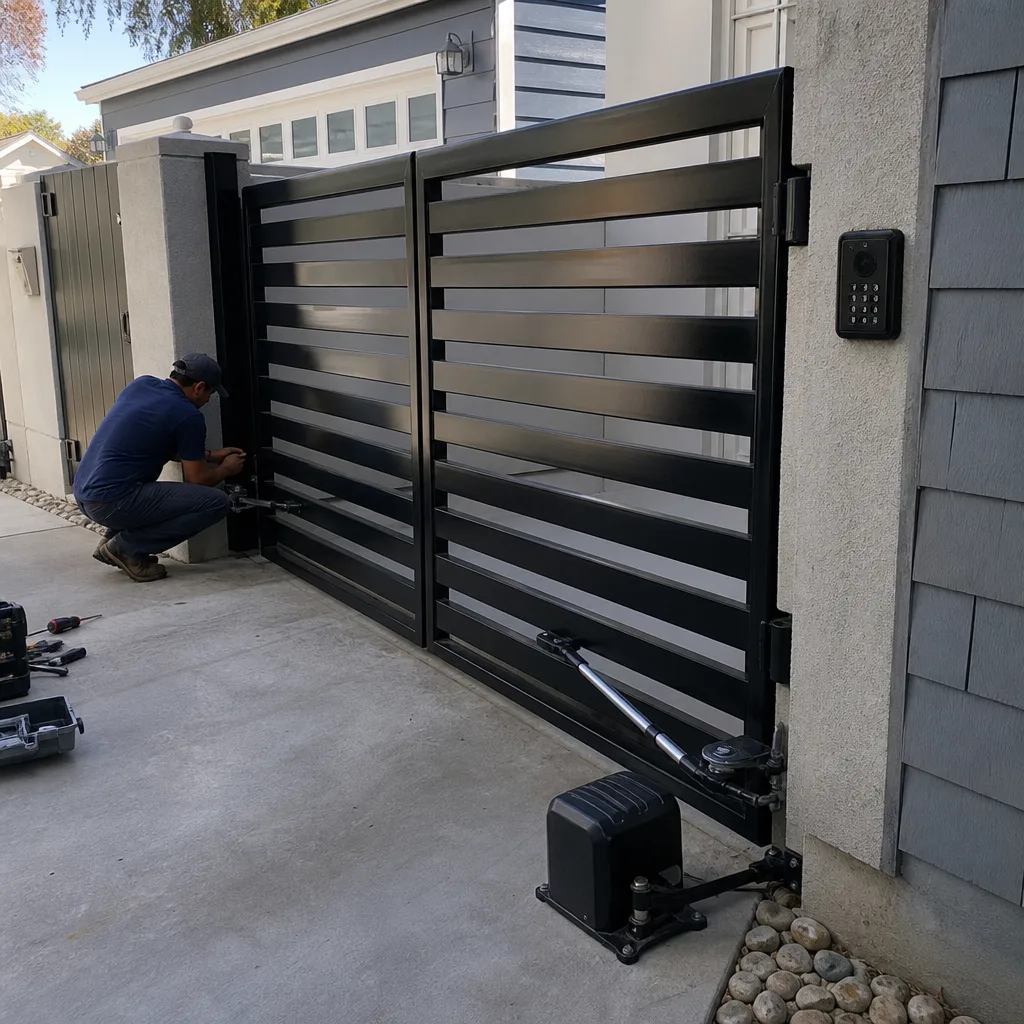 After