
Last updated October 30, 2026
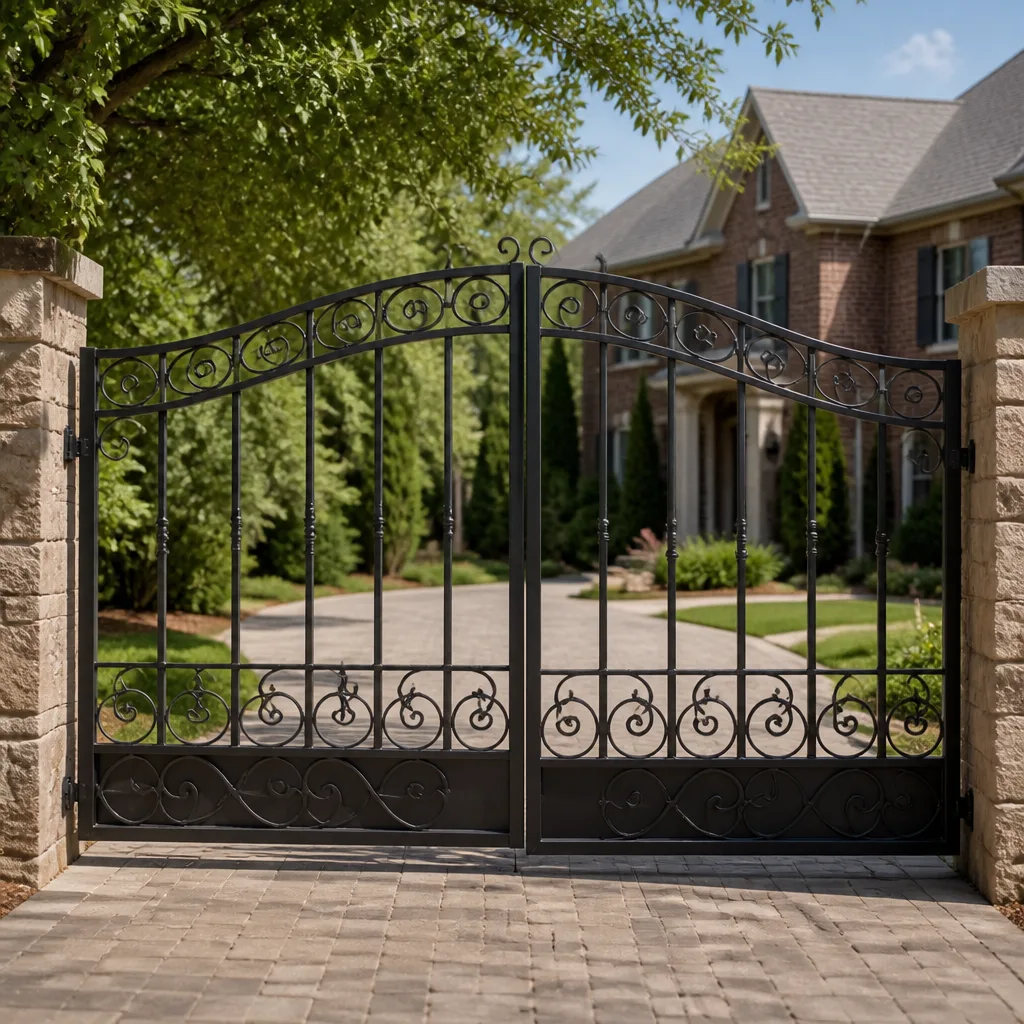 Wrought iron
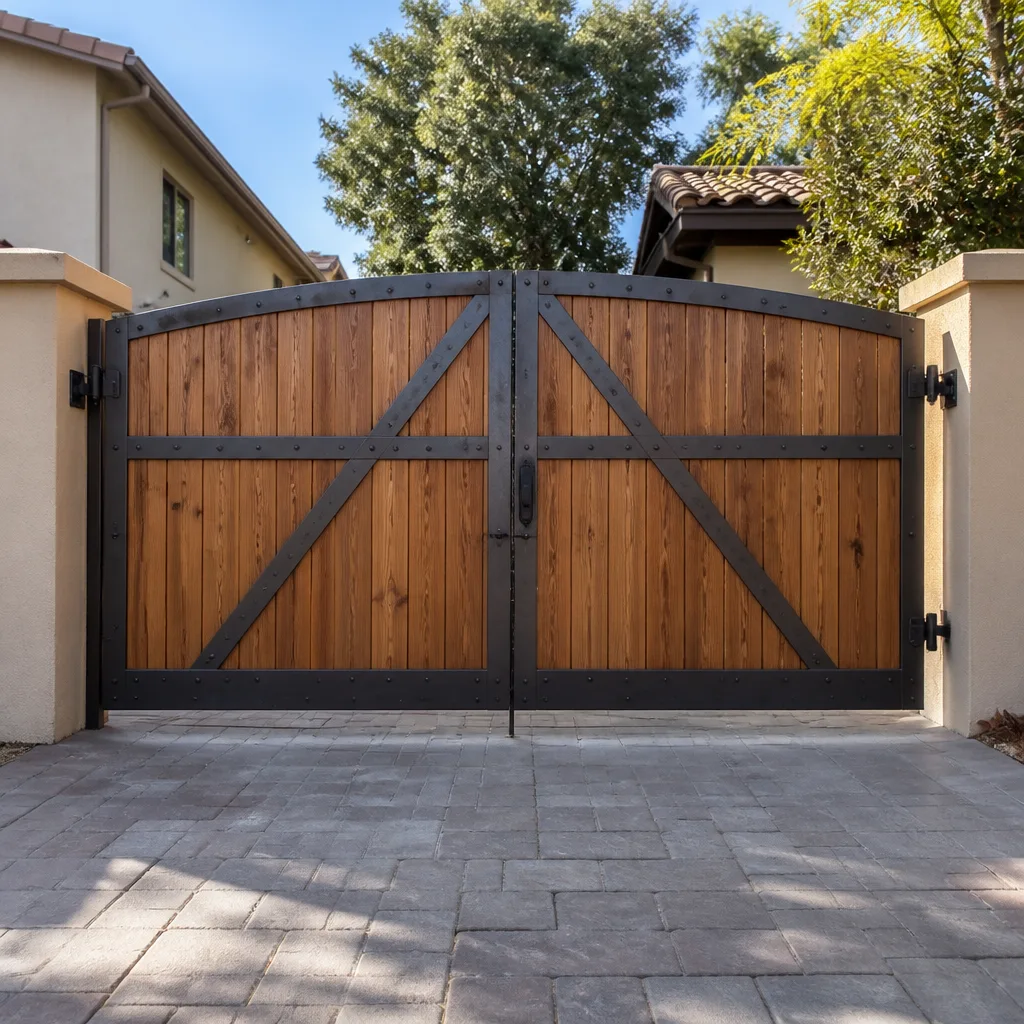 Wood & steel frame
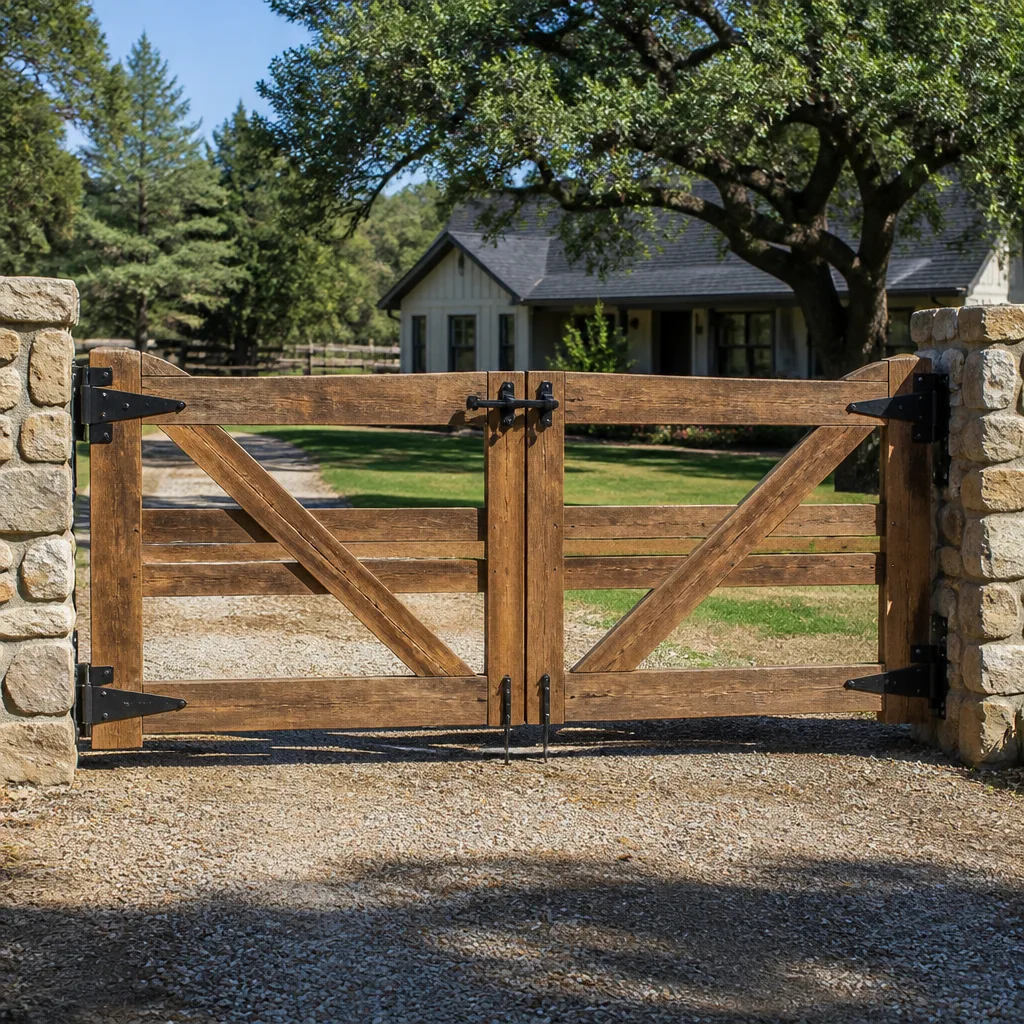 Farm & ranch
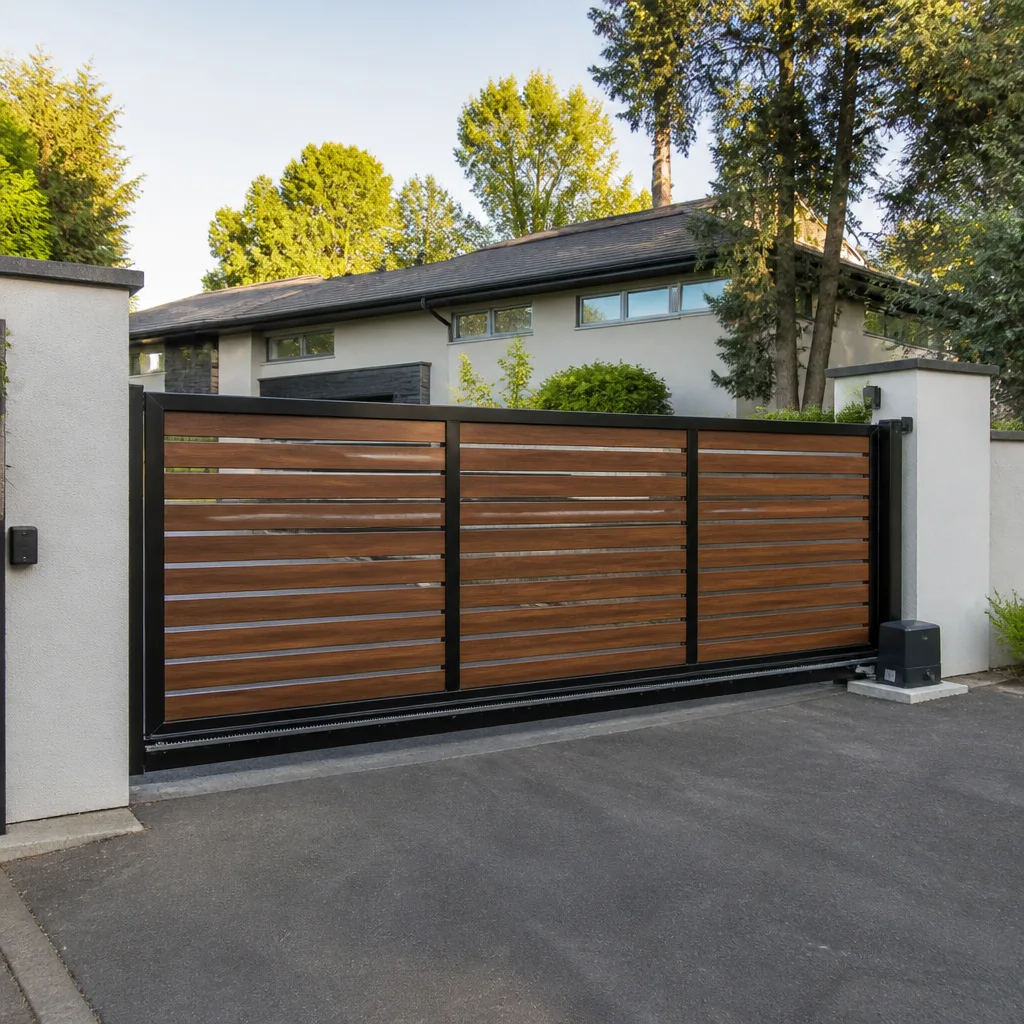 Sliding driveway gates
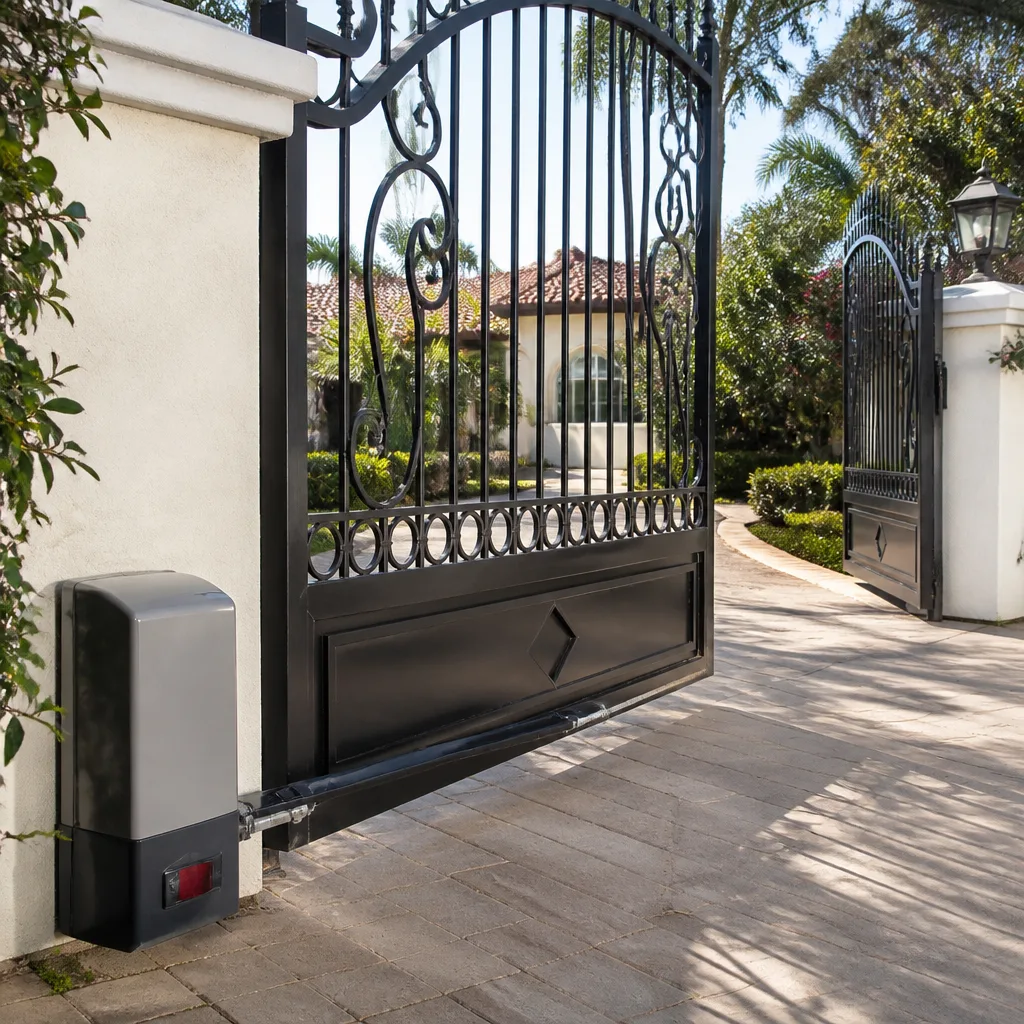 LiftMaster operators
Free on-site gate assessment - hinges, posts, and your LiftMaster or Nice gate operator checked before anything is quoted
The assessment is free and the quote is the invoice.
Get your free estimateThe Complete Gate Repair Guide for San Diego Homeowners
Most gate failures in San Diego aren’t random. They follow a predictable seasonal pattern tied to the June marine layer, the salt-heavy air along the coast, and the inland heat cycles that bake places like Escondido and Santee from May through October. A hinge that starts binding in spring will often seize entirely by August. A control board that worked fine through winter will short out after the first humid stretch in June. Knowing this pattern matters because catching a failing component early usually means a $90 hinge replacement instead of a $900 motor job. This guide maps the full repair lifecycle specific to San Diego conditions, from the first creak to the final part you’ll need. For a deeper dive, see The Complete Guide to Gate Repair in San Diego.
Quick Answer
Gate repair in San Diego typically costs between $125 and $450 for common fixes like hinge replacement, sensor realignment, or opener reprogramming. The key to keeping costs low is catching mechanical wear before it cascades into motor or control board failure. Most repairs on a gate with a functioning structure can be completed the same day the technician arrives, without replacing the entire gate.
Styles & brands we work with
Table of Contents
- How San Diego’s Climate Affects Your Gate
- What Gate Repair Actually Costs in San Diego
- Diagnosing the Most Common Gate Failures
- When to Repair vs. When to Replace
- San Diego Permits, Codes, and HOA Rules
- Parts Availability in San Diego County
- Documenting Your Gate Before Calling Anyone
- Electric Gate Systems: Motors, Boards, and Sensors
How San Diego’s Climate Affects Your Gate
San Diego is not one climate. It is at least three distinct microclimates, and each one damages gate hardware in its own way. Along the coast, from Point Loma up through La Jolla and Del Mar, the air carries enough salt and moisture to corrode galvanized steel hinges within three to five years. Inland, from Mira Mesa through Poway and east to Ramona, the issue is thermal cycling: 40-degree morning temperatures in winter followed by 90-degree afternoons in summer cause metal to expand and contract repeatedly, loosening bolts and stressing welds. In the hillside estates of Rancho Santa Fe and Fairbanks Ranch, the alkaline soil accelerates rust on buried gate posts and fence pickets through constant mineral contact.
What this means practically: we see control boards coated in fine salt residue within two miles of the beach. We see swing gate hinges that look fine from a distance but have worn internally to the point where the gate leaf sags a quarter inch. We see chain-drive operators in East County that fail because the chain stretched through years of heat expansion and now skips teeth on the sprocket.
The materials that hold up in San Diego conditions are worth knowing before you buy or repair anything:
- Powder-coated aluminum resists coastal corrosion far better than raw steel or iron. It costs more upfront but outlasts steel by a decade near the water.
- Stainless steel hardware on hinges and latch components is worth the premium within five miles of the ocean. Galvanized steel will rust through.
- Sealed control boards with conformal coating survive the June marine layer’s humidity. Unsealed boards are the single most common electronic failure we see in coastal San Diego neighborhoods like Crown Point and Bird Rock.
- Composite gate pickets avoid the soil-contact rot that eats through wood posts in hillside communities where irrigation water runs off into the gate line.
If your gate faces due west into the afternoon sun, expect the finish to fade and the exterior-facing hardware to degrade faster than the parts on the shaded side. This asymmetry is a telltale sign of an aging gate that needs attention before the structural damage spreads.
What Gate Repair Actually Costs in San Diego
Gate repair pricing in San Diego follows the same logic as auto repair: small parts, modest labor for simple jobs, and steep escalation when a neglected component takes out something bigger. From our work across San Diego, here are the ranges homeowners should expect for the most common repairs. These are real market numbers, not a menu you will find at a chain:
- Hinge replacement: $90 – $250 per hinge, including labor, depending on gate size and material. A heavy steel driveway gate costs more than an aluminum pedestrian gate.
- Sensor realignment or replacement: $80 – $200. Photo-eye sensors drift out of alignment from wind, vibration, or a bumped post. This is the single most common electric gate fix.
- Opener reprogramming or limit switch adjustment: $75 – $160. When a gate opens too far, too little, or reverses at the wrong point, the fix is usually an adjustment, not a part.
- Control board replacement: $200 – $600 including the board. Boards fail from moisture, power surges, or ant colonies nesting inside the housing. The part alone runs $90 – $350 depending on brand.
- Motor or actuator replacement: $400 – $1,200. This is the point where many homeowners question whether the gate is worth saving.
- Full operator replacement (motor, arm, board, remote): $1,200 – $2,800 installed, depending on brand and gate weight.
- Chain or belt replacement: $150 – $350. Chains stretch in San Diego’s inland heat cycles. Belts crack from UV exposure.
- Welding repair on a steel gate: $150 – $400. Broken welds on the hinge side of the gate are the first structural failure point.
These numbers assume a gate specialist is doing the work. A general handyman might quote lower, but the diagnosis is the risk: if the hinge is replaced but the real problem was a bent post, the gate keeps binding and the motor burns out six months later. The quote is always agreed before work starts, so there is no invoice surprise at the end. A Cambridge Gate Repair home estimate accounts for the full system, not just the visible symptom.
As a rough repair-vs-replace threshold for San Diego homeowners: if the cost of a repair approaches 60 percent of the cost of a new gate and operator, replacement makes more financial sense. If the gate structure is sound and only the operator has failed, repair almost always wins.
Diagnosing the Most Common Gate Failures
Before anyone touches a wrench, the diagnosis is half the job. Here is the framework we use on every call in San Diego, from a stuck driveway gate in Scripps Ranch to a dead keypad in La Mesa. It works for any gate brand and any operator system.
- Identify the failure mode. Is the gate stuck open, stuck closed, moving slowly, stopping midway, making noise but not moving, or not responding to any input? Each behavior points to a different subsystem.
- Check the manual release. On an electric gate, pull the manual release and try to move the gate by hand. If it moves smoothly, the operator is the problem. If it binds or drags, the gate structure and hardware are the problem. This single test saves more misdiagnosis than any other step.
- Listen. A grinding sound means a gear or bearing is failing. A clicking sound without movement means the motor capacitor or the circuit breaker has tripped. A whirring sound with no movement means the chain or belt has slipped off the sprocket.
- Look at the hinges and weld points. Sagging gate leaves, visible rust streaks under hinge pins, and cracked paint around welds are all structural red flags. A gate that sags an inch at the latch is working every hinge and the motor twice as hard as it should.
- Test the safety sensors. Most modern electric gates in San Diego have photo-eye sensors. Wave your hand in front of each sensor while the gate is moving (stand clear of the gate path). If the gate does not reverse or stop, the sensors are misaligned, dirty, or failed.
- Check the power. A dead gate that does not respond at all is often a tripped GFCI outlet, a popped breaker, or a dead transformer before it is a failed board. Verify power reaches the operator before ordering any parts.
If the gate binds when moving by hand, stop diagnosis there. Do not keep running the motor against a binding gate. A residential gate motor in San Diego can burn out in under two minutes of continuous stall. A stuck motor at the wrong angle is where a $120 hinge replacement becomes a $900 motor job.
When to Repair vs. When to Replace
The decision to repair or replace a gate comes down to three questions, answered in order. Every San Diego gate we assess follows this same decision tree, whether it is a wooden swing gate in Kensington or a steel slide gate at a commercial property in Miramar.
First: Is the gate structure sound? If the gate leaf itself is twisted, rusted through, or has broken welds at multiple points, replacement is the only honest recommendation. Patching a failing structure extends its life by a year or two at best. Conversely, if the structure is straight and the posts are still set firmly in the ground, repair almost always makes sense.
Second: Is the operator appropriate for the gate? Sometimes the motor is not broken; it is undersized. A gate that worked for years on a light-duty operator may start eating gears after a homeowner adds pickets, mounts a heavier latch, or lets vegetation grow against the gate. In these cases, replacing the operator with a properly rated one is the repair. Brands like Viking and BFT offer operators rated for different gate weights and duty cycles. Putting a light-duty operator on a heavy gate guarantees a repeat failure.
Third: Is the wiring harness intact? This is the detail most guides miss and the thing we see constantly in San Diego’s coastal communities. The actuator or motor may be fine. The problem is the low-voltage wiring running underground from the control board to the actuator, corroded by years of salt-laced soil moisture in places like Del Mar and Solana Beach. A technician who replaces the actuator without testing the harness will be back in six months when the new actuator also fails. Testing the wire continuity costs nothing and takes ten minutes. Replacing the wiring harness can cost $300 – $800 in labor, but it fixes the actual problem.
If the gate structure is sound and the harness tests clean, repairing the operator and replacing the worn mechanical parts is the right call. It keeps a working gate out of a landfill and costs a fraction of a full replacement.
San Diego Permits, Codes, and HOA Rules
San Diego has specific requirements for gate work, and they vary by city and even by neighborhood. Understanding them before you schedule work saves delay and a potential citation.
City of San Diego unincorporated areas require a building permit for a new gate structure when the gate is over 7 feet tall or when the gate includes a motorized operator. The gate motor itself is regulated as an electrical installation in many cases, meaning a permit is required for operator replacement in some jurisdictions, particularly when new conduit or a new power run is involved. In incorporated cities like Chula Vista, Oceanside, and Carlsbad, the permit threshold can be lower for backyard gates exceeding 6 feet. Always confirm with the local building department before a new installation.
HOA overlays are the bigger variable in San Diego. Rancho Santa Fe, Del Mar, and several master-planned communities in Carmel Valley and 4S Ranch have architectural review requirements that apply to any gate visible from the street. A homeowner who replaces a gate without HOA approval can be ordered to tear it out at their own expense. For a gate matching the original design, approval is usually routine. For a design change, expect a review period of two to four weeks.
For automated gates, California state code requires safety entrapment protection in the form of photo-eye sensors or contact edges. This is not optional. A gate operator that lacks these protections is both a safety violation and a liability landing zone. Any professional gate installer in San Diego will quote these protections as part of new operator installation by default. If your current operator lacks them, the upgrade path is straightforward and required.
Our Gate Installation in Rancho Santa Fe service includes the permit and HOA paperwork handling, because in that community the review process is the schedule bottleneck, not the construction itself.
Parts Availability in San Diego County
The brand of operator on your gate determines how long a repair will take. Some manufacturers maintain local supply chains in Southern California. Others ship from a warehouse in the Midwest or from overseas, and those two-week waits are the difference between a gate that is down for a weekend and a gate that is down for a month.
Brands with strong San Diego parts availability include LiftMaster, FAAC, and Linear. These companies have distribution centers in Southern California, which means boards, actuators, and remotes can often be sourced same day or next day. In our experience, a Linear actuator for a slide gate in Chula Vista can be in hand by the next morning, while a specialty board for a less common European brand might sit in customs for ten days.
Brands that require more lead time in San Diego include some BFT and Viking components, particularly older model control boards that are no longer kept in local stock. When a homeowner in Jamul or Alpine has an out-of-production Viking operator, the repair path often involves a compatible retrofit board rather than waiting for an obsolete part that may never arrive.
This is one of the strongest arguments for choosing a brand-agnostic gate specialist. A technician who works only with one manufacturer’s line will inevitably recommend that manufacturer’s replacement operator when a part is backordered. A specialist who works across FAAC, BFT, Linear, Viking, and others will source the part that actually fits your gate. Sometimes that part is a used or refurbished board. Sometimes it is a cross-compatible retrofit. Either way, the goal is to fix what you have, not to sell you a new operator because one brand’s supply chain is slow.
If you have an older gate, write down the operator model number and the control board part number before a failure occurs. When the gate goes down on a Friday afternoon, having that information ready means a technician can begin sourcing parts immediately instead of spending the first visit just identifying the system.
Documenting Your Gate Before Calling Anyone
This is the single highest-leverage thing you can do before any technician arrives, and almost no one does it. Documenting your gate system takes fifteen minutes and cuts diagnostic time in half. When you call a repair company in San Diego and can provide this information over the phone, the technician arrives with the right parts in the truck instead of spending the first hour identifying what you have.
Here is exactly what to document:
- Photograph the gate from both sides. Full view, showing the hinges, the latch, and the operator mounting. These photos answer structural questions before the visit.
- Photograph the operator unit. The motor housing, the arm or chain, and the control board cover. The model number is usually printed on a label on the side or underside of the operator housing.
- Photograph the control board. If you are comfortable opening the operator cover (with power off at the breaker), a clear photo of the board shows the exact revision and connector layout. This matters for ordering replacement parts.
- Locate and photograph the model number. On LiftMaster and Linear operators, the model number is on a side label. On FAAC and BFT units, it is typically on the bottom plate. Viking units usually carry a serial plate on the arm.
- Note the power source. Is the operator plugged into an outlet, hardwired to a dedicated circuit, or solar-powered? This changes the diagnostic approach.
- Count the remotes and access devices. How many remotes, keypads, sensors, or intercom units are installed? If the system uses an access control panel, photograph that too.
When a homeowner in San Diego calls with this documentation ready, the conversation changes. Instead of “we will send someone out to take a look,” the technician can start with “that sounds like a failed limit switch on a Viking VG-2000, and I have one in the truck.” That is the difference between one visit and two.
If your gate is in the coastal zone, include a photo that shows any visible corrosion on the board or the harness. Salt damage is a specific diagnosis with a specific repair path, and the photo confirms it before the technician drives out from the shop.
Electric Gate Systems: Motors, Boards, and Sensors
Electric gate repair in San Diego is its own discipline, distinct from the mechanical work of hanging a gate or replacing a hinge. Most homeowners understand the motor part. The failure points lie in the electronics around it.
The motor. Electric gate operators use either an electromechanical motor (gears driving a chain or belt) or a hydraulic actuator (fluid pressure driving a piston). Electromechanical units are more common in residential San Diego. Hydraulic units show up on heavier estate gates, often in Rancho Santa Fe and Olivenhain, where gate leaves weigh 800 pounds or more. Motors fail from thermal overload, mechanical binding, or simply age. A motor that hums but does not turn is usually a failed start capacitor, a $15 part. A motor that runs but cannot move the gate is often undersized for the load.
The control board. This is the brain of the system and the component most vulnerable to San Diego’s coastal humidity. Control boards fail from moisture ingress, ant colonies nesting inside the housing (a genuinely common problem in San Diego’s warm months), or power surges during Santa Ana wind events. Symptoms of board failure include the gate opening but not closing, the gate ignoring the remote intermittently, or the gate reversing for no reason. A failed board on a FAAC operator can be replaced as a standalone part for $200 – $450, which is far less than replacing the operator.
The safety sensors. Photo-eye sensors on either side of the gate opening detect obstructions and reverse the gate. They drift out of alignment from wind, from a vehicle bumping a post, or from ground settling. A gate that refuses to close is more often a sensor issue than a motor issue. The fix is a realignment or a $40 replacement sensor, not a new operator. Contact edges (rubber strips along the gate edge that reverse the gate on contact) serve the same purpose and should be replaced if the rubber is cracked or the internal contact is intermittent.
The loop detector. Buried in the driveway, an induction loop detects a car’s metal mass and holds the gate open. Loop detectors fail from broken wire insulation, water infiltration at the saw-cut, or a failed detection module. Symptom: the gate closes on your car, or refuses to open when you pull up. Loop repair involves re-cutting a saw slot and laying new loop wire, a San Diego-specific repair because the cost of cutting through a stamped concrete driveway in Rancho Bernardo is higher than cutting through an asphalt driveway in Normal Heights.
Our Electric Gate Repair in Rancho Santa Fe service covers the full electronics stack: motors, boards, loops, sensors, and access control. The diagnostic approach is the same one outlined above. The difference is that a gate specialist recognizes the interaction between the mechanical gate and the electronic operator, which is where most misdiagnosis happens.
Common Mistakes to Avoid
- Lubricating a worn hinge. Grease makes a worn hinge quieter for a week, then the metal-on-metal wear accelerates. The correct fix is replacing the hinge pin or the hinge. Lubricant masks the symptom; it does not address the wear.
- Running the motor against a binding gate. If the gate will not move smoothly by hand, forcing it with the motor destroys the operator. Shut the operator off and fix the binding first.
- Ignoring a sagging gate leaf. A gate that sags a half inch at the latch side is transferring that force into the hinge and the motor on every cycle. The longer it goes, the more expensive the fix.
- Skipping the HOA review for a visible gate repair. In Del Mar and Rancho Santa Fe, replacing a gate without architectural approval can trigger a stop-work order and a mandatory restoration. The review is free; the penalty is not.
- Buying a control board online without verifying the revision. A board that looks identical on eBay may be an earlier revision that is incompatible with your sensors or your remote frequency. Verify the part number before buying.
- Replacing the operator when the wiring harness is the problem. In coastal San Diego, underground low-voltage wiring corrodes faster than the operator fails. Test the harness before condemning the motor.
- Using indoor extension cords for a gate operator. Gate operators need weather-sealed, outdoor-rated wiring. An indoor cord will degrade within a season and can arc, which is a fire hazard and a code violation.
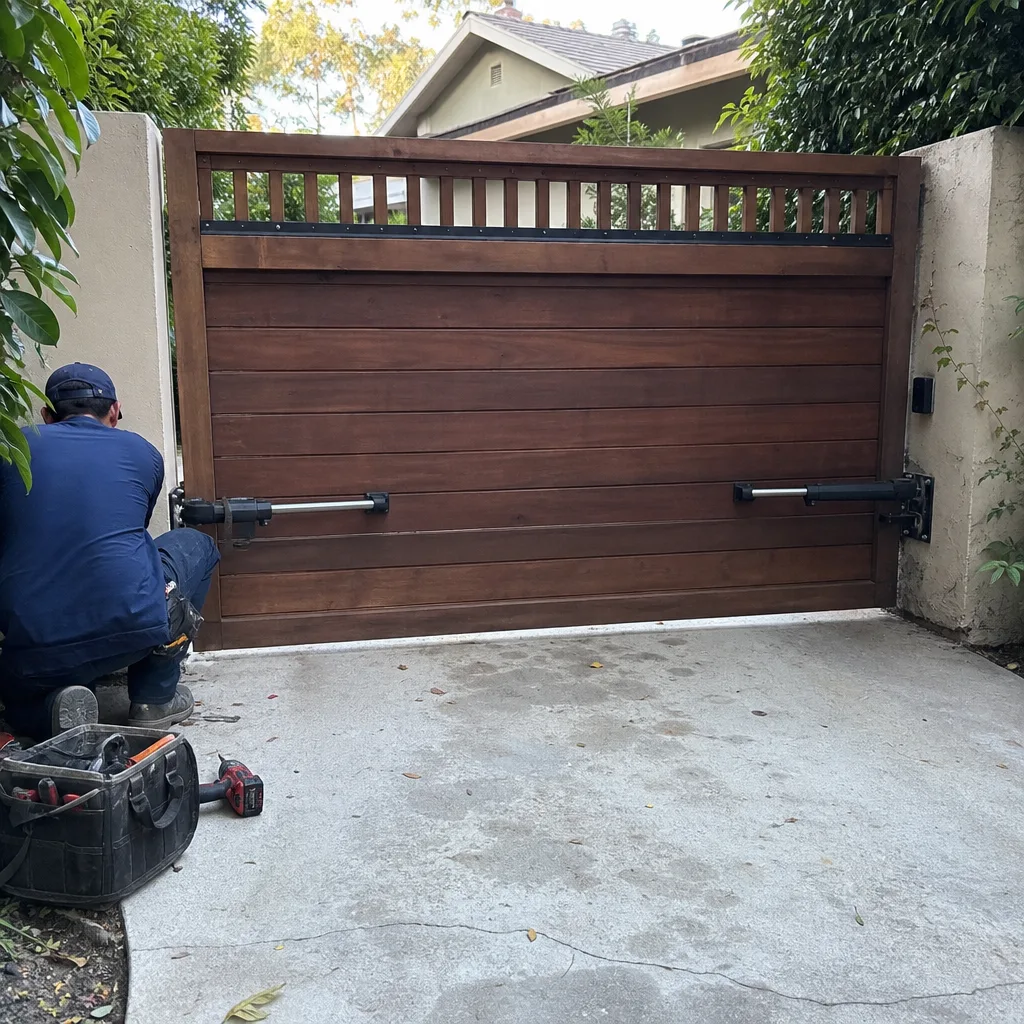
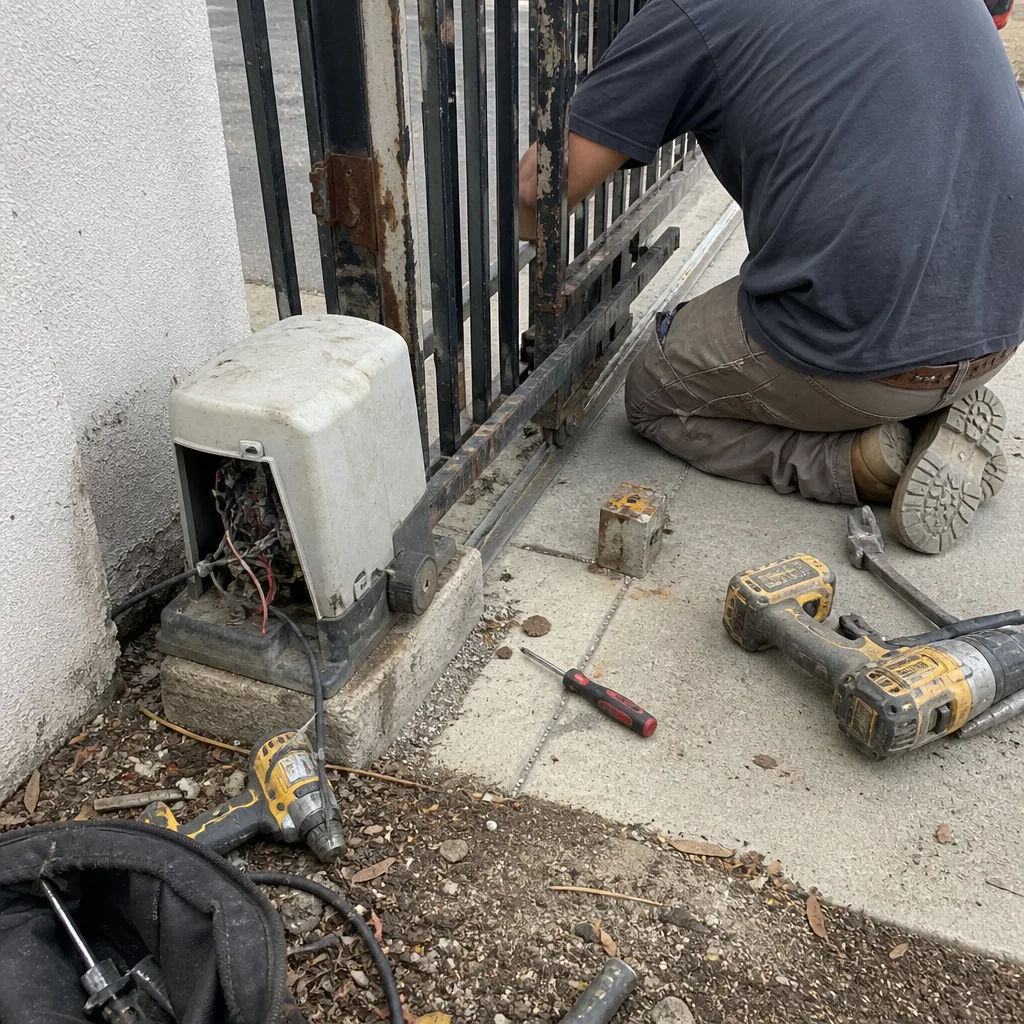
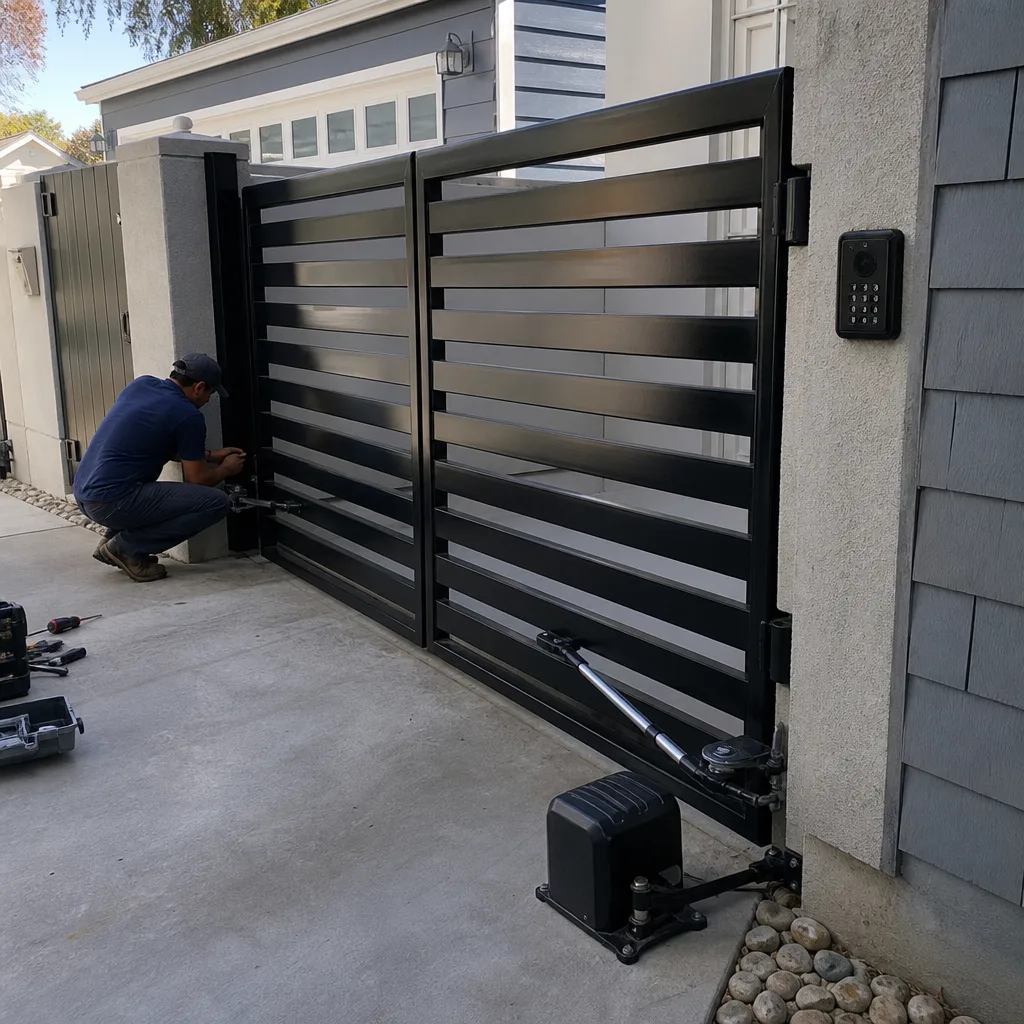
See the difference
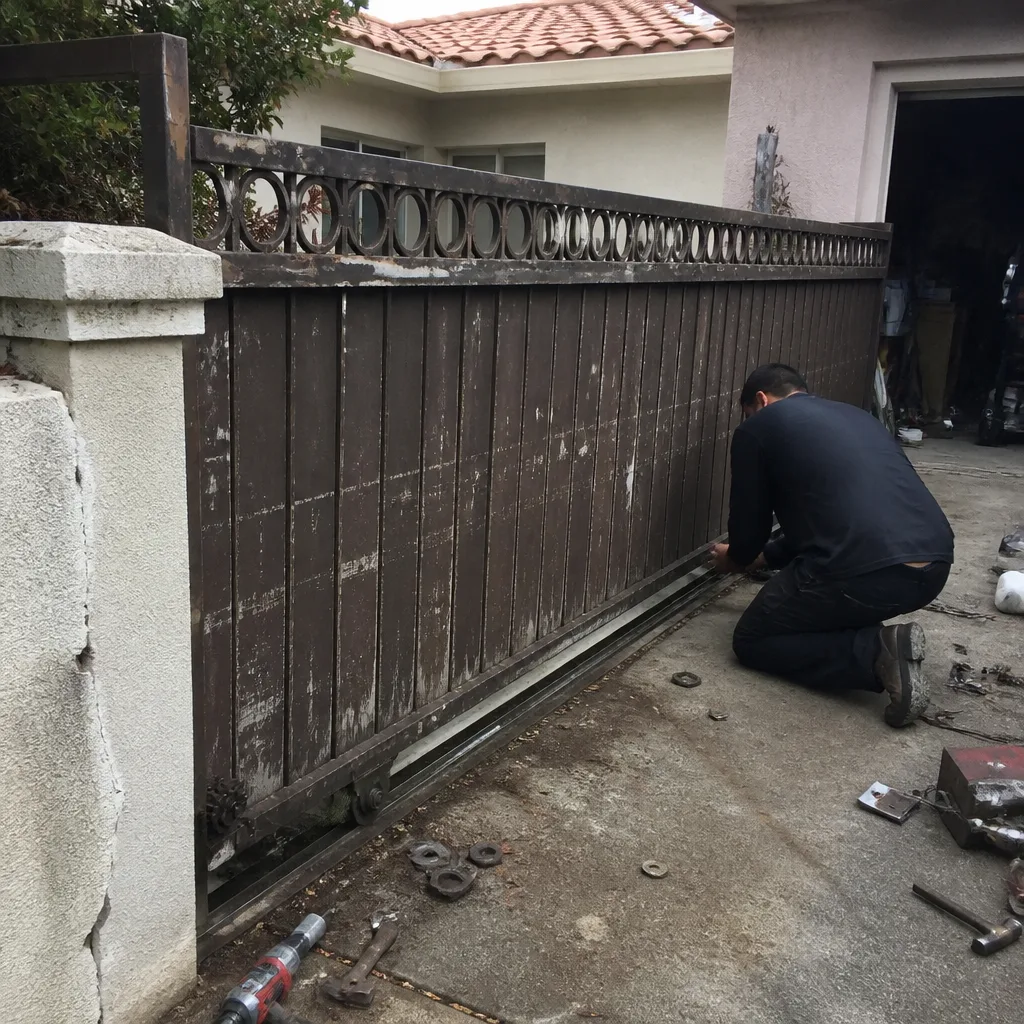 Before
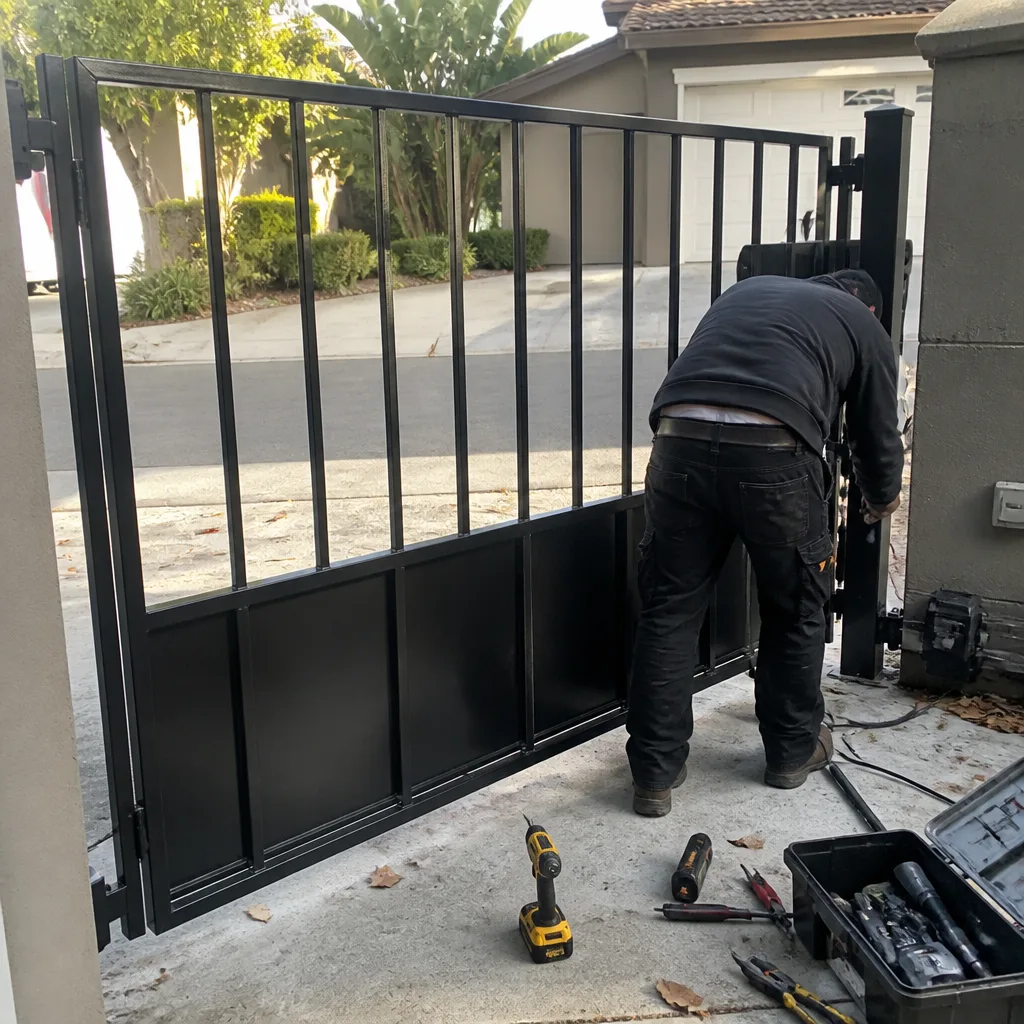 After
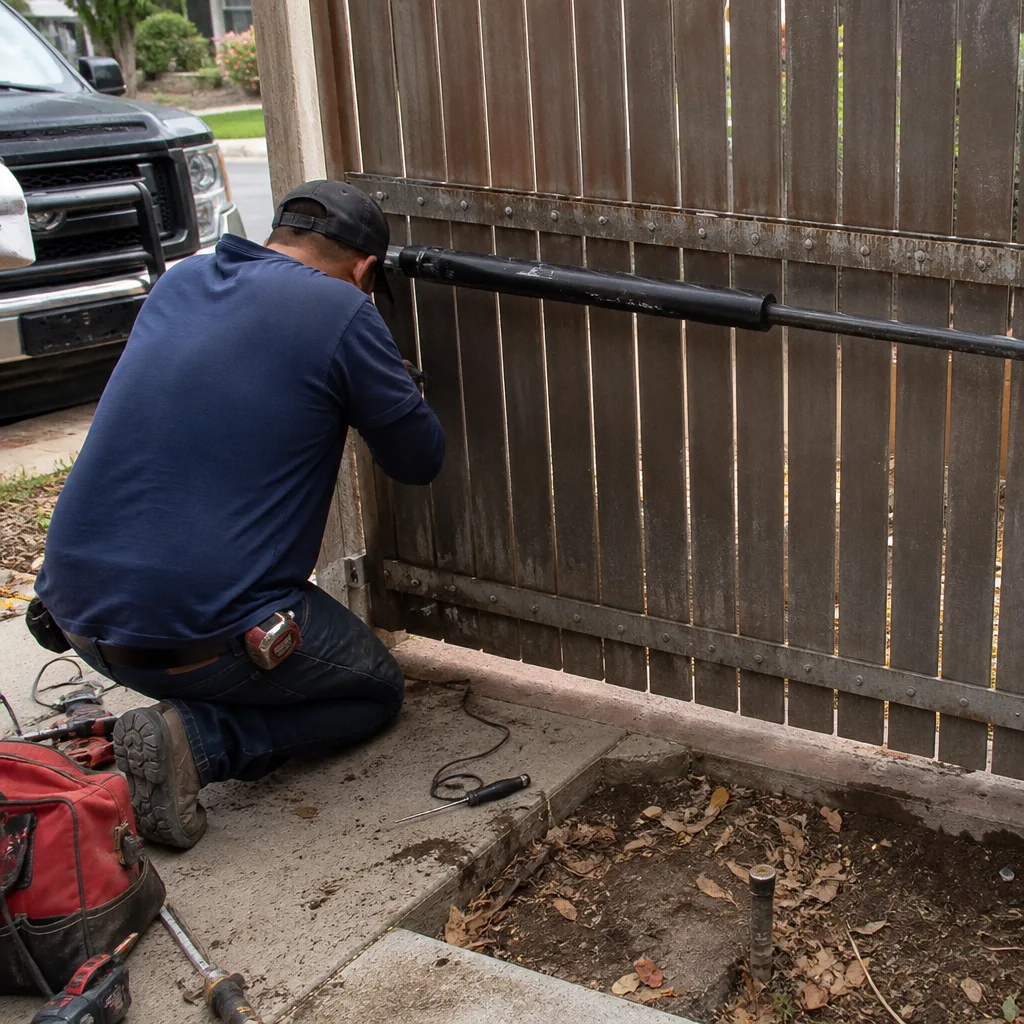 Before
 After
 Before
 After
When to Call a Professional
Call a gate professional when the gate binds against manual force, when the operator hums but does not move the gate, when the gate reverses unpredictably, or when you smell burning from the operator housing. These symptoms indicate a mechanical failure, an electrical overload, or a safety sensor fault that requires diagnostic equipment and replacement parts beyond what a homeowner should attempt. Also call a professional before any replacement of a high-tension spring, gate chain, or a heavy gate leaf. A falling gate leaf can cause serious injury, and a wound spring carries stored energy that can release violently. Cambridge Gate Repair offers free estimates in San Diego. Call (833) 589-8195 to schedule a diagnostic visit, and we will give you a written quote before any work begins.
Frequently Asked Questions
Gate repair in San Diego typically costs $125 to $450 for common repairs like hinge replacement, sensor realignment, or limit switch adjustment. Operator and motor replacements run $400 to $1,200 depending on the brand and gate size. Call (833) 589-8195 for an exact quote; the estimate is free and the price is agreed before work starts.
Most common gate repairs in San Diego can be completed the same day when the parts are in stock locally. LiftMaster, FAAC, and Linear parts are usually available same day in Southern California. Less common brands or older control boards may require a one- to two-week lead time.
An electric gate that opens but refuses to close is almost always a safety sensor problem. The photo-eye sensors have drifted out of alignment, the lenses are dirty, or a sensor has failed. The gate will not close because the control board believes an obstruction is present. Realigning or replacing the sensor fixes the problem for $80 to $200.
In many San Diego jurisdictions, replacing a gate motor with a like-for-like unit does not require a permit if no new electrical work is involved. If the replacement requires new conduit, a new power circuit, or structural modification to the gate, a permit is typically required. In HOA communities like Del Mar and Rancho Santa Fe, architectural review may apply regardless of the permit status.
In coastal San Diego neighborhoods, the most common electric gate failure is control board corrosion from salt-laden humidity. The June marine layer deposits fine salt residue on unsealed circuit boards, which eventually arcs or shorts. The fix is a replacement board plus sealing the enclosure against future moisture ingress. If you are within two miles of the ocean, this is the first thing we check.
Repair is worth it when the gate structure is straight, the posts are set, and the operator is appropriately sized for the gate. Replace when the gate leaf is rusted through, twisted, or has multiple weld failures, or when the repair cost approaches 60 percent of a new gate and operator. Call (833) 589-8195 for a repair-vs-replace assessment; a gate specialist can tell you in one visit which path makes sense.
The Bottom Line
Gate repair in San Diego succeeds when the diagnosis is accurate before the parts are ordered. The city’s coastal salt air, inland heat cycles, and HOA review overlays create failure patterns that generic repair guides miss, but they are predictable once you know the signs. The fastest path to a working gate is documenting your system, testing the manual operation before calling anyone, and choosing a gate specialist who works on the brand you already have. Whether the fix is a $40 sensor or a $900 motor, the price is always quoted and agreed before work begins. For more guides & resources, visit our blog. If the gate is down now, call (833) 589-8195. We’ll tell you what is wrong, what it costs, and whether repair or replacement is the right call.
Written by the team at Cambridge Gate Repair, serving San Diego since 2014.