
Last updated October 30, 2026
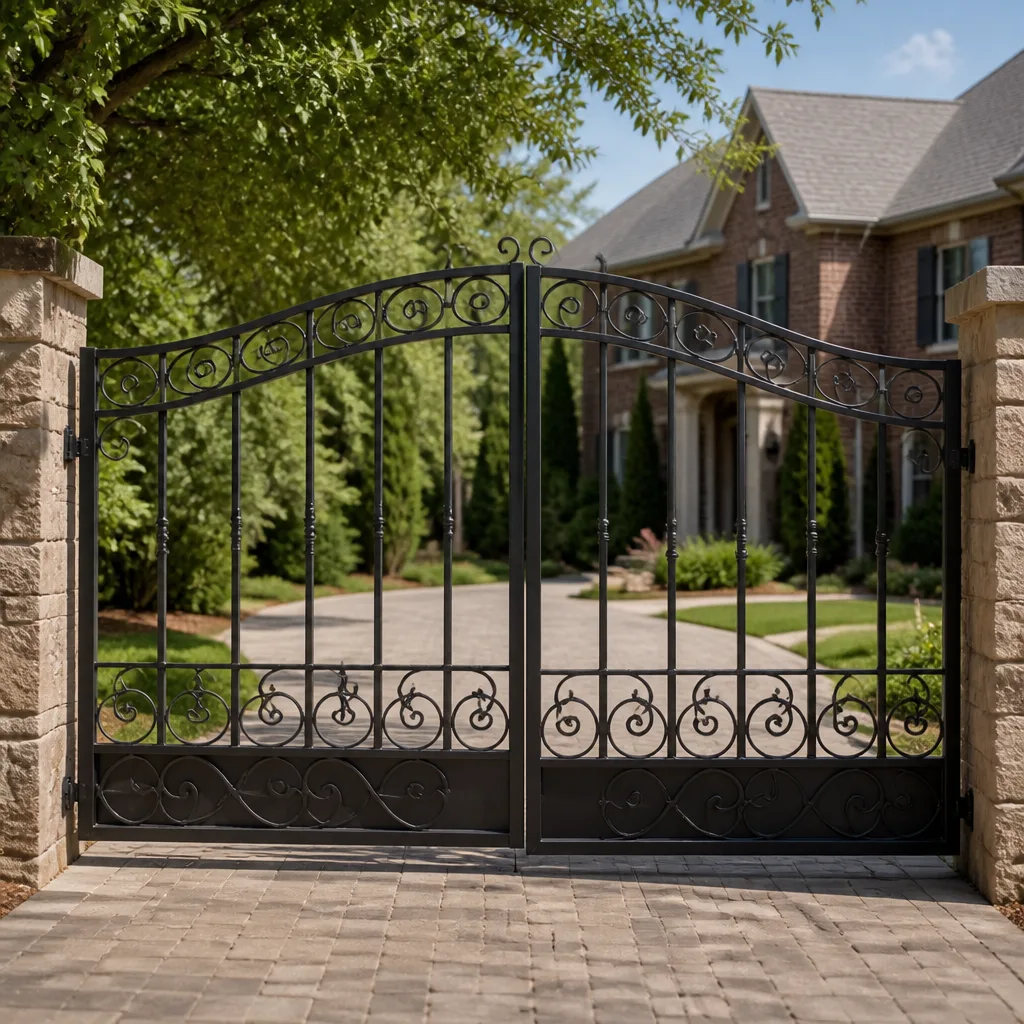 Wrought iron
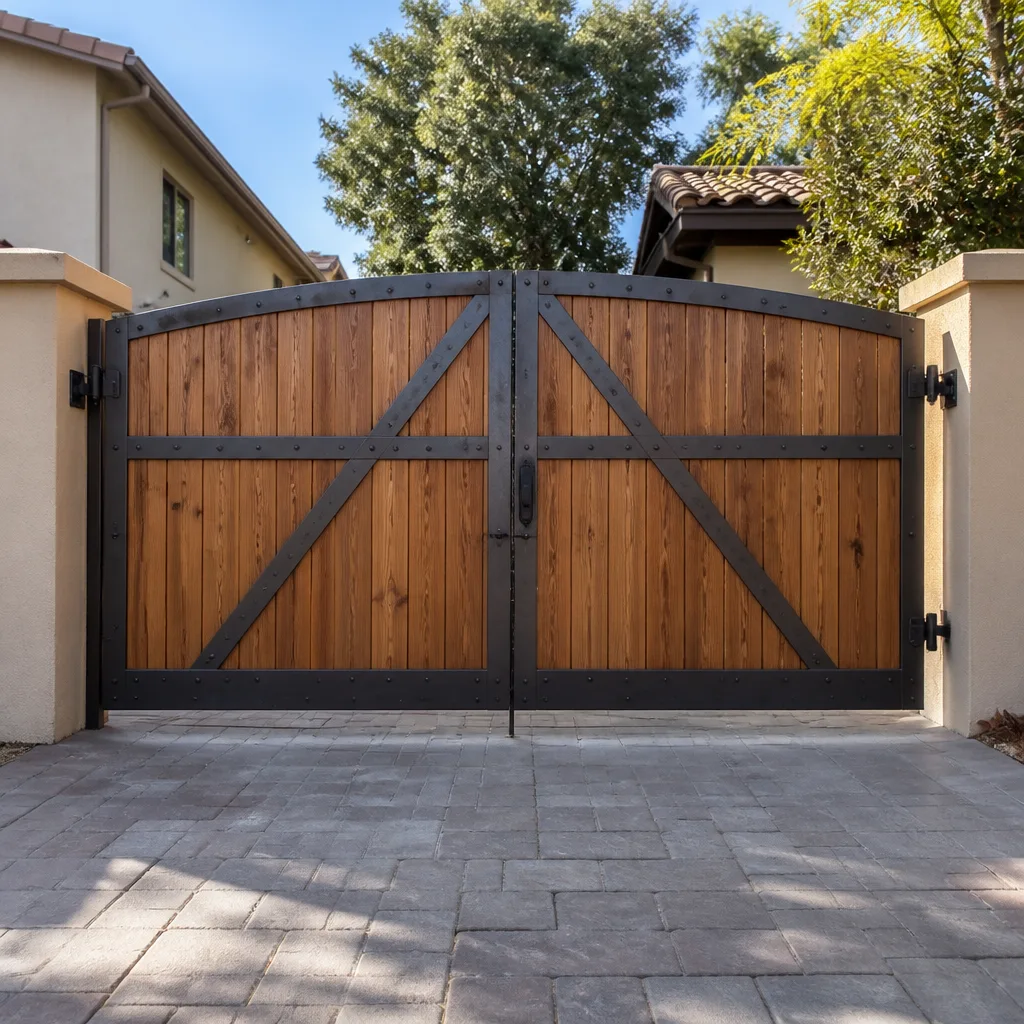 Wood & steel frame
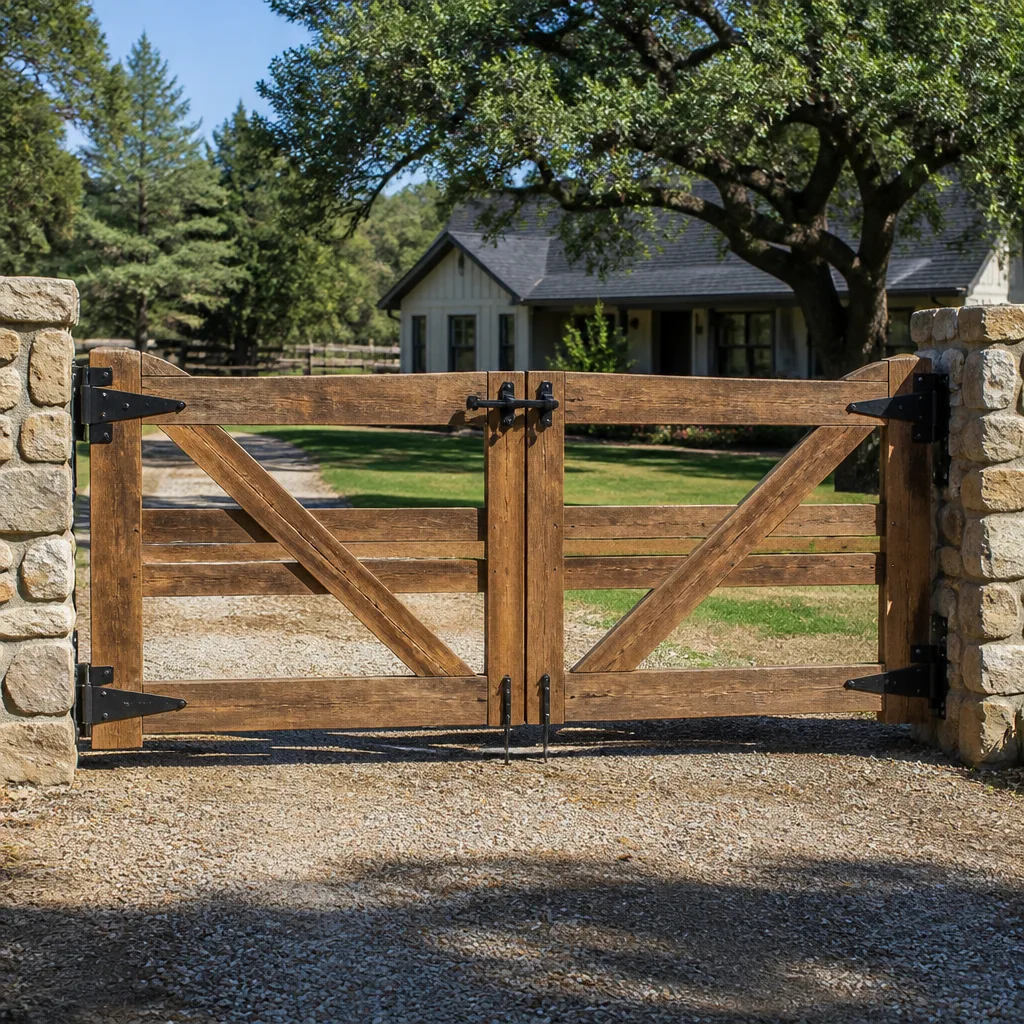 Farm & ranch
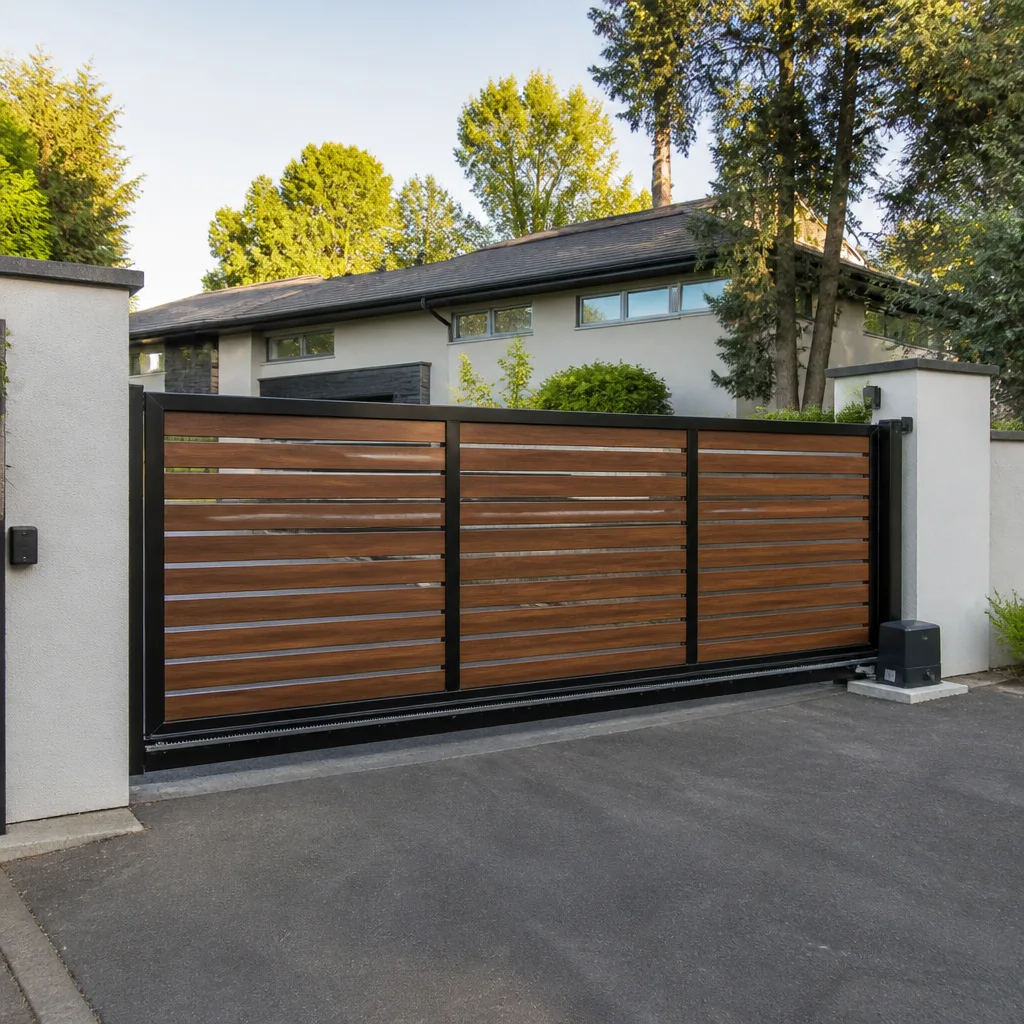 Sliding driveway gates
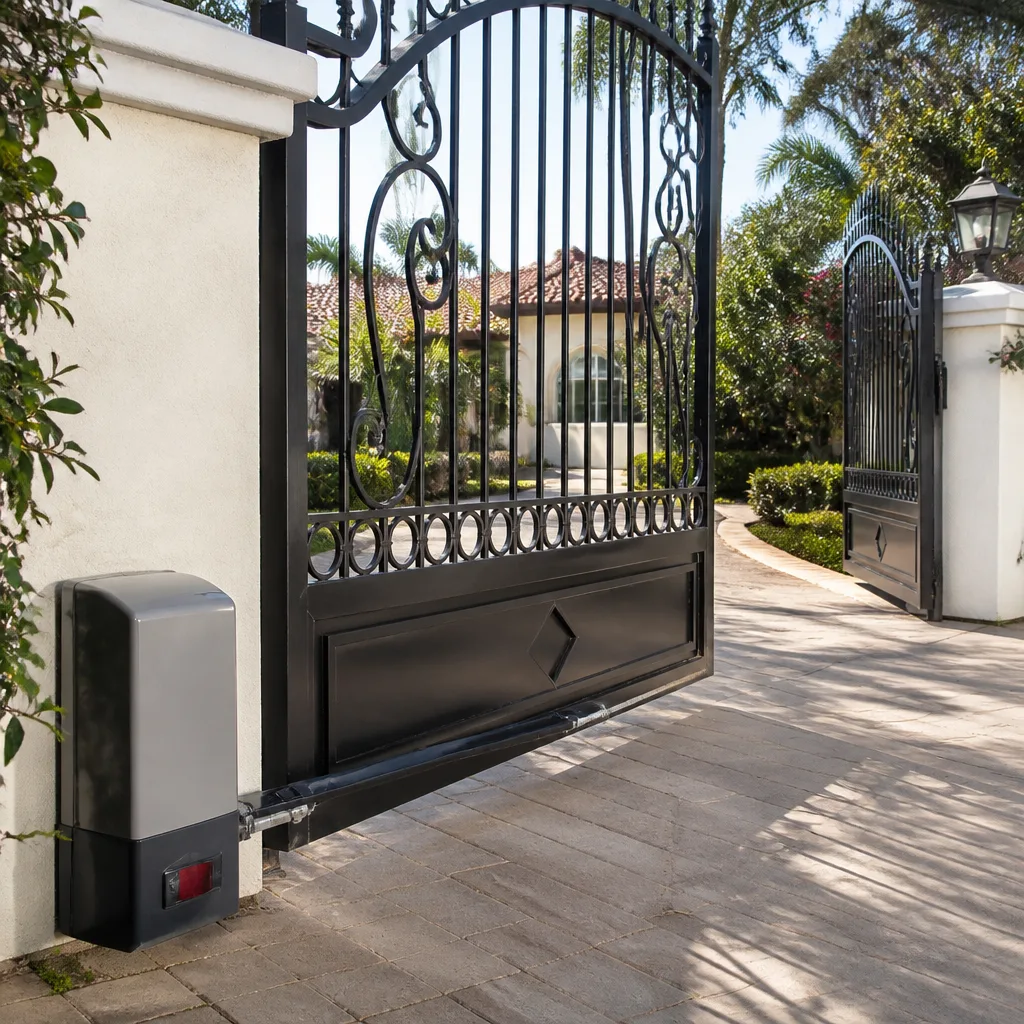 LiftMaster operators
Free on-site gate assessment - hinges, posts, and your LiftMaster or Nice gate operator checked before anything is quoted
The assessment is free and the quote is the invoice.
Get your free estimateGate Repair Emergency Preparedness Guide for San Diego Homes
During the 2007 San Diego wildfires, automated gates in mandatory evacuation zones became chokepoints. Residents who had never touched their gate’s manual release stood in driveways fumbling with operator housings while ash fell. A release mechanism that takes 30 seconds to locate in a calm moment can cost minutes you don’t have during an evacuation. This guide gives you a plan for gate failures before they happen. You’ll learn how to find and test your manual release across five common operator types, what actually happens to your gate during a San Diego power outage, how wildfire protocols affect gate settings, and how to build a one-page emergency reference card specific to your property.
Quick Answer
Gate emergency preparedness in San Diego means knowing where your manual release is, testing it before you need it, and having a written plan for the three most likely scenarios: power outage, wildfire evacuation, and a gate stuck open after a security event. The core of preparedness is simple: if you cannot disengage your automated gate and open it by hand within 60 seconds under stress, you are not prepared. This guide walks through exactly how to get there, including operator-specific release locations and a reference card framework you can fill in and post in your garage today. For additional preparation steps, see our Gate Repair Maintenance Checklist for San Diego Homeowners.
Styles & brands we work with
Table of Contents
- Why Gates Fail When San Diego Needs Them Most
- Manual Release Basics: How Disengagement Actually Works
- Finding the Manual Release on Five Common Operator Types
- Wildfire Preparedness: Gate Settings and Evacuation Protocols
- Power Outages: What Happens to Your Gate When the Grid Fails
- Security Failure: When Your Gate Is Stuck Open
- Build Your One-Page Emergency Reference Card
- Common Mistakes to Avoid
Why Gates Fail When San Diego Needs Them Most
Gates do not fail randomly. They fail at the intersection of stress, weather, and deferred maintenance. And in San Diego, that intersection is forecastable: Santa Ana winds, wildfire season, and the occasional heavy rain storm put specific demands on gate hardware. We’ve seen the pattern enough times to describe it plainly.
First, wind. Santa Ana gusts routinely hit 40 to 60 mph in the inland valleys and foothill neighborhoods. A gate that operates fine in calm conditions becomes a sail in that wind. The operator motor works against resistance it was never sized for, thermal overload trips, and the gate stops mid-travel. If it stops while open, your property is exposed. If it stops while closed, you cannot leave.
Second, power instability. San Diego’s grid strain during peak wildfire season leads to deliberate public safety power shutoffs in high-risk areas. When SDG&E cuts power, your gate’s automatic opener goes dark unless you have a functioning battery backup. Many homeowners discover their backup battery died two years ago precisely at the moment they need it.
Third, deferred mechanical wear. Gate hinges, wheels, and chains wear slowly. A gate that has been getting progressively harder to open manually is telling you something. Under normal conditions, you ignore it. Under emergency conditions, that resistance becomes the difference between escaping and waiting for help.
The common thread is that none of these failures are mysteries. They are mechanical systems behaving exactly the way mechanical systems behave under load. Your job as a homeowner is not to become a gate technician. Your job is to know enough to keep the gate functional when it matters.
Manual Release Basics: How Disengagement Actually Works
Every automated gate operator has a mechanism that disconnects the motor from the gate leaf itself. This is called the manual release. When engaged, the motor drives the gate. When disengaged, the gate swings or slides freely by hand.
The release exists because operators fail. Motors burn out. Control boards short. Power goes down. The manufacturer knows this, so every operator ships with a way to bypass the automation. The problem is that release mechanisms are not standardized. A LiftMaster release looks different from a FAAC release, which looks different from a Viking or Ghost Controls release. And they are often tucked behind covers, secured with keys, or marked with icons that are not intuitive under stress.
Here is the core principle: the manual release is always located on or near the operator housing. For slide gates, the operator is the metal box mounted on a concrete pad beside the gate track, with a chain or belt running to the gate. For swing gates, the operator is either an articulated arm, a piston cylinder, or an underground box at the pivot point. The release mechanism is a handle, a lever, a key slot, or a pull chain attached to that assembly.
What matters operationally is this sequence:
- Identify the operator type on your gate. Write down the brand and model number from the label on the housing.
- Locate the manual release mechanism while the gate is working normally.
- Test the release once, under no stress. Disengage the motor, push the gate open and closed by hand, then re-engage.
- Time yourself. The goal is release-to-open in under 60 seconds.
- If the release is keyed, confirm the key lives on a hook near the gate or in a known drawer. Duplicate it if there is only one copy.
One honest warning: testing a manual release on a gate that has not been disengaged in years can cause a temporary misalignment when you re-engage. This is normal for gates with accumulated wear. If the gate struggles after re-engaging, that is diagnostics information, not an emergency. It means the operator or hardware was already marginal. Better to find out now than during a wind event.
Finding the Manual Release on Five Common Operator Types
There are five operator configurations we see most often on San Diego gates. Here is what to look for on each. These are identification tips, not step-by-step mechanical instructions. If your gate’s release looks different from the descriptions below, check the manufacturer label and look up your model’s specific release diagram. The goal is locating it before the emergency.
1. Linear and Viking Slide Gate Operators
These are box-style operators mounted beside the gate track. The housing is typically metal, roughly coffee-table-sized, with a chain or belt exiting one side and running along the fence line to the gate. The manual release on most Linear and Viking slide operators is a T-handle or a small lever on the front or top of the housing. Some models require a key. The release disengages the chain drive so the gate slides freely on its track. If you have a Linear operator, the release is usually marked with a small padlock icon or the word “MANUAL.” Viking operators often put the release behind a flip-down cover on the housing face.
2. Ghost Controls Swing Gate Operators
Ghost Controls makes articulated-arm operators, often sold as DIY-installation kits. The arm connects from a post-mounted motor housing to the gate leaf. The manual release on a Ghost Controls unit is typically a knob or lever on the arm itself, near the motor housing. On some models, pulling a ring disengages the internal clutch. The disengagement is mechanical and does not require power. The advantage of Ghost Controls from a preparedness standpoint is that the release is usually visible and hand-operated without tools. The disadvantage is that owners often install the motor housing cover back on top of the release and forget it is there.
3. DoorKing Slide and Swing Operators
DoorKing is common on light commercial and larger residential gates throughout San Diego. These are box operators, often beige or gray, with the brand name embossed on the housing. DoorKing slide operators typically have a manual release lever behind a small access door on the side of the housing. The lever disconnects the gearbox from the chain. DoorKing swing operators, especially the 6000-series, use a pull-pin release on the arm assembly. Locate the access panel, open it, and identify the lever before you need to operate it. Some DoorKing units require a flathead screwdriver to open the panel. Keep a screwdriver in the box or on a hook near the gate.
4. Hydraulic Swing Gate Operators (FAAC, BFT, and similar)
Hydraulic piston operators look like a metal cylinder running from a post or pillar to the gate leaf. The manual release is usually a small lever built into the piston body or a bleed valve that releases hydraulic pressure. FAAC operators typically have a release lever near the base of the cylinder. BFT units use a similar design. These releases are small and easy to miss, especially on dark-colored pistons. The key point: disengaging a hydraulic operator lets the gate swing freely, but the gate will be heavy. These are full-size swing leaves, sometimes 14 feet and 400 pounds. Be ready for the weight when you push.
5. Underground Swing Gate Operators
Some high-end San Diego properties, especially in Rancho Santa Fe and coastal custom homes, use underground gate operators. The motor unit is buried in a concrete vault under the gate hinge point. The manual release is inside that vault, accessed through a lid at ground level. The lid is often covered by dirt, mulch, or landscape fabric. The release itself is usually a lever or pull handle on the underground motor housing. Find the lid now, clear the area around it, and verify you can lift it. In an evacuation, digging through landscaping to find your operator vault is not a workable plan.
The through-line across all five types: the release is always mechanical, always on the operator itself, and always discoverable before the emergency. The worst time to learn where it is, is when you need it. If you cannot identify your operator type or find the release, electric gate repair in Rancho Santa Fe and surrounding San Diego areas often starts with exactly this walkthrough. A trained eye spots the release in seconds.
Wildfire Preparedness: Gate Settings and Evacuation Protocols
San Diego’s wildfire risk is not theoretical. The 2003 Cedar Fire, the 2007 Witch Creek and Harris fires, and the 2014 Cocos Fire all forced mandatory evacuations from communities with gated entries. In each event, some automated gates performed exactly as designed. Others became obstacles. The difference was preparation.
There are three gate-related decisions to make before the next red flag warning:
1. Set Your Gate to Fail Open or Know How to Force It Open
Some operators have a configuration setting that determines gate behavior on power loss: fail open, fail closed, or fail as-is. For wildfire-prone San Diego neighborhoods, fail-open is the safer default for evacuation routes. The gate opens when power cuts and remains open. The downside is that your property is unsecured during a power outage that is not fire-related. But in an evacuation scenario, a gate that stays closed is a liability. If you are unsure whether your operator supports fail-open configuration, check the manual or call a specialist. This is a 10-minute adjustment on many LiftMaster and DoorKing models, and it is a setting worth understanding even if you decide not to change it.
2. Test Your Battery Backup Under Load
Many San Diego gate installations have battery backup, but we have found batteries that test fine without load and fail the moment the motor draws current. A no-load test tells you the battery holds a surface charge. A load test tells you whether it can actually move the gate. The practical version: disconnect power to the operator and cycle the gate three or four times using the backup. If it slows, stutters, or stops, the battery is done. Replace it. Battery lifespan on most operators is two to three years in San Diego’s temperature swings. If you cannot remember when yours was installed, it is probably time.
3. Pre-Assign the Manual Release Task
In an evacuation, one adult in the household should be assigned the gate. Not two adults. Not whoever gets to it first. One person, with a defined job: disengage the gate, push it open, secure it in the open position with a strap or block if necessary, and leave it open for vehicles behind you. If multiple cars are evacuating, the gate opens once, stays open, and the last vehicle out decides whether to leave it open or re-engage. This sounds simple. Under stress, with ash falling and a fire crew working the road, it is not. Assign it, write it on the reference card, and you have removed one variable from an already chaotic moment.
For homes in fire-prone San Diego communities like Rancho Bernardo, Poway, Scripps Ranch, and the unincorporated backcountry, gate preparedness belongs on the same checklist as defensible space and go-bags. For homeowners in and around Rancho Santa Fe specifically, our gate repair in Rancho Santa Fe service often includes wildfire-season readiness checks: release testing, battery load testing, and fail-open configuration review. Properties in that area tend to have larger custom gates, and the mechanical work is correspondingly heavier.
Power Outages: What Happens to Your Gate When the Grid Fails
San Diego experiences two kinds of power outages. The first is unplanned: a car hits a pole, a transformer fails, a construction crew cuts the wrong line. These are unpredictable but usually short. The second is planned: SDG&E public safety power shutoffs during high wind and low humidity. These are announced in advance, last hours to days, and affect precisely the high-fire-risk neighborhoods where gates are common.
What happens to your gate in either case depends on how it is powered and how it is configured.
Grid-Only Gates
If your operator has no backup power, the gate goes dark. Most operators have a manual release that lets you open the gate by hand. This works regardless of power. The limitation is effort: a 400-pound swing gate is manageable by hand once disengaged, but it is work. A 30-foot slide gate on rollers is easier than most people expect once the chain is released. The critical point is knowing where the release is and what to do with it. If you know that, a grid-only gate is not an emergency. It is an inconvenience with a reliable 60-second workaround.
Battery Backup Gates
A working battery backup keeps the gate operating normally during an outage, usually for a limited number of cycles. The typical residential backup battery delivers 10 to 30 open-close cycles before depletion, depending on gate weight and battery condition. That is enough for evacuation and re-entry. It is not enough for indefinite normal operation.
The failure mode we see most often is a battery that tests as functional but cannot deliver starting current under load. The motor tries to move the gate, the voltage sags, and the operator faults. The gate stops mid-travel. If this happens during a power outage, you will need the manual release anyway. Which brings us back to the same lesson: the manual release is the foundation of gate emergency preparedness. Every other strategy is layered on top of it.
Generators and Solar
If your home has a whole-house generator or a solar-plus-storage system, your gate typically runs on that power during an outage, assuming the gate circuit is included in the backup panel. This is worth confirming with your electrician or solar installer. Many San Diego solar installations have a “critical loads” subpanel that does not include the gate operator. If your gate is not on the backup circuit, you are effectively grid-only for gate purposes, and the manual release protocol applies.
For properties with more complex automated systems, from access control to loop detectors to safety sensors, power outage behavior can involve multiple components. That is the boundary where electric gate repair in Rancho Santa Fe and the broader San Diego service area becomes relevant. A specialist can map exactly which components run on backup power, which do not, and what the practical implications are for your gate.
Security Failure: When Your Gate Is Stuck Open
An automated gate that is stuck closed is a mobility problem. An automated gate that is stuck open is a security problem. In San Diego, where gated entries are often the first line of defense for driveways and private roads, a gate that will not close changes the meaning of “home security.”
The causes of a stuck-open gate are varied: a failed safety sensor that thinks something is in the gate path, a control board fault, a burned motor capacitor, a physical obstruction on the track or hinges, or a loop detector that is picking up interference. The response, however, is consistent.
Step 1: Determine Whether the Gate Will Close Manually
If you can disengage the motor and close the gate by hand, do it. A closed gate that is not automated is still a gate. It blocks vehicle access even if it cannot open itself. Use a chain or heavy-duty strap to secure it in the closed position temporarily. This is not a permanent fix, but it restores the physical barrier while you arrange repair.
Step 2: If the Gate Will Not Close at All, Secure the Opening
This applies when the gate is off its track, the structure is damaged, or the operator failure is coupled with a physical issue. You are now securing a driveway by other means. Park a vehicle across the opening if practical. Post the property. If the gate is the only access control for a private road or community, notify affected neighbors and consider a temporary barrier. Rental barriers are available from local San Diego equipment companies.
Step 3: Do Not Rely on the Operator Until It Has Been Diagnosed
A gate that closes but reopens on its own, or stops halfway, is telling you something specific. It might be a safety sensor misalignment, a force-sensitivity setting, or a control board issue. Bypassing the sensor or holding the close button may work temporarily, but it masks the fault. If the gate closes on a vehicle or a person because a safety device was bypassed, that is a serious liability. Diagnose before you override.
We have handled stuck-open calls at all hours in San Diego, from coastal properties in La Jolla to ranch estates in the inland foothills. The common thread is that the homeowner is usually more concerned about the security exposure than the mechanical failure itself. That concern is valid. A gate stuck open is an invitation, and the window between failure and repair is the risk period. The faster you can get a clear diagnosis, the sooner you know whether this is a temporary barrier-and-wait situation or a straightforward repair.
For new construction or full replacement scenarios where the old gate is beyond repair, gate installation in Rancho Santa Fe and surrounding San Diego areas follows a measured process. New gates are specified, built, and scheduled. But when the goal is simply getting a broken gate closed and secure, that is repair work. And repair is the priority.
Build Your One-Page Emergency Reference Card
The most useful preparedness tool for any San Diego homeowner with an automated gate is a single page, filled in with your specific information, posted somewhere you will actually see it. The garage wall next to the interior door, the inside of a kitchen cabinet, the front of the electrical panel. Anywhere visible and known to every adult in the house.
Here is the framework. Fill in each line for your gate.
The Emergency Reference Card Framework
- Gate Operator Brand and Model: [Write it down from the label on the housing. If you do not know this, find out now.]
- Manual Release Location: [Describe it in one sentence: “T-handle on front of gray contractor box beside the gate track” or “Keyed release behind access panel on beige box.”]
- Manual Release Tools Needed: [None, or “flathead screwdriver” or “key from hook in garage.”]
- Release-to-Open Time, Tested: [Time yourself. Write down the number.]
- Battery Backup Status: [No backup, backup tested and functional, or backup replacement needed.]
- Fail Configuration on Power Loss: [Fail open, fail closed, fail as-is, or unknown.]
- Emergency Gate Contact: [Gate repair company name and phone number, plus any warranty support line for your operator brand.]
- Assigned Gate Person: [Name of the person who handles the gate in an evacuation.]
The value of this card is not the card itself. It is the 20 minutes of focused attention that filling it out forces. You locate the release. You test it. You time it. You check the battery. You identify the fail configuration. Each of those actions closes a gap that would otherwise surface during an emergency. The card is the artifact; the walkthrough is the preparedness.
Post the card. Tell the other adults in the house where it is. And update it whenever the gate is serviced or the operator is replaced.
Common Mistakes to Avoid
- Never testing the manual release because the gate works fine. The release is not for when the gate works fine. It is for when it does not. Testing it under calm conditions is the only way to know whether it even functions. A release that has seized from corrosion or lack of use will seize whether or not you tested it, but only testing tells you now instead of during an evacuation.
- Assuming the battery backup works because the installer said it was included. Batteries age. A backup installed five years ago is not a backup today. Load-test it annually. The standard now in our experience across San Diego is that most residential backup batteries are replaced every two to three years, not every ten.
- Bypassing a safety sensor instead of diagnosing the fault. When a gate will not close because a safety sensor is misaligned, the wrong fix is to hold the close button or jumper the sensor. The gate closes, but the safety system is disabled. If it closes on a car, a delivery person, or a child, that bypass decision becomes the story.
- Leaving the gate in “fail closed” configuration in a wildfire-prone San Diego neighborhood. Some operators ship with fail-closed as the default. If you live in an evacuation zone and your gate fails closed during a power shutdown, you now have a manual-release moment under maximum stress. Fail-open may not be right for every property, but it deserves a deliberate decision, not a default.
- Not knowing your operator brand. You do not need to become a gate technician, but writing down the brand and model from the label on the housing is five minutes of work. It makes every service call faster, every parts order shorter, and every phone conversation more productive. “It’s a gray box” is not useful information when you are describing your gate over the phone during an emergency.
- Waiting until the gate breaks to find a gate repair specialist. By the time the gate is stuck, you are calling whoever shows up. That is how San Diego homeowners end up with mismatched parts, brand-locked replacements, and temporary fixes that become permanent. Knowing who you will call before the failure gives you options instead of pressure.
See the difference
 Before
 After
 Before
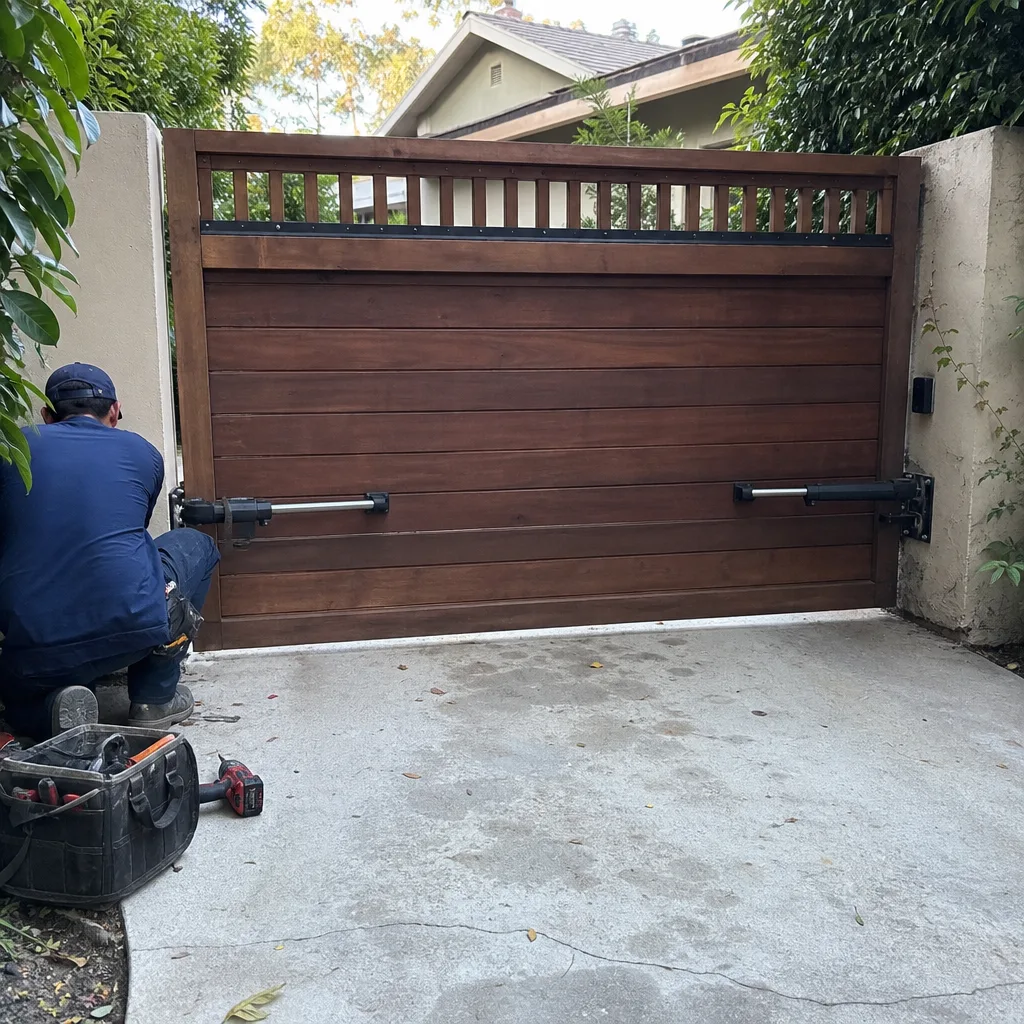 After
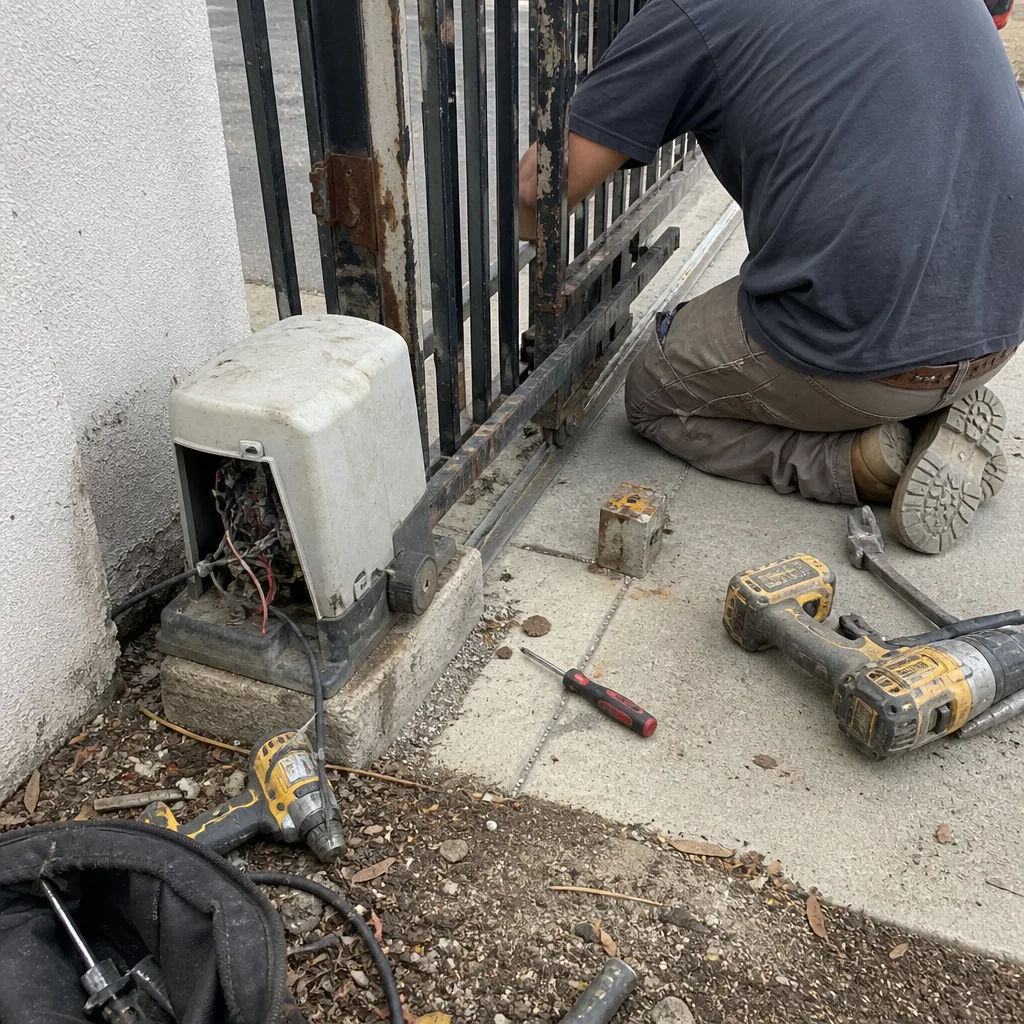 Before
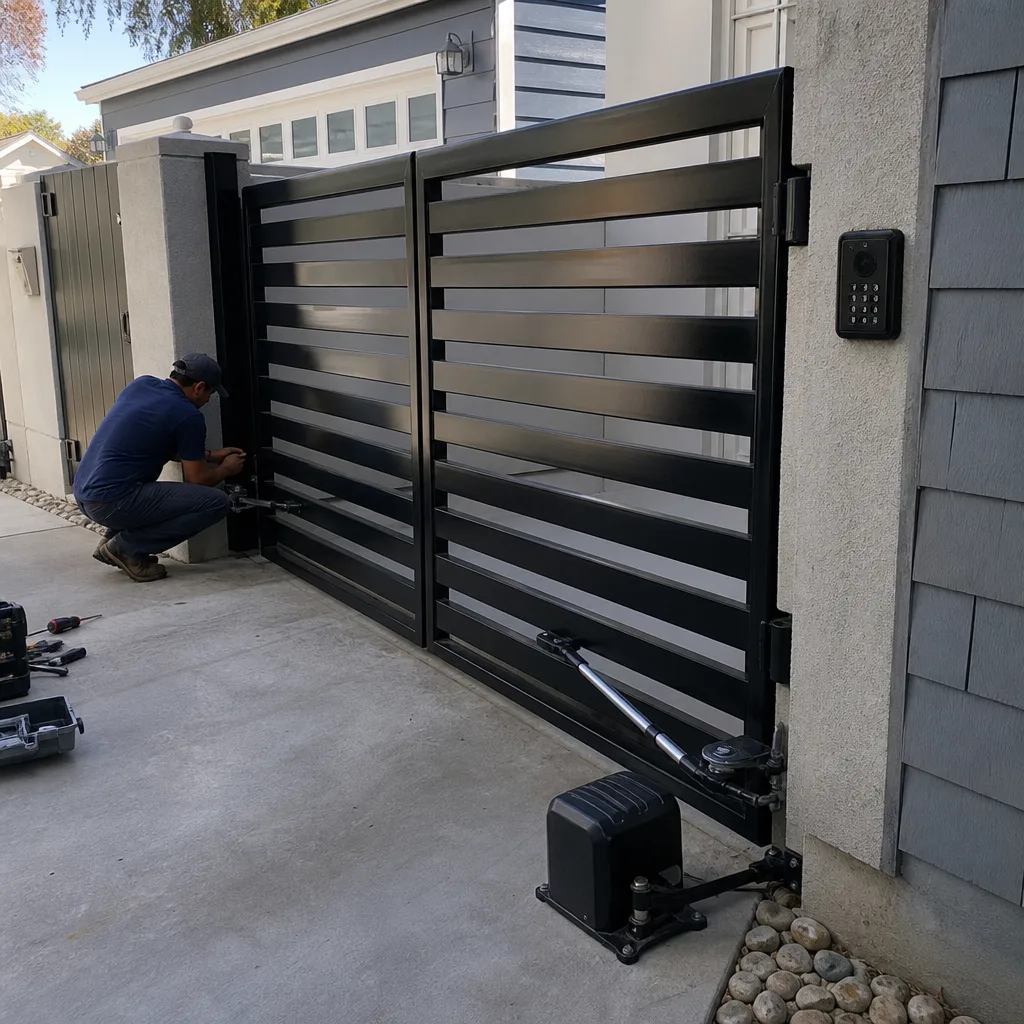 After
When to Call a Professional
Some gate work is genuinely do-it-yourself: testing the manual release, clearing debris from a slide gate track, checking battery connections. But the boundary matters. If the operator motor is seized, the control board is faulting, the gate is off its track, or the safety sensors will not align despite adjustment, call a specialist. The same applies if you have tested the manual release and it does not work. A seized release or a broken disengagement mechanism is not a DIY project; it is a repair that will require disassembly of the operator.
Hydraulic operators deserve particular respect. The fluid is under pressure, the components are heavy, and a failed piston or hose fitting can spray hydraulic fluid at force. If your FAAC or BFT piston is leaking or the gate will not hold position, that is a professional repair. The same caution applies to any gate operator with a high-tension spring or counterbalance. These components store mechanical energy, and releasing that energy incorrectly can cause serious injury.
Cambridge Gate Repair offers free estimates in San Diego for our Gate Repair services, electric gate repair, and installation. Call (833) 589-8195 and describe what you are seeing. We work on the gate you have, whether it’s a Linear slide operator, a Ghost Controls swing arm, a Viking box, or a DoorKing commercial unit. Diagnosed and fixed, not just replaced.
Frequently Asked Questions
Locate the manual release on your gate operator and disengage the motor, then push the gate open by hand. The manual release works without power on every operator type. If you do not know where the release is or cannot operate it, that is the moment you realize the preparation was not done. Call (833) 589-8195 for a gate specialist who can walk you through it or dispatch a repair.
Look on the operator housing itself, which on a slide gate is the metal box beside the gate track and on a swing gate is the arm, piston, or underground vault at the hinge point. The release is typically a T-handle, lever, key slot, or pull ring on that assembly. If you cannot identify your operator type, your operator brand, or the release location, a professional walkthrough takes minutes and eliminates the guesswork.
Battery backup collapses your dependence on grid power during a public safety power shutoff, which is exactly when you may need to evacuate. It is not required by San Diego building code for all residential gates, but for homes in high-fire-risk areas it is strongly recommended. If you have backup, load-test it annually. If you do not, make sure your manual release protocol is solid.
Twice a year, and at least once before wildfire season. That means disengaging the motor, opening and closing the gate by hand, and re-engaging. If the release is stiff, keyed, or hard to operate, address that now. A release that cannot be operated in under 60 seconds in calm conditions will not get faster under evacuation stress.
Yes, and in most evacuation scenarios you should. The gate’s job during an evacuation is to open and stay open so vehicles can move through it. Assign one person to handle the gate, open it fully, and leave it open. Securing the property becomes a secondary priority to getting everyone out safely.
Cost depends on the operator, the failure mode, and the parts involved, but expect straightforward repairs like sensor realignment or release replacement to run lower than operator or control board replacement, which can be several hundred to over a thousand dollars with parts and labor. The exact price is quoted and agreed before any work starts. Call (833) 589-8195 for a free estimate specific to your gate.
The Bottom Line
A gate stuck closed during a wildfire evacuation or stuck open after a break-in are not abstract risks in San Diego. They are events that have happened and will happen again. The difference between a bad day and a dangerous one is whether you prepared. Find your manual release and test it. Load-test your battery backup. Decide your fail configuration deliberately. Build the one-page reference card and post it where you will see it. And know who you will call when the gate stops doing what it should. Preparation is not complicated. It is just specific. Specificity is what works when the power is out, the wind is blowing, and the gate will not move.
Written by the team at Cambridge Gate Repair, serving San Diego since 2014.
If your gate has a problem you cannot diagnose, or you want a professional readiness check before the next Santa Ana event, call Cambridge Gate Repair home at (833) 589-8195 for a free estimate. We repair what you have, from a stuck swing gate to a failed electric operator.