
Last updated October 30, 2026
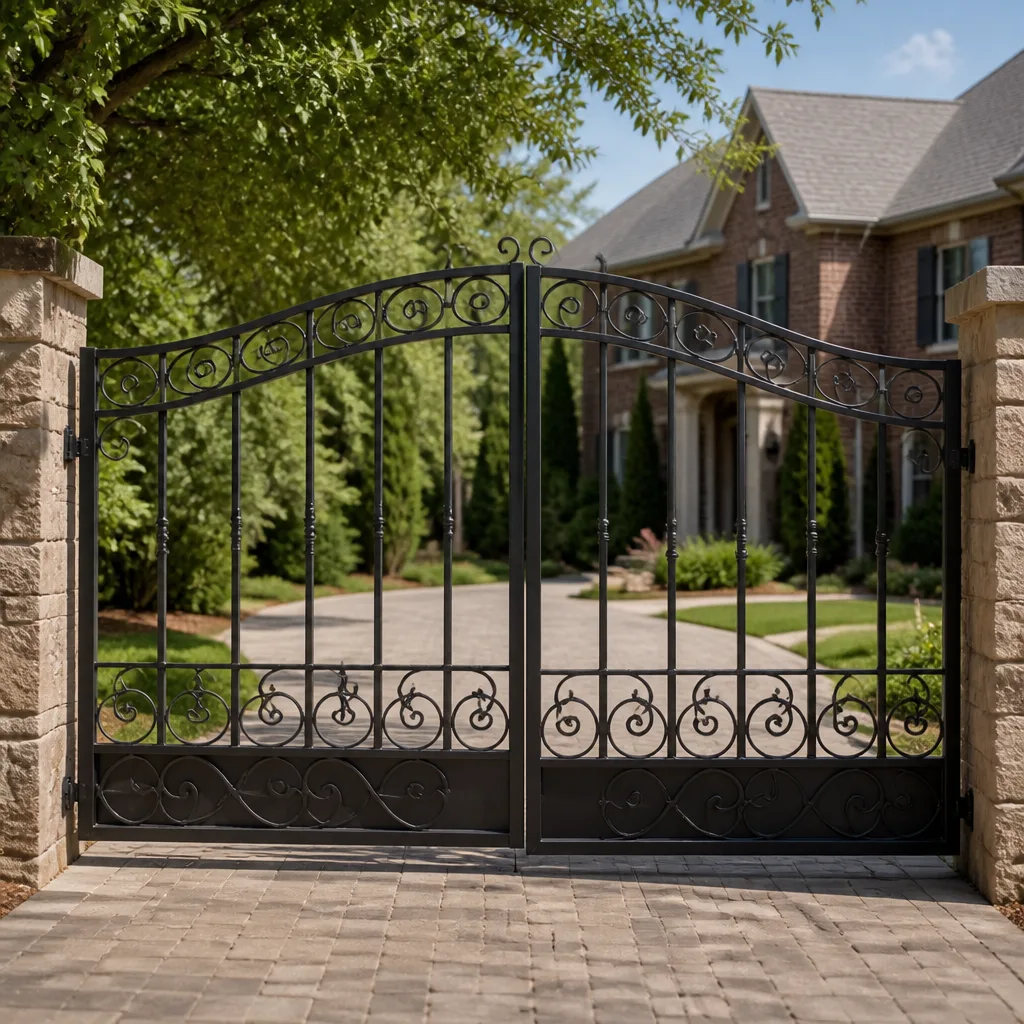 Wrought iron
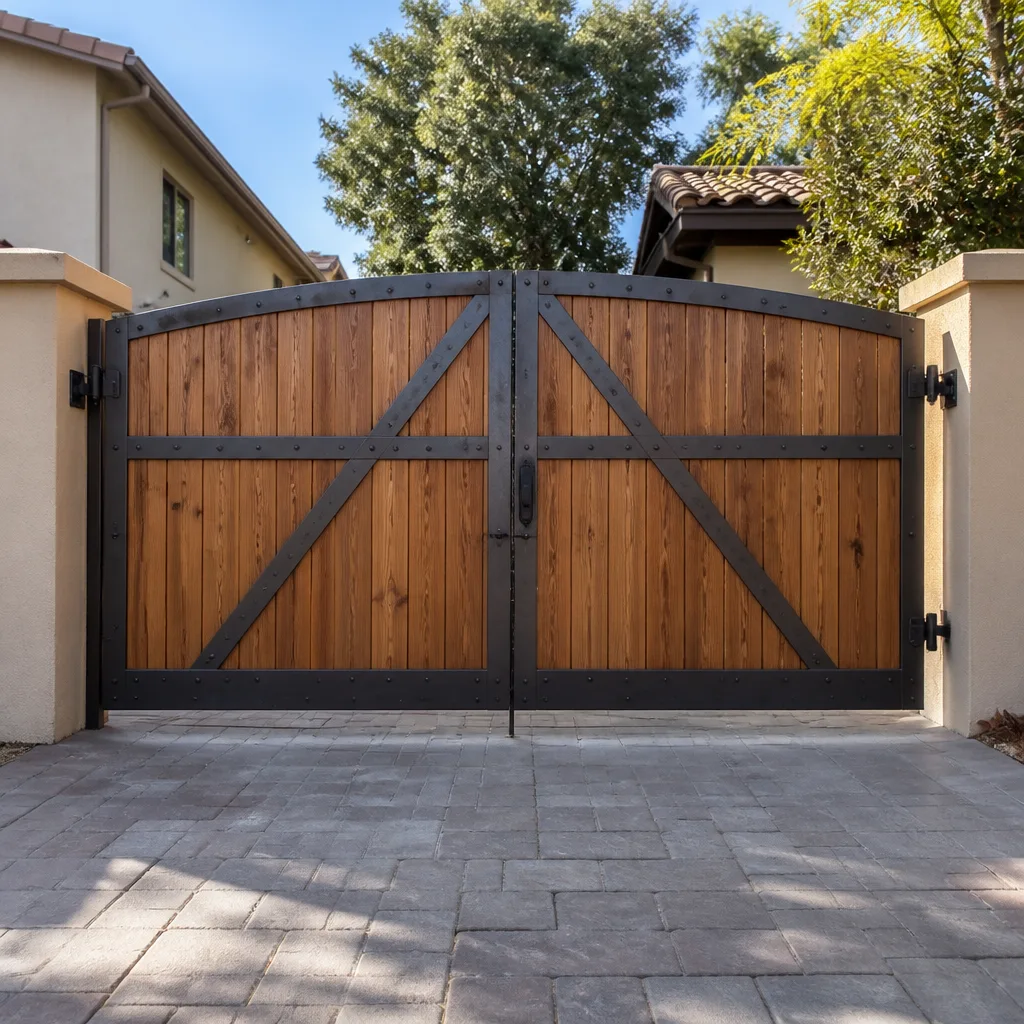 Wood & steel frame
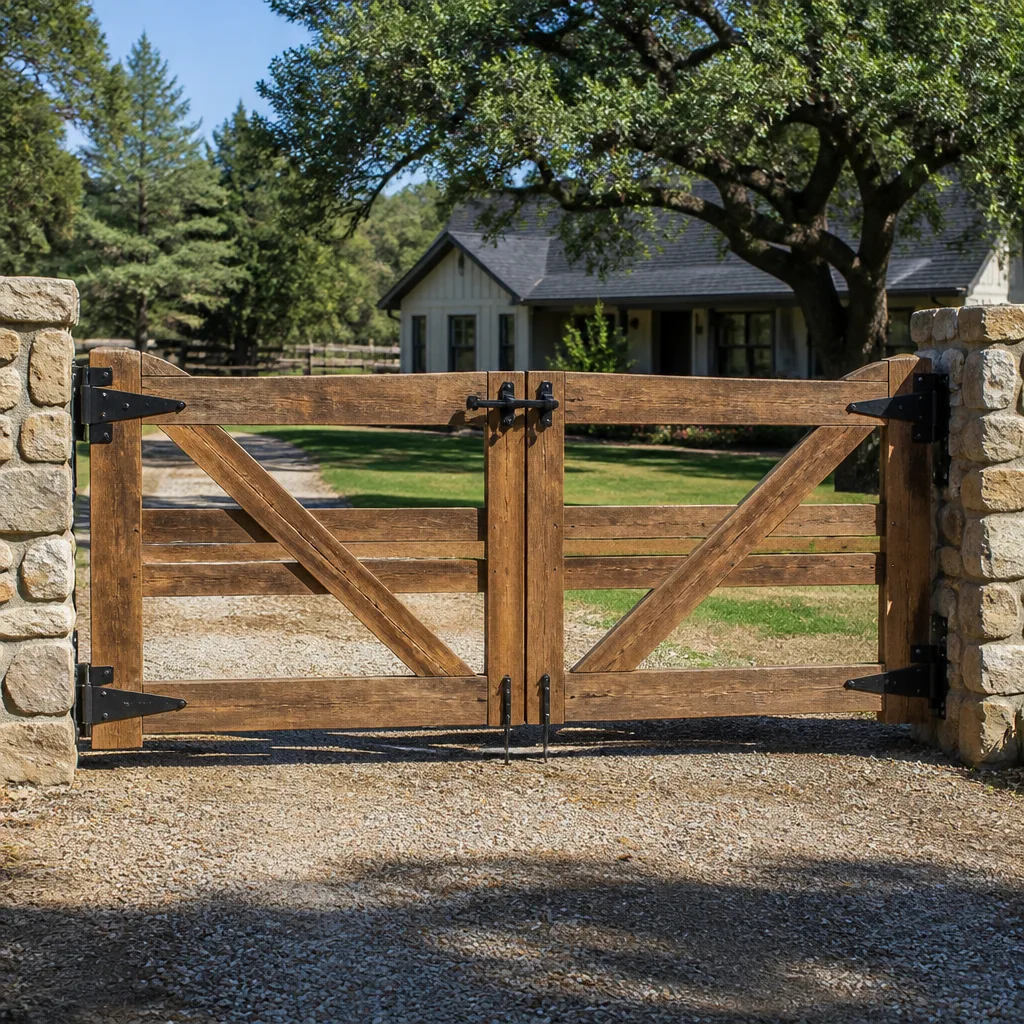 Farm & ranch
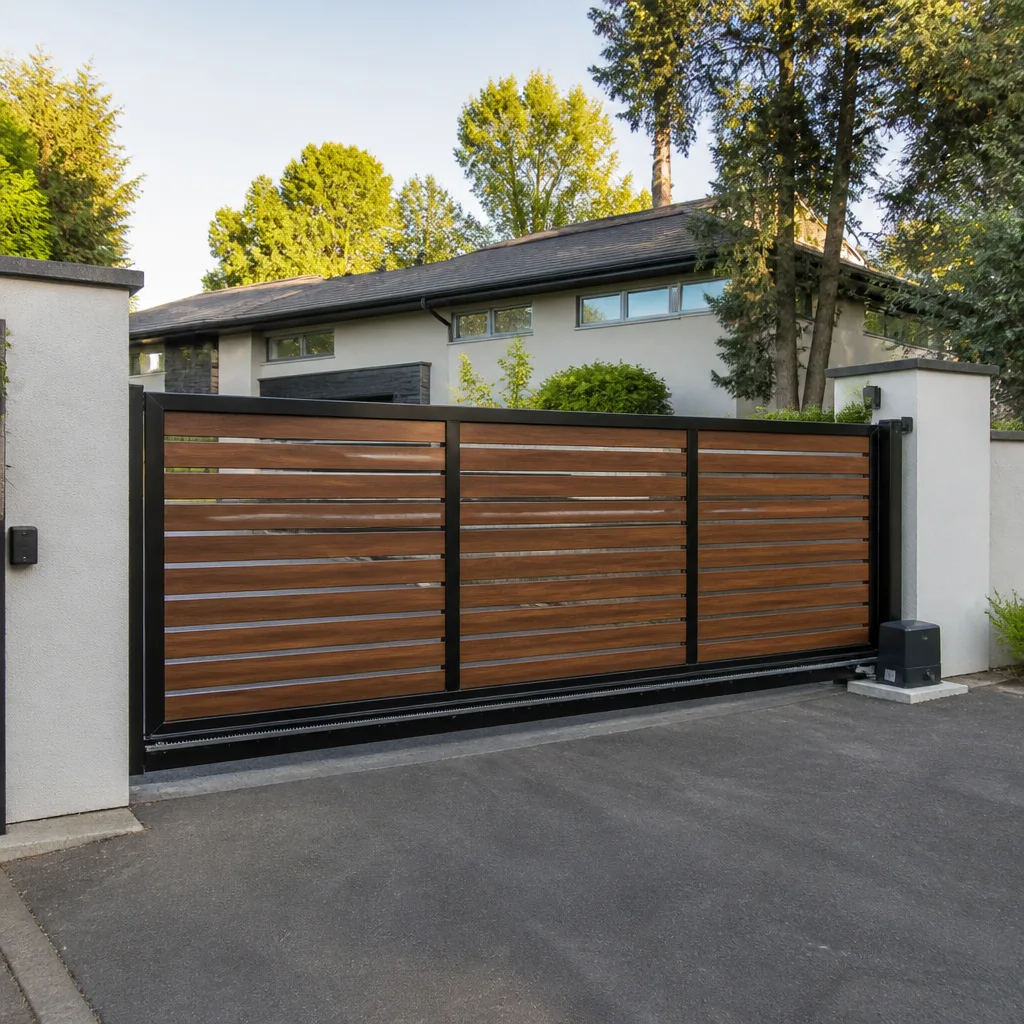 Sliding driveway gates
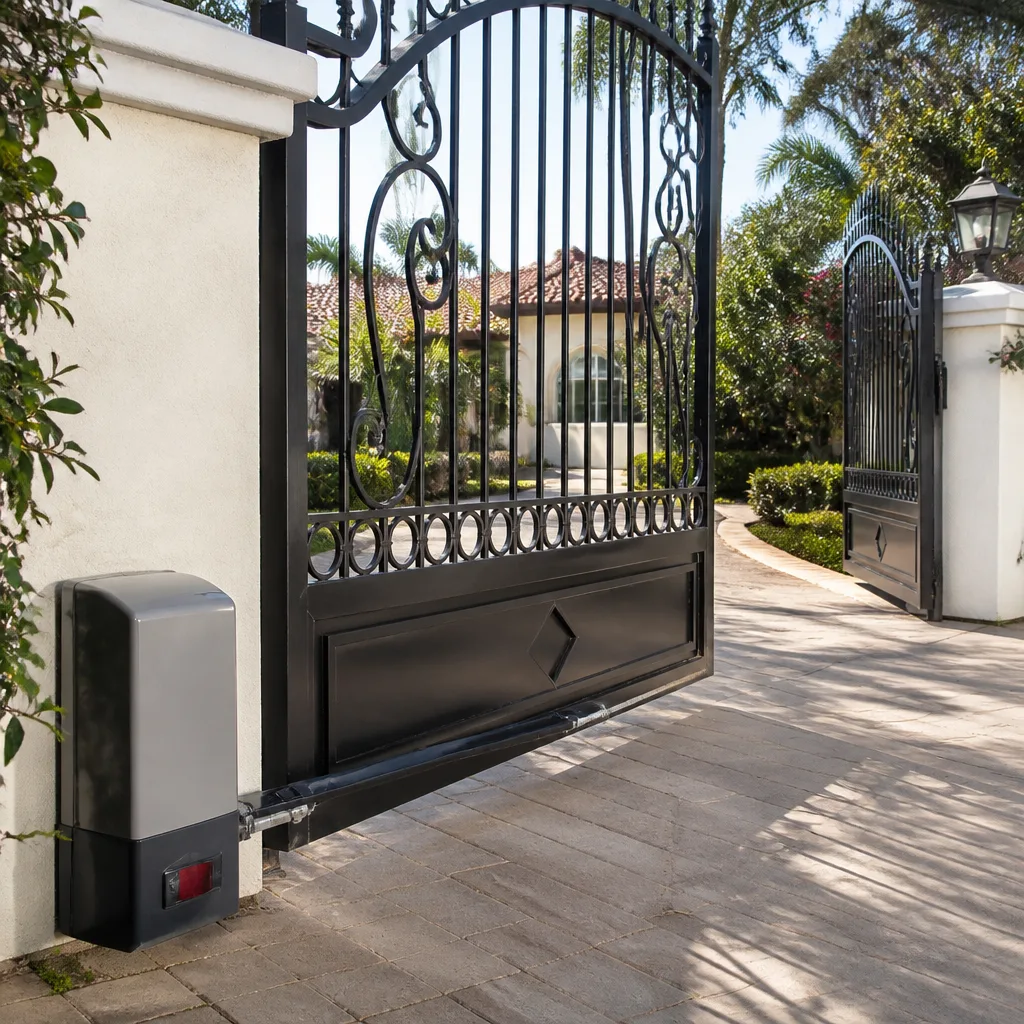 LiftMaster operators
Free on-site gate assessment - hinges, posts, and your LiftMaster or Nice gate operator checked before anything is quoted
The assessment is free and the quote is the invoice.
Get your free estimateDIY vs Professional Gate Repair: The San Diego Homeowner’s Decision Guide
The gate repairs that look complicated, like adjusting limit switches or realigning photo eyes, are often owner-doable with a manual and 30 minutes of patience. The ones that look simple, like replacing a hinge on a 400-pound steel swing gate, can break a wrist or crush a car frame if the gate loses support mid-repair. This guide walks through the specific failure types, the safety codes that govern automated gates in San Diego, and the honest math on when a Saturday DIY project saves money versus when it quietly becomes a $1,400 professional correction.
Quick Answer
DIY gate repair in San Diego is genuinely reasonable for about 20% of common failures: cleaning and aligning photo eyes, replacing remote batteries, tightening loose hardware, and lubricating hinges, rollers, and chains. It is a bad idea for anything involving torsion springs, heavy gate leaf removal, control board wiring, or safety sensor replacement on UL 325 listed automatic operators, where a mistake can cause serious injury or leave the gate non-compliant with California code.
Styles & brands we work with
Table of Contents
- The Repair Matrix: What’s DIY, What’s Not, and Why
- The Real Safety Risks on Automated Gates
- Tools and Knowledge for Legitimate DIY Gate Work
- How San Diego’s Climate Changes the DIY Equation
- California Code and UL 325: Where DIY Legally Stops
- How DIY Mistakes Compound the Repair Cost
- Brand-Specific Repairs: What Is Reasonable on Your Operator
- Common Mistakes to Avoid
- When to Call a Professional
- Frequently Asked Questions
The Repair Matrix: What’s DIY, What’s Not, and Why
Most gate failure calls we see in San Diego fall into one of three categories. The first is mechanical wear: hinges sagging, wheels wearing flat spots, chains stretching, posts leaning. The second is electrical: control boards losing programming, photo eyes misaligned, loop detectors failing to sense a car. The third is structural: cracked welds, rotted post footings, bent frames.
Here’s the honest breakdown:
- Safe and reasonable for a homeowner: Lubricating rollers, hinges, and chains. Tightening loose bolts on hinge brackets. Replacing remote batteries and reprogramming a basic remote if the manual is available. Cleaning photo eye lenses with a soft cloth. Trimming vegetation that’s blocking an optical sensor. Replacing a worn gate wheel if the gate can be safely supported and the wheel is bolt-on, not welded.
- Borderline, depends on the homeowner’s tools and judgment: Adjusting limit switches on an opener. Replacing a Mighty Mule or Ghost Controls remote receiver. Straightening a minor post lean with a hydraulic jack, provided the post footing is sound. Re-hanging a gate leaf under 150 pounds with proper blocking and a helper.
- Requires a technician: Replacing torsion springs on cantilever gates. Anything that involves removing a leaf heavier than 150 pounds from its hinges. Control board replacement on a LiftMaster, FAAC, or BFT operator. Loop detector installation or diagnosis. Rewiring a 120V feed to an opener. Welding cracks in steel or aluminum frames. Any repair that requires resetting the operator’s entrapment protection and re-testing it against UL 325 standards.
The dividing line is not skill, it’s consequence. A misaligned sensor means the gate doesn’t close. A dropped gate leaf means an ambulance ride. San Diego neighborhoods with narrow driveways and street parking, think North Park or Clairemont, leave very little room to safely block a falling gate with a car or ladder. The margin for error on a 300-pound leaf is zero.
The Real Safety Risks on Automated Gates
Automated gate operators store energy. A piston-style operator, the kind on most San Diego swing gates, is under hydraulic or screw tension even when the gate is fully closed. Disconnecting one incorrectly releases that tension instantly. The gate can swing free, fall, or the operator arm itself can become a projectile under the right failure.
Three specific hazards make automated gate work a poor DIY candidate:
- Stored mechanical energy: Operators from FAAC and BFT, common on higher-end San Diego properties in Rancho Santa Fe and La Jolla, use internal pistons that stay loaded even with power off. Removing an actuator arm without releasing pressure in the correct sequence can snap a finger or wrist.
- Entrapment zones: UL 325, the federal safety standard for automated gate operators, defines specific entrapment areas between the moving gate and fixed objects. The force required to kill a child or small adult is lower than what most people assume. A properly installed operator must reverse or stop within a set force threshold. When an owner adjusts a limit switch too far, the gate can compress against a post with far more force than the standard allows, turning a routine close cycle into a pinching hazard.
- 120V power and low-voltage control wiring: The operator motor runs on household current. The control board, photo eyes, keypads, and loop detectors run on low voltage, usually 24V. A homeowner who assumes the whole system is safe because “it’s just a gate opener” and starts probing wires on a live board can short a transformer, fry the board, or get a shock from the line side.
In our experience, the most dangerous thing a homeowner can do is attempt to “fix” a gate that stops mid-cycle by standing in the entrapment zone and manually pushing the leaf while the operator is still engaged. We have seen the aftermath of that mistake. It is the reason UL 325 compliance exists, and it is the reason we treat certain repairs as no-DIY zones, not because we want the work, but because the cost of being wrong is permanent. For urgent situations, see our Gate Repair Emergency Preparedness Guide for San Diego Homes.
Tools and Knowledge for Legitimate DIY Gate Work
If you are going to handle the owner-appropriate repairs, the right preparation matters more than the right attitude. Most San Diego garages are equipped for car maintenance, not gate maintenance, and the tool gap shows up fast.
What a prepared homeowner should have for safe DIY gate upkeep:
- Heavy-duty jack stands rated for at least 500 pounds, not automotive stands rated for the weight of the gate leaf, and a hydraulic bottle jack with a flat saddle. Blocking a gate off the ground is non-negotiable before touching hinges or wheels.
- A complete socket set in both SAE and metric. Gate hardware in San Diego runs mixed. Older steel gates often use standard bolts, newer aluminum ones metric. A 12-point socket on a rusty 14mm bolt strips it in seconds.
- A torque wrench for hinge and bracket bolts. Under-tightening lets the gate sag and bind. Over-tightening cracks aluminum castings and star-pattern weld plates.
- White lithium grease for chains and worm gear tracks, silicone spray for roller pins and hinge bushings. Do not use WD-40. It displaces the existing grease, then evaporates, leaving metal on metal.
- A non-contact voltage tester and a basic multimeter if any electrical diagnosis is planned, even on low-voltage control wiring.
- The manufacturer’s manual, downloaded from the specific brand page. Programming sequences differ between a LiftMaster LA400 swing operator and a FAAC 400, and no amount of YouTube confidence replaces the exact dip switch setting chart.
Knowledge matters as much as tools. Before touching any automated gate, know where the manual disconnect switch is, where the breaker feeding the operator is, and how to power the whole system down safely. That is the sequence we follow on every call in San Diego, from a small pedestrian gate in Kensington to a 24-foot sliding commercial gate in Miramar. Power down, lock out, then work.
How San Diego’s Climate Changes the DIY Equation
San Diego’s coastal environment is not hard on gates the way Phoenix heat or Seattle moisture is, but it leaves a specific fingerprint. Marine layer humidity works into unsealed steel from May through August, particularly in Point Loma, Ocean Beach, and the La Jolla hillside zones within a mile of the water. Salt air accelerates rust on gate hinges, operator brackets, and chain drives. It also corrodes wire terminals inside control boxes that look sealed but breathe through small vents.
What that means for the DIY owner:
- Rust seized hinge bolts are the most common “simple” repair that goes wrong. A homeowner hits a corroded 5/8-inch hinge bolt with an impact wrench, shears the head off, and now the gate is supported by one hinge and the job has become urgent. Kroil or PB Blaster and 24 hours of soaking beats force, every time.
- Operators that live near the coast fail at the electrical connections before the mechanical parts. A LiftMaster opener in Del Mar with green corrosion on the control board terminals needs more than a cleaning; it needs the terminal condition assessed for whether the board itself is compromised. This is where DIY diagnosis usually reaches its ceiling.
- Fading and surface oxidation on aluminum gates is cosmetic, but UV exposure in inland areas like Santee and El Cajon dries out the plastic housings on photo eyes and keypads, making them brittle. Replacing a photo eye that shatters during “gentle” removal is an avoidable $120 mistake.
The realistic take: San Diego’s climate rarely kills gates outright. It degrades connections, seizes hardware, and demands more patience than inland repairs. Beating the weather with brute force is the shortest path to a larger professional repair bill.
California Code and UL 325: Where DIY Legally Stops
California electrical and residential code draws a line that most homeowners do not know exists until a repair goes wrong or a gate hurts someone. That line is real, and it matters.
The key restrictions for San Diego homeowners:
- Permitted electrical work: Running a new 120V circuit to power a gate opener is electrical work that requires a permit and, in many cases, a licensed electrician. The gate operator installation itself can typically be done by a gate specialist, but the line-voltage feed from the panel to the operator is regulated. A homeowner who runs their own UF cable 150 feet to a new gate in a Rancho Santa Fe driveway without a permit is creating a liability problem that insurance can disclaim after an incident.
- UL 325 compliance testing: UL 325 is a safety standard, not a code, but California references it and local San Diego permitting offices expect gate installations to meet it. The standard requires photo eyes, edge sensors, or both, depending on the gate type and entrapment risk. Repairs that alter force settings, replace a control board, or change the travel limits require re-testing the entrapment protection to verify it still meets the standard. Homeowners do not own the test equipment. Professionals do.
- Structural post work: In San Diego, a sagging gate post set in concrete that needs replacing may fall under structural work on a retaining wall or driveway entrance. The county looks at soil stability, particularly on hillside lots. If the post footings are close to a slope, a building inspector may want a set of plans, not a bag of Quikrete.
The legal reality is practical: a homeowner can perform minor repairs and maintenance without a permit. Once the work touches line voltage, structural footings, or the safety system’s compliance status, the law stops caring about your YouTube education.
How DIY Mistakes Compound the Repair Cost
The expensive part of a failed DIY attempt is rarely the original broken part. It is the secondary damage. Here is how a $60 hinge replacement on a San Diego swing gate becomes an $850 professional repair in one afternoon:
Step one: The homeowner removes both hinge bolts from a 250-pound gate leaf, assuming the gate will stay upright because “it’s still attached to the other side.” It does not. The leaf drops, bends the bottom hinge mount, torques the top hinge, and lands on the gate operator arm, snapping the internal piston rod.
Step two: Now the gate is off, the operator is damaged, and the homeowner cannot get a car out of the driveway. The professional call is no longer for a hinge replacement. It is for a hinge repair, a frame check, a possible hinge plate re-weld, and an operator replacement because the piston is not serviceable on that model.
For the repair, the owner is now paying for all of that, plus the original hinge. Five times the original quote, and that is before any urgency fee for the blocked driveway.
Another pattern we see regularly: a San Diego homeowner replaces a control board on a BFT sliding gate operator and wires the 24V terminals to the 120V input by misreading the diagram. The board fries instantly. The second board gets wired correctly, but the original problem, a shorted loop detector wire, returns three days later because the loop was the actual failure, not the board. The homeowner has now bought two boards and still needs the loop fixed. A technician would have diagnosed the loop in 20 minutes and bought one board, not two.
The compounding pattern is consistent: a failed attempt usually damages something else, and the eventual professional repair now has a larger scope and a smaller window of time because the gate is worse off than before.
Brand-Specific Repairs: What Is Reasonable on Your Operator
Not all gate openers are equally DIY-friendly, and the difference is in the design philosophy of the manufacturer. Knowing what you have and what it demands goes a long way.
Mighty Mule and Ghost Controls make the most homeowner-friendly operators on the market. The manuals are written for non-technical users. Limit adjustment is often a mechanical stop with clear adjustment bolts. Replacing a control board is often plug-and-play with a screwdriver and a photograph of the existing wiring. For these systems, a San Diego homeowner with the manual can realistically handle a sensor realignment, a remote reprogramming, and basic limit tweaks.
LiftMaster operators sit in the middle. They are reliable and well documented, but the control boards integrate safety sensor logic that must be reset and tested. The LA400 swing operator, which is on a lot of San Diego residential gates, requires the force and the limit to be learned in sequence after any change. Skip the sequence, and the gate slams or stops short. It is not difficult to do correctly, but it is less forgiving of a shortcut.
FAAC and BFT are European-engineered systems that dominate higher-end and commercial installations in San Diego. They are precision machines. A FAAC 400 or 750 uses hydraulic logic on some models, and the pressures, speeds, and deceleration ramps are set internally. The manuals assume a working knowledge of hydraulic and electromechanical gate automation. A homeowner who approaches a FAAC like a Mighty Mule will misdiagnose the problem and likely cause a second one. These are the systems where “the gate stopped working” has eleven possible causes and the one you guess first is usually wrong.
Our position is simple: we work on the gate you have. We repair LiftMaster operators, FAAC control boards, BFT pistons, and Mighty Mule receivers. But the brand matters when deciding whether the fix is a Saturday-morning task or a call to a gate specialist. The matrix in this guide exists because there is an honest answer for each brand, and it is not the same answer.
Common Mistakes to Avoid
- Removing both hinges at once. Even on a light pedestrian gate, removing both hinge brackets while the leaf is vertical means the leaf pivots or drops in a direction you did not plan. One hinge stays connected until the gate is properly blocked and supported.
- Lubricating with the spray can you have on hand. WD-40, blast lubricants, and graphite spray are all wrong for gate chains and rollers. WD-40 strips existing grease. Graphite attracts San Diego’s coastal moisture and turns into abrasive paste. White lithium or silicone, nothing else.
- Forcing a rusted bolt with an impact wrench. Coastal San Diego hardware seizes. Shearing a hinge bolt off inside a steel post turns a bearing replacement into a machine shop job. Soak the bolt for a day, then use a breaker bar with slow, steady force.
- Adjusting the force setting to compensate for a misaligned gate. When a gate starts binding and tripping the reverse safety, the wrong fix is increasing the operator’s force so it pushes through the bind. The gate now closes harder than UL 325 allows, and the original mechanical problem is still there, getting worse. This is the single most dangerous DIY mistake on automated swing gates.
- Treating photo eyes as optional. The photo eye is not a convenience feature. It is the primary entrapment sensor on most San Diego residential gates. Bypassing it because it keeps tripping, which we have seen homeowners do with a splice and some tape, means the gate will close on a person without stopping. That is a code violation, a safety hazard, and a legal liability.
- Digging post footings on a hillside lot without checking the slope. Parts of San Diego, including Mission Hills, Point Loma, and sections of La Mesa, have specific gradient rules for structural posts near slopes. A footing sized for flat ground may fail on a 30-degree grade during the winter rains. Engineering soil reports exist for this reason.
- Assuming the control board is the problem before testing the inputs. The control board sees inputs from remotes, keypads, loop detectors, photo eyes, and edge sensors. Most board replacements we do not need to do were preceded by an owner replacing a board that worked fine. Test the input chain first.
When to Call a Professional
Call a gate specialist when the repair involves stored mechanical energy, line voltage, UL 325 safety components, or structural post work. That covers most of the failures on automated gates in San Diego. If the gate leaf weighs more than 150 pounds and needs to come off its hinges, the risk equation shifts sharply. If the problem requires re-testing entrapment protection, it is not optional. And if the gate is a FAAC or BFT operator, the diagnosis alone often saves you the cost of the call. Cambridge Gate Repair offers free estimates in San Diego. Call (833) 589-8195 and we’ll tell you honestly whether the job is worth doing yourself.
Frequently Asked Questions
Yes, minor maintenance and non-structural repairs are legal for homeowners in San Diego without a permit, including lubrication, hardware tightening, photo eye cleaning, and basic remote reprogramming. Electrical work on line-voltage circuits and structural post replacement requires a permit and often a licensed professional, and safety system changes must maintain UL 325 compliance.
Professional gate repair in San Diego typically ranges from $175 to $550 for most residential service calls, with the most common fixes, like sensor alignment, limit adjustment, and hinge tightening, landing between $175 and $300. Control board replacement on a LiftMaster or BFT operator usually falls between $425 and $850 installed, depending on the model. Call (833) 589-8195 for an exact quote on your specific gate, estimates are free.
Replacing a gate opener yourself is physically possible for do-it-yourself-friendly brands like Mighty Mule and Ghost Controls, but the 120V power connection must be done by a licensed electrician in San Diego, and the completed installation must be tested against UL 325 entrapment standards. A homeowner can handle the mechanical mounting and low-voltage wiring, but full compliance requires professional verification.
The most dangerous part of gate repair is stored energy in the operator mechanism combined with the weight of the moving leaf. A piston-style FAAC or BFT actuator can release force unexpectedly, and a 300-pound gate leaf falling off a single hinge is a crush injury waiting to happen. The entrapment zone between a closing gate and a post is also a life-threatening pinch point when force settings are incorrect.
In San Diego’s climate, gate lubrication and hardware inspection should happen every six months for gates within three miles of the coast, where salt air corrodes hardware faster, and every twelve months for inland gates in areas like Santee, Poway, and El Cajon. The maintenance includes bearing lubrication, hinge bolt torque checks, photo eye cleaning, and wiring terminal inspection.
A gate specialist works on gates every day, knows the repair sequences for LiftMaster, FAAC, BFT, and Mighty Mule operators, and carries the diagnostic equipment to test entrapment sensors and loop detectors. For more guides & resources, explore our blog. A general handyman sees a gate as one of many jobs and often diagnoses by replacement, swapping parts until something works, which costs more than a proper diagnosis the first time.
The Bottom Line
The DIY decision on gate repair in San Diego comes down to one question: what is the specific failure, and what happens if the gate moves unexpectedly while you are working on it? For lubrication, cleaning, battery replacement, and hardware tightening, the answer is safe and worth doing yourself. For anything involving the operator’s stored energy, 120V power, UL 325 safety components, or a heavy leaf off its hinges, the math shifts. A wise San Diego homeowner respects that line, because crossing it saves a service call and can cost a hand, a car, or a code violation that insurance refuses to cover. When the job belongs to a technician, we are here. Cambridge Gate Repair works on the gate you have, no brand bias, no unnecessary replacement, just the repair. Call (833) 589-8195 for a free estimate, or learn more from our Cambridge Gate Repair home page.
For homeowners in North County, see our guides on Gate Repair in Rancho Santa Fe, Electric Gate Repair in Rancho Santa Fe, and Gate Installation in Rancho Santa Fe.
Written by the team at Cambridge Gate Repair, serving San Diego since 2014.
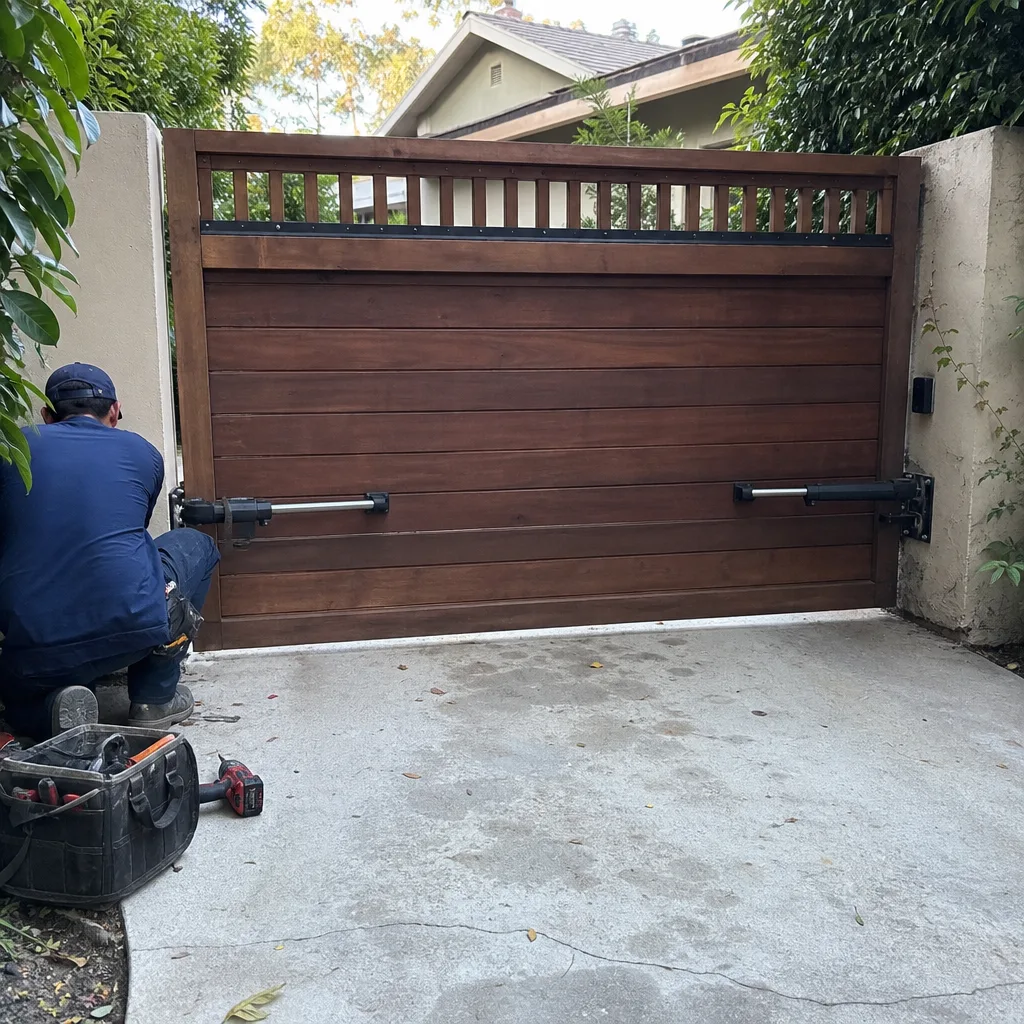
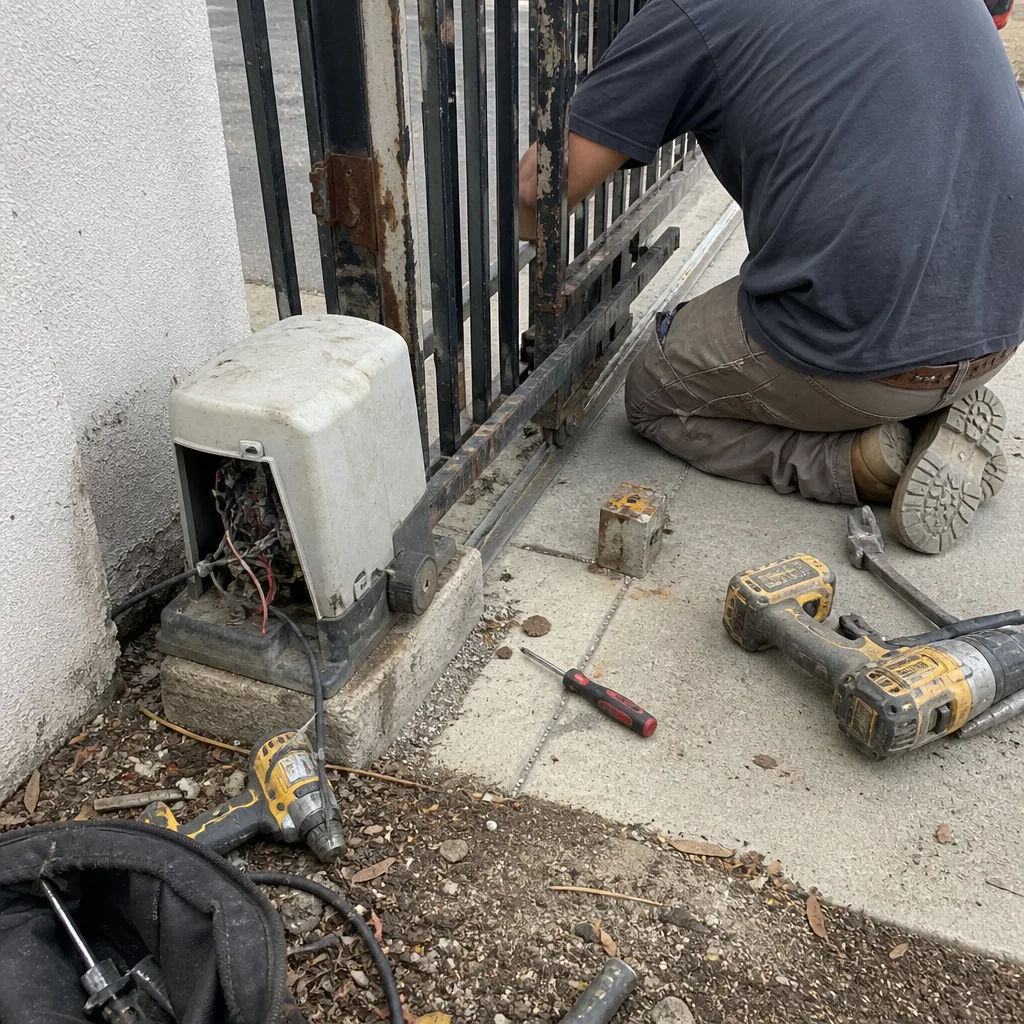
See the difference
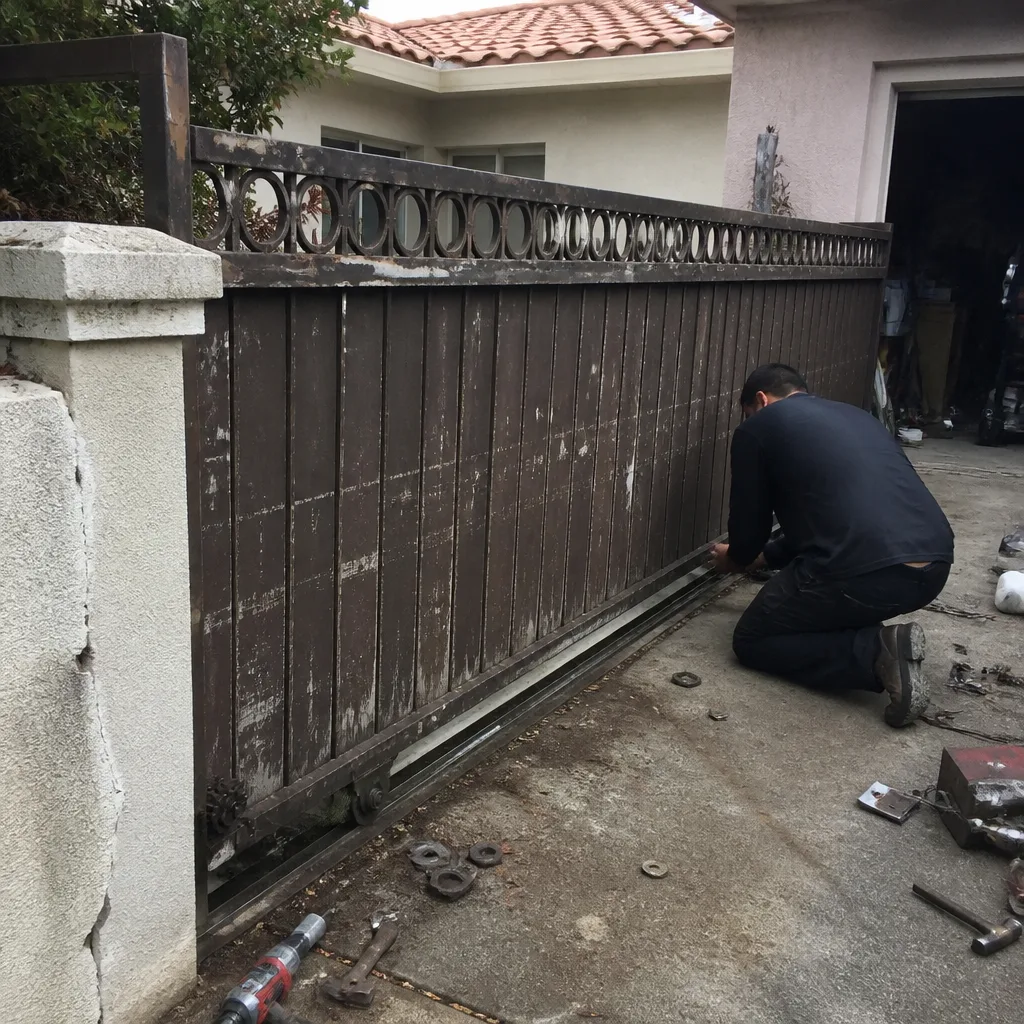 Before
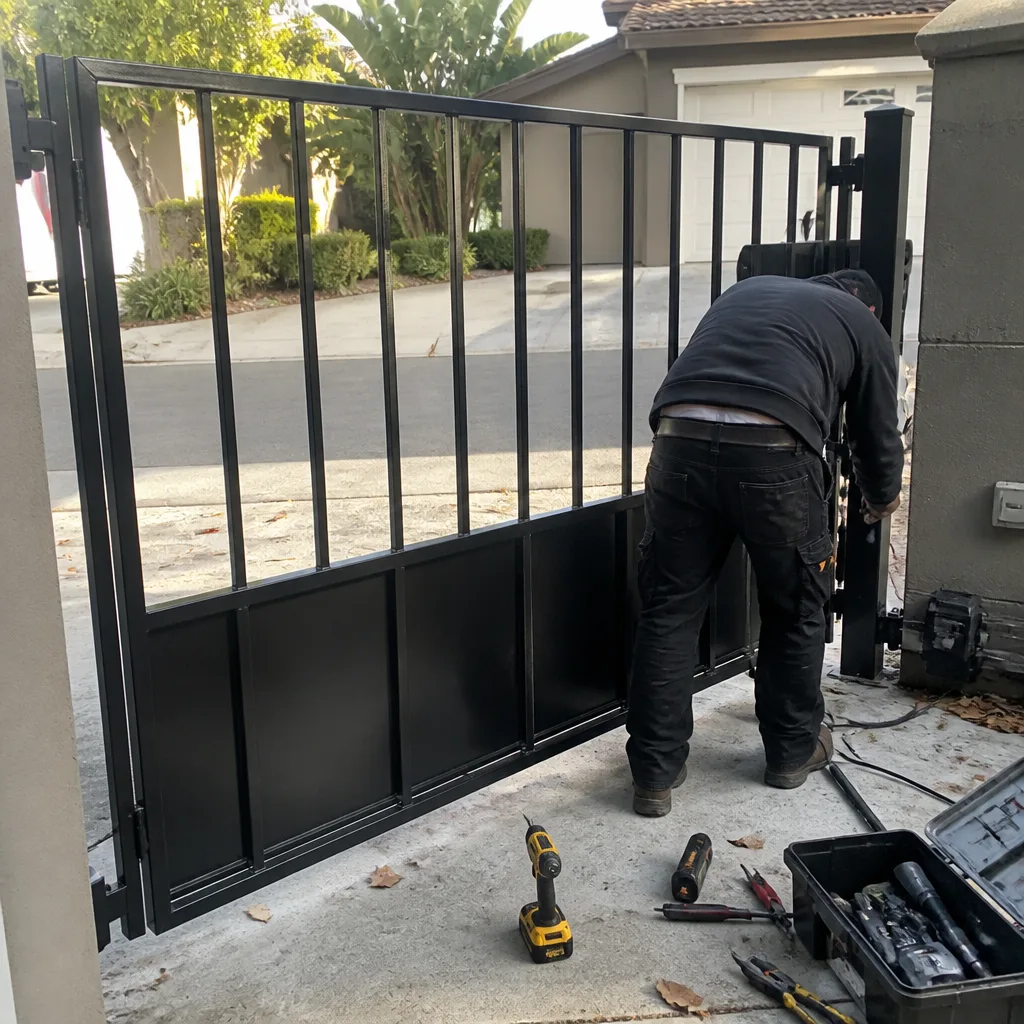 After
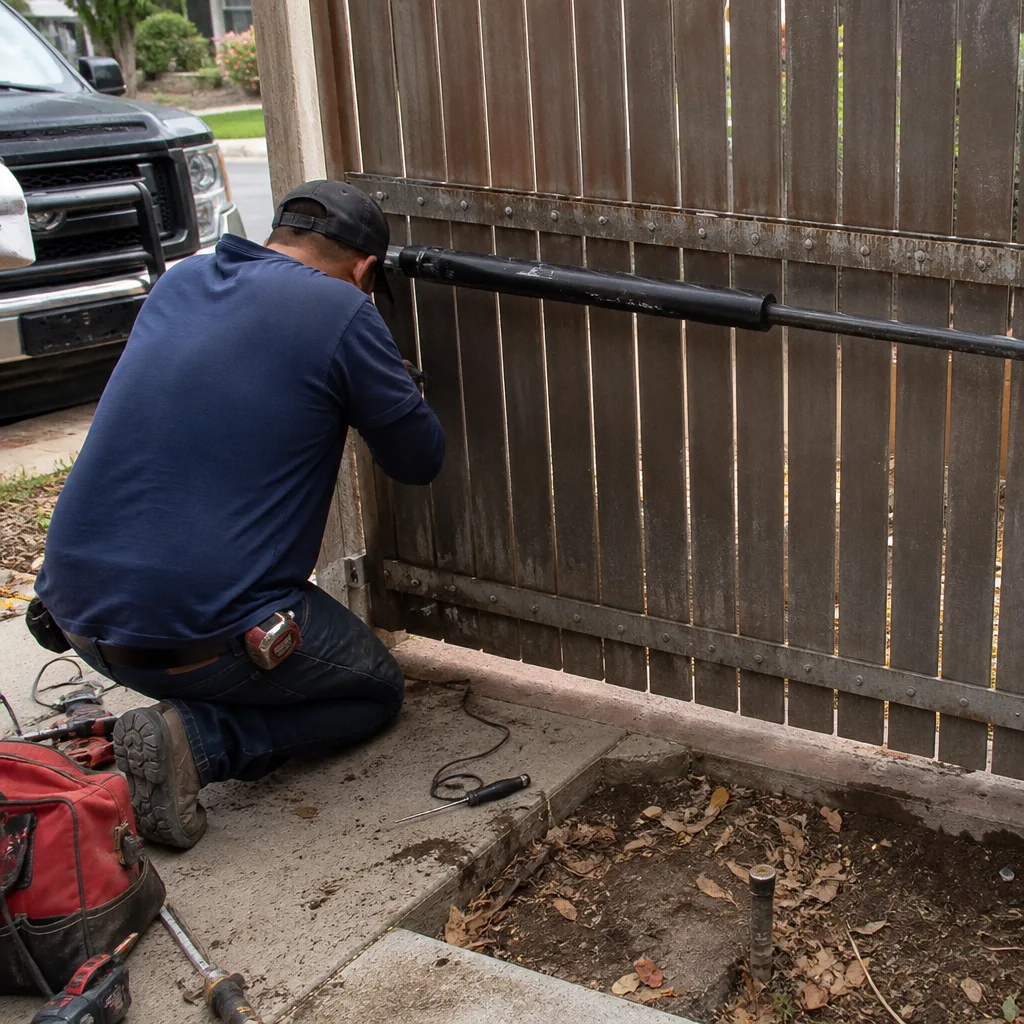 Before
 After
 Before
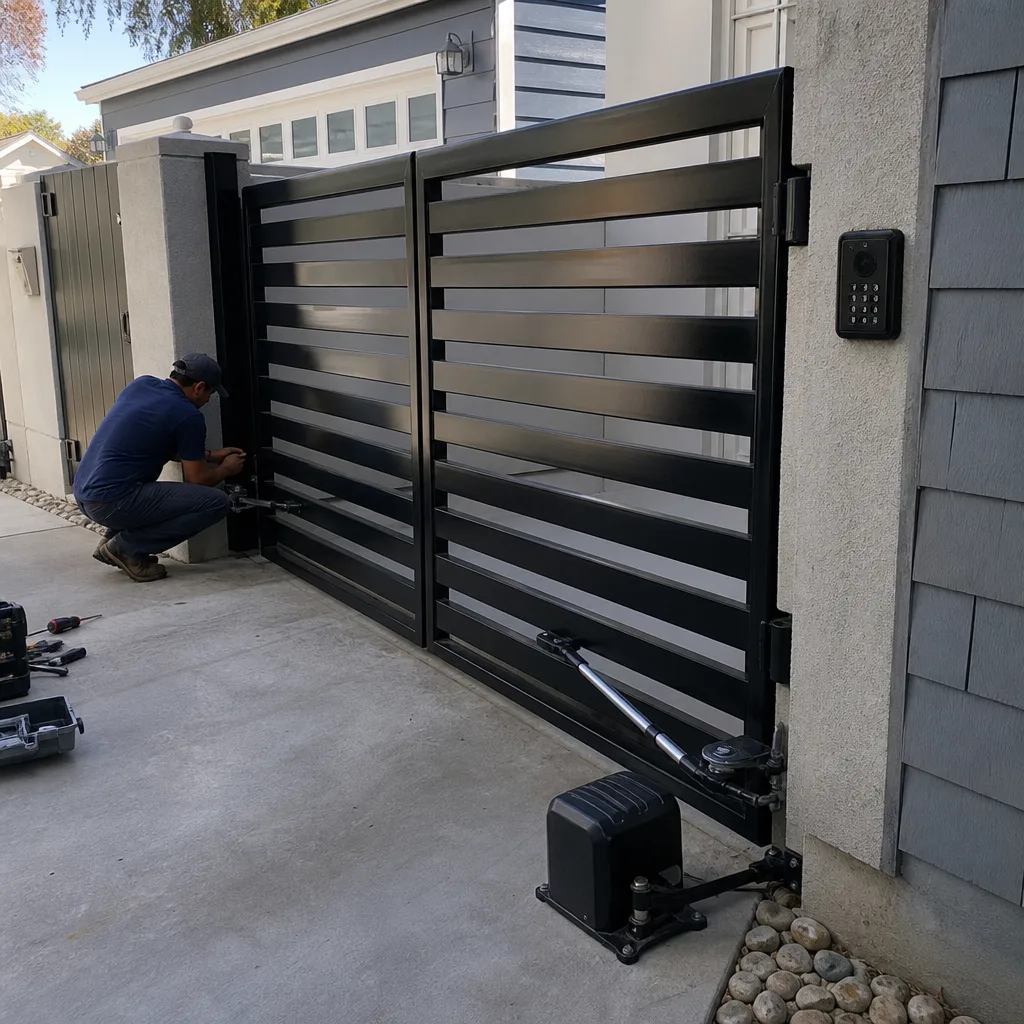 After