
Last updated October 30, 2026
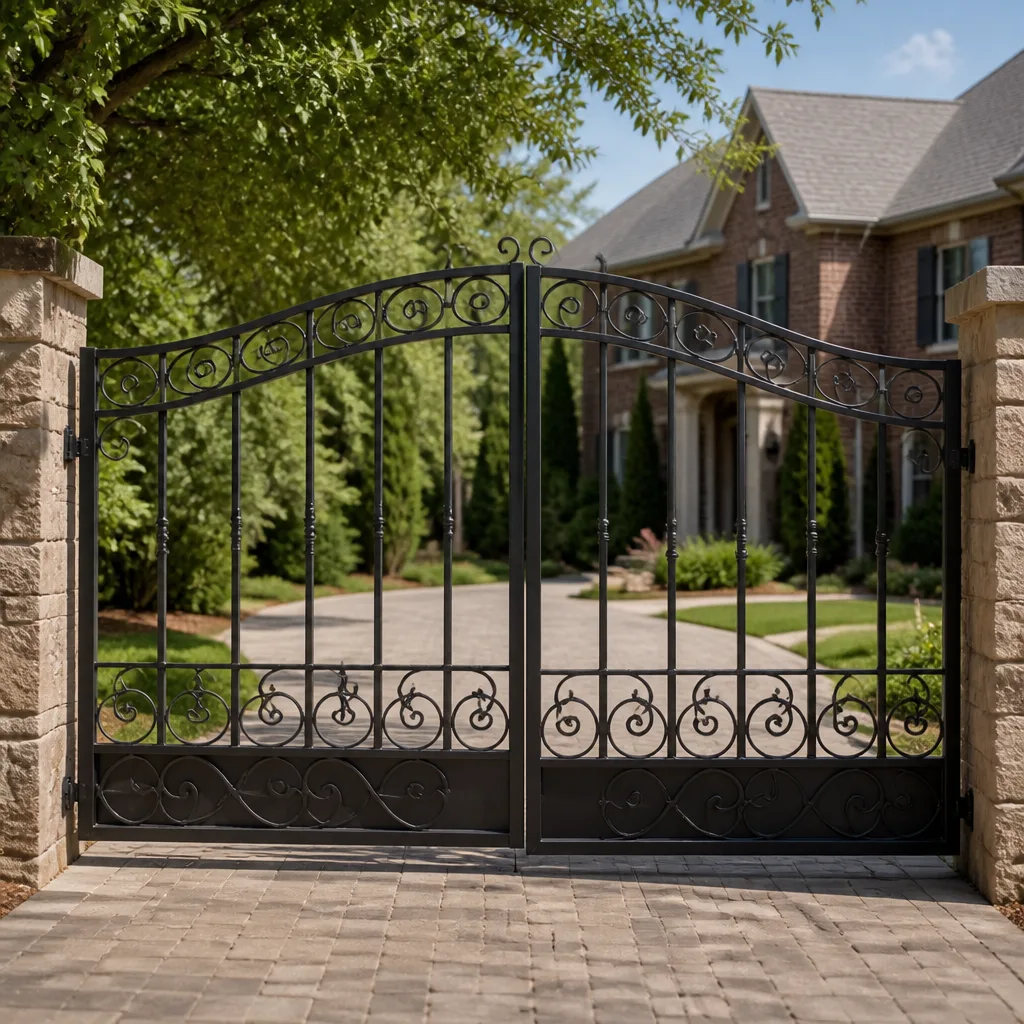 Wrought iron
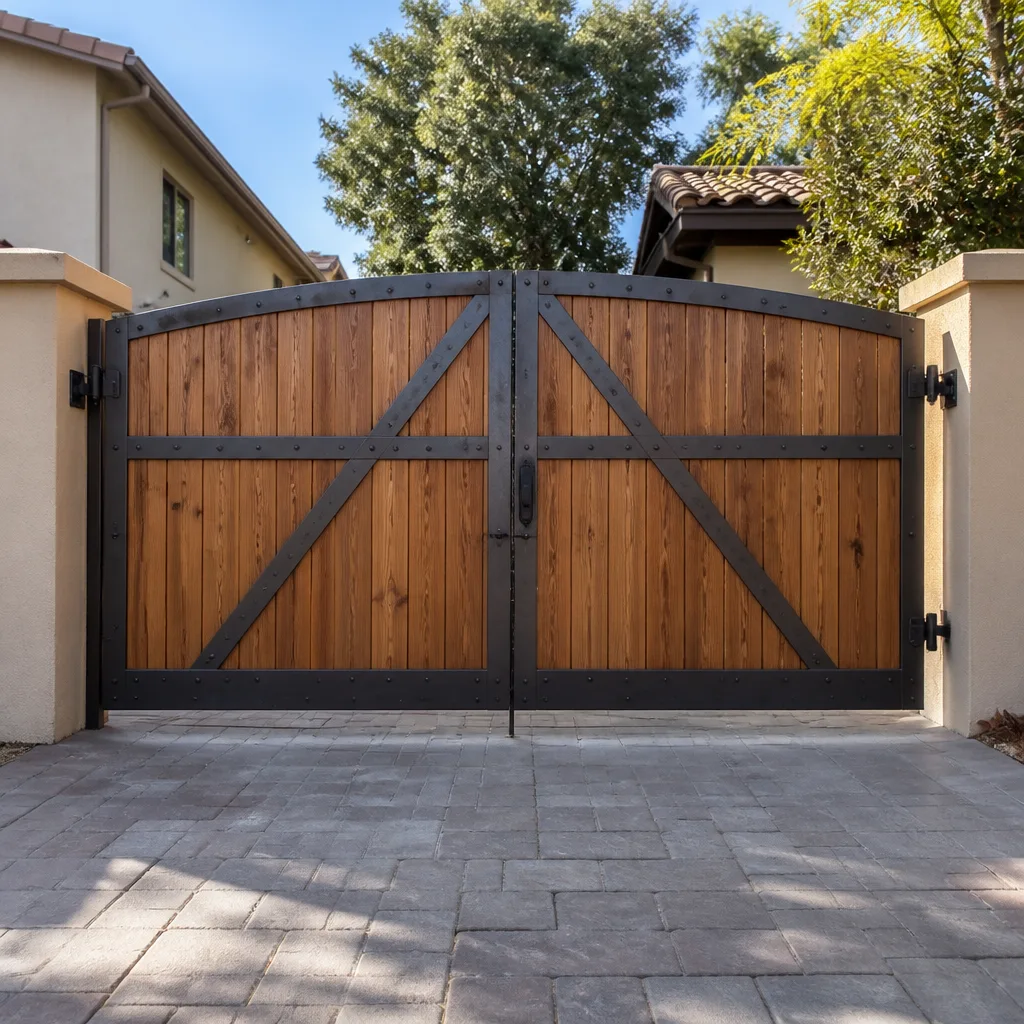 Wood & steel frame
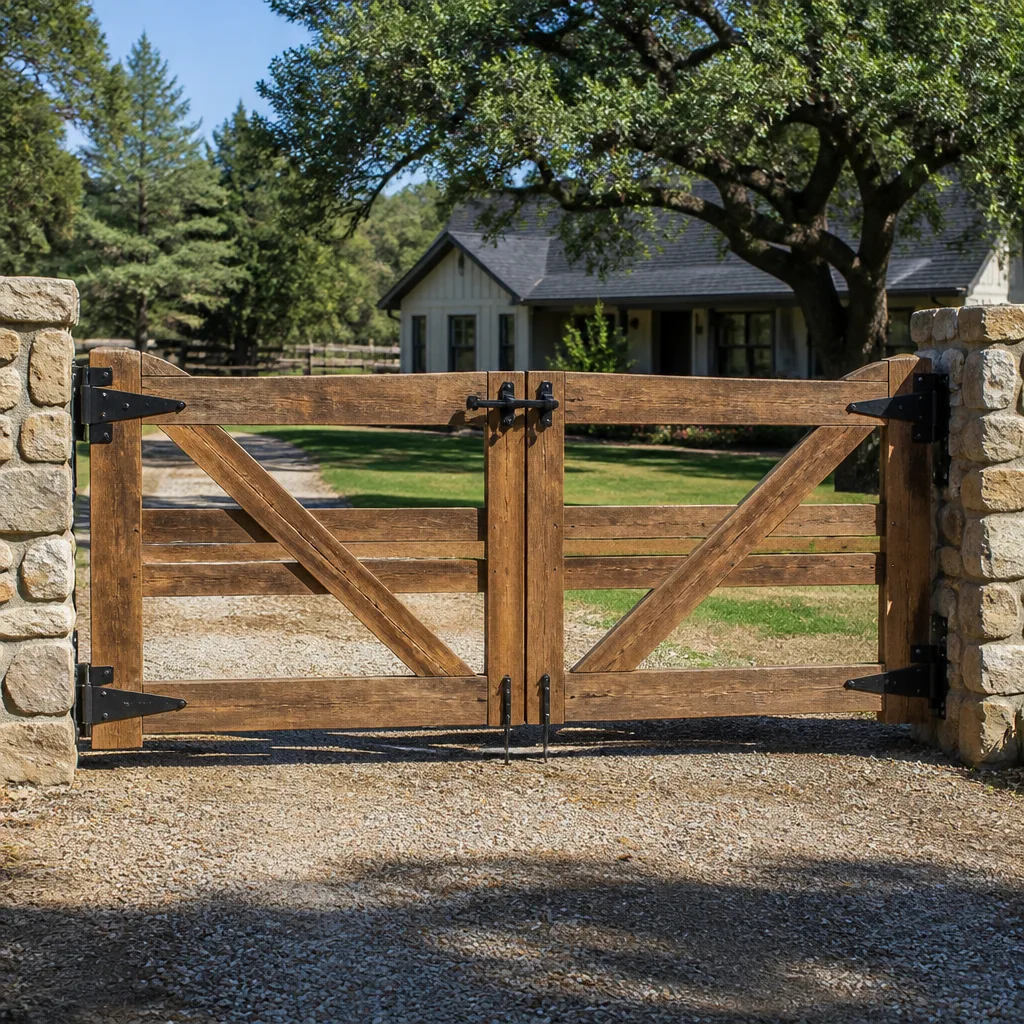 Farm & ranch
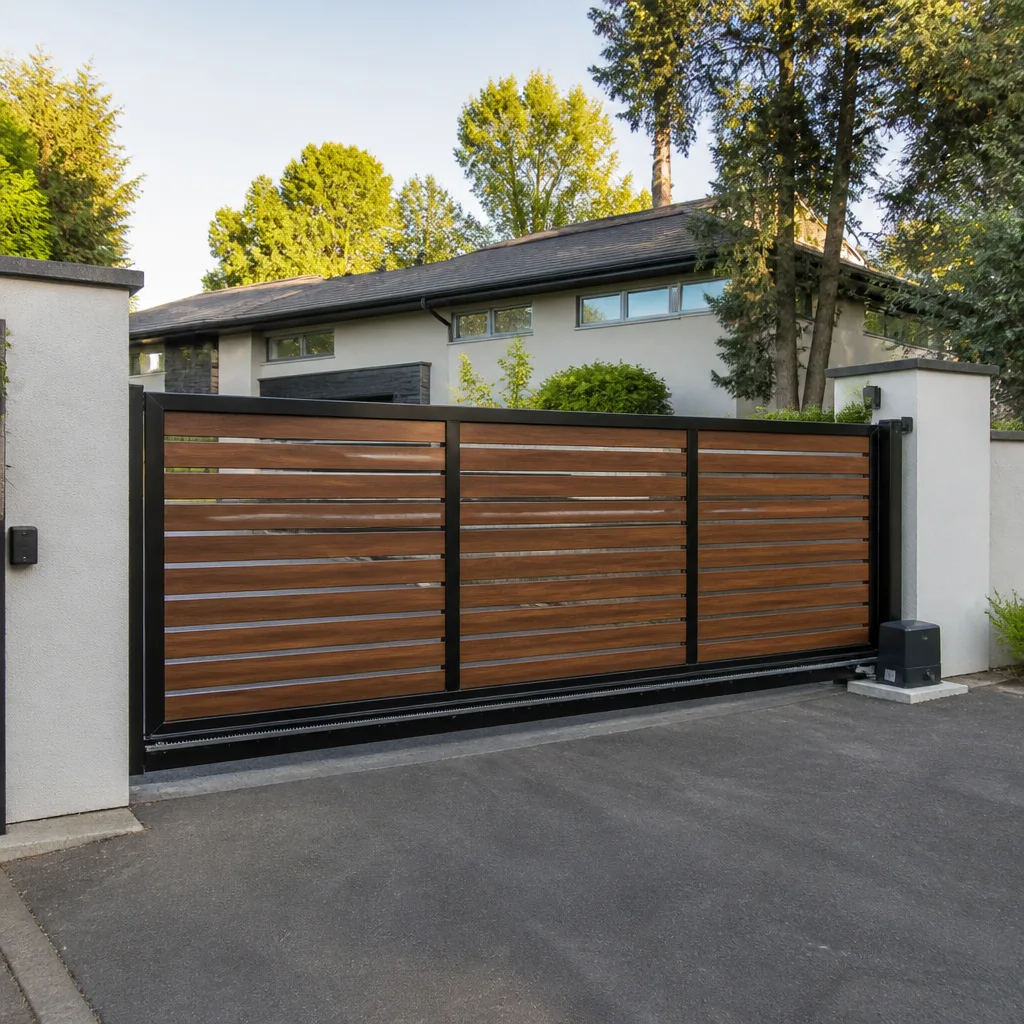 Sliding driveway gates
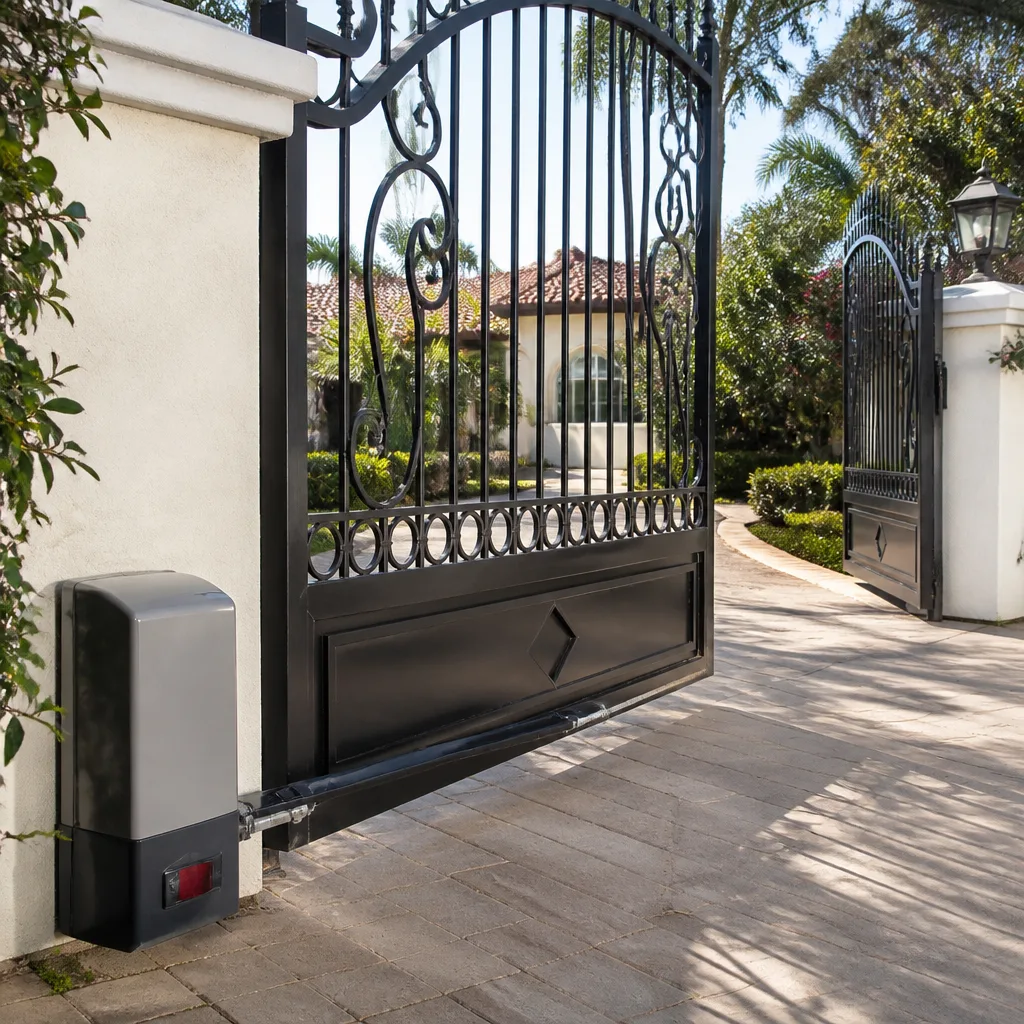 LiftMaster operators
Free on-site gate assessment - hinges, posts, and your LiftMaster or Nice gate operator checked before anything is quoted
The assessment is free and the quote is the invoice.
Get your free estimateSeasonal Gate Repair Care for San Diego: Year-Round Homeowner’s Guide
San Diego’s reputation for mild weather is, ironically, the reason so many gates here are in worse shape than gates in places with brutal winters. A homeowner in Minneapolis knows their gate took a beating from ice and snow. A homeowner in La Jolla looks at their gate on a 72-degree February afternoon and assumes everything is fine. But the same marine layer that keeps your roses blooming also keeps moisture pressed against your gate hinges for weeks at a time. The same offshore winds that make October evenings pleasant are the ones that send unlatched gates slamming into their posts. This complete gate repair guide for San Diego homeowners maps the area’s actual seasonal stress points onto a maintenance calendar you can follow year-round.
Styles & brands we work with
Quick Answer
Seasonal gate care in San Diego means preparing for Santa Ana winds each fall, addressing marine layer moisture on coastal properties each spring, protecting seals and wiring from summer UV exposure, and using the mild dry season between August and November for non-urgent repairs. Most gate failures here are predictable, not random. A four-season maintenance routine built around San Diego’s specific climate patterns prevents roughly 80% of the breakdowns we see. If your gate is already showing signs of wear, Cambridge Gate Repair offers free estimates throughout San Diego at (833) 589-8195.
Table of Contents
- Why San Diego’s Climate Is Harder on Gates Than It Looks
- Fall: Santa Ana Wind Season Is the Highest-Risk Period
- Winter and Spring: Marine Layer, Rain, and Coastal Moisture
- Summer: UV Damage, Heat Expansion, and Material Fatigue
- The San Diego Four-Season Gate Maintenance Calendar
- Using the Dry Season for Non-Urgent Repairs
- Electric Gate Components That Need Seasonal Attention
- What to Do Yourself vs. What to Leave to a Specialist
Why San Diego’s Climate Is Harder on Gates Than It Looks
San Diego gets about 10 to 12 inches of rain per year, almost all of it between November and March. The rest of the year is dry, sunny, and increasingly hot. That produces a stop-start corrosion cycle you don’t see in consistently wet or consistently dry climates. Metal components expand under summer heat, then contract during cool coastal nights. Powder coating and paint develop microscopic cracks that let salt air in along the coast or dry heat in further inland. A gate in Rancho Santa Fe experiences entirely different stresses than one in Point Loma, but both need attention.
Here’s what we’ve observed across thousands of service calls in San Diego County:
- Coastal gates fail most often from hinge corrosion and control board moisture, even when they look clean on the outside
- Inland gates in areas like Poway, Santee, and Rancho Bernardo fail most often from UV-degraded seals, dry-rotted wiring insulation, and heat-related operator shutdowns
- Canyon and hillside properties get the worst of both, plus stronger wind loads during Santa Ana events
- Gates that face west or south take significantly more UV exposure than north- or east-facing gates on the same street
The good news is that San Diego’s seasonal rhythm is highly predictable. You know when the winds will come. You know when the rain will come. You know when the heat will spike. That predictability lets you build a maintenance routine that prevents most problems before they start. The Cambridge Gate Repair home team has spent years mapping these local patterns to the specific mechanical and electrical failure modes they cause.
Fall: Santa Ana Wind Season Is the Highest-Risk Period
Santa Ana winds typically arrive between late September and early December, with peak intensity in October and November. These are offshore winds: dry, warm, and capable of sustained gusts over 50 mph in canyon areas. For a gate, this is the most dangerous weather San Diego produces all year. A gate that works fine in calm conditions can sustain serious damage in a single wind event if it isn’t prepared.
The primary risk is not the wind blowing the gate over. It’s the wind catching an unlatched or partially latched gate and slamming it against its stops, its operator arm, or the fence line. The forces involved are enormous: a 200-pound steel gate accelerating through a 40-degree arc in a 50 mph gust hits with enough energy to bend hinge brackets, snap operator arms, and crack weld points.
Here is what to inspect before Santa Ana season starts, ideally in late August or early September:
- Check the latch and strike plate alignment. A gate that doesn’t fully latch is a wind hazard. The latch should seat without shaking the gate. If you have to push or pull the gate to get it to latch, the hinges or post have shifted.
- Inspect hinge brackets and bolts. Look for rust stains running down from bolt heads, which indicate water ingress and weakening. Tighten any loose bolts, but don’t over-torque: a stripped hinge bolt is worse than a loose one.
- Test the operator’s manual release. On electric gates, know how to disconnect the operator so the gate can swing freely if a wind event is forecast. A locked operator arm in high winds can transmit full gate force directly into the operator gearbox, stripping internal gears.
- Clear the gate’s swing path. Anything in the gate’s path, whether a trash bin, a potted plant, or a parked car bumper, becomes a collision point when the wind takes the gate.
- Check the travel stops. Most swing gates have physical stops or a stop in the operator. If these are missing or worn, the wind can over-extend the gate past its design arc, damaging hinges and the operator alike.
In our experience on gate repair calls across San Diego, October and November produce the highest concentration of operator failures from wind-related damage. It’s not that operators are weak. It’s that a gate that gets slammed repeatedly eventually transfers that shock load into the operator’s internal gears and limit switches. Whether you have a LiftMaster operator or a FAAC hydraulic arm, the same wind physics applies. A well-maintained gate with a working latch is the single best protection against Santa Ana damage.
Winter and Spring: Marine Layer, Rain, and Coastal Moisture
San Diego’s winter is mild by any national standard, but it brings two things gates don’t like: episodic rain and the persistent marine layer. The marine layer is the bigger long-term problem because it’s invisible and constant. From roughly November through April, coastal neighborhoods from Imperial Beach up through Del Mar sit under damp air for hours or days at a time. The moisture condenses on metal surfaces, seeps into small gaps, and never quite dries out.
What that means for your gate:
- Steel hinges rust from the inside out. The visible rust is usually a lagging indicator. By the time you see orange staining, the internal bearing surfaces are already pitted. Hinges should be greased with a water-resistant grease, not oil, and checked for play at least twice a year.
- Control boards corrode faster near the coast. Electric gate control boards sit in sealed-ish enclosures, but the seals degrade. The salt-laden marine air accelerates corrosion on exposed solder joints and terminal connections. We see control board failures on coastal installations at roughly double the rate of inland ones, even on quality equipment from BFT or Viking.
- Rain exposes drainage problems. When rain does come, it finds its way into operator enclosures, under concrete piers, and into solenoid housings. Poor drainage around the gate posts is a recurring issue on San Diego properties where the grade wasn’t properly sloped at installation.
- Wood gates absorb moisture and swell. Warping, sticking, and hinge binding are common on wood gates after wet winters, especially when the gate is made of redwood or cedar that wasn’t properly sealed on all six faces.
If you live in a coastal community, check your gate’s metal components monthly from November through April. Look for rust, feel for hinge play, and if you have an electric operator, open the enclosure and look for white or green corrosion on terminals. If you’re inland, your risk profile is lower for moisture but higher for freeze-related expansion if you’re at elevation. Homes in areas like Alpine or Jamul can see overnight frost that coastal San Diego never gets, and that frost can create ice in small gaps that expands overnight and loosens hardware over time.
Summer: UV Damage, Heat Expansion, and Material Fatigue
San Diego summers are sunny, and the sun is the most relentless force your gate faces all year. UV radiation degrades rubber seals, plastic bushings, painted finishes, and wire insulation. Heat makes metal expand, which changes clearances. And for electric gates, the combination of high ambient temperature and direct sun on the operator enclosure can push internal electronics to their design limits.
The materials that degrade fastest in San Diego’s summer:
- Rubber seals and edge strips on driveway gates and pedestrian gates dry out, crack, and fall off. This is a safety issue on electric gates, where missing safety edges can disable the auto-reverse function. Replace cracked seals before they fail completely.
- Wiring insulation on exposed low-voltage runs becomes brittle after three to five summers of direct sun exposure. Brittle insulation cracks, moisture enters, and short circuits develop. UV-rated conduit or shielded cable is essential for new installations, and existing runs should be inspected each summer.
- Powder coat finishes chalk and fade, especially on dark colors. Once the coating degrades to the point where it’s worn through, the bare steel underneath starts corroding in the winter moisture cycle. Touch-up paint applied at the first sign of chalking is much cheaper than a full strip-and-recoat later.
- Plastic components like hinge bushings, limit switch housings, and operator covers get brittle and crack. A cracked operator cover lets dust and moisture in, accelerating internal damage.
Heat also has a mechanical effect. A steel gate that’s been in direct sun all day in El Cajon or Escondido when it’s 95 degrees outside will be measurably larger than it was at 6 a.m. The expansion shifts clearances between the gate and the frame, which means a gate that latches perfectly in the morning might bind in the afternoon. If you notice seasonal binding that improves after dark, that’s thermal expansion, and it points to hardware clearances that are set too tight.
For electric gates, summer heat is the enemy of capacitors, which are sensitive to high temperatures. Operators installed in full sun without shade or ventilation can overheat and shut down on their thermal overload protection, especially on long run cycles. A simple shade structure or a well-ventilated enclosure makes a real difference. We’ve repaired operators in San Diego that were installed in black metal enclosures facing full afternoon sun, and the fix was as much about repositioning and ventilation as it was about the component replacement.
The San Diego Four-Season Gate Maintenance Calendar
This calendar is tailored to San Diego’s actual climate rhythm. It’s not a generic national template. Use it as your annual reference.
Fall (September through November): Prepare for Wind
- Lubricate all hinges with water-resistant grease
- Verify latch alignment and strike plate security
- Inspect and tighten all hinge bolts, bracket bolts, and post hardware
- Test the operator’s manual release function
- Clear the full swing path of the gate
- Check travel stops and limit switches
Winter (December through February): Manage Moisture
- Inspect hinges for rust and play after each significant rain
- Open electric operator enclosures and check for condensation or corrosion
- Verify drainage around gate posts is flowing away from the foundation
- Check wood gates for swelling, warping, and paint adhesion
- Wipe down exposed metal surfaces after rain events if possible
- Listen for unusual squeaks or grinding when the gate operates
Spring (March through May): Repair and Restore
- Address any rust found during winter inspections with sanding and touch-up paint
- Replace cracked or missing rubber seals and safety edges
- Schedule any repair work identified in the previous two seasons
- Re-tension sagging chain drives and check belt tension on belt-driven operators
- Test all safety sensors and auto-reverse functions on electric gates
- Check gate alignment after winter moisture cycles have settled the posts
Summer (June through August): Mitigate Sun and Heat
- Inspect all exposed wiring for cracking or brittleness
- Apply UV protectant to plastic components if applicable
- Check operator enclosure ventilation and provide shade if possible
- Monitor for afternoon binding caused by thermal expansion
- Touch up paint chips and worn powder coat areas
- Verify that the gate latches correctly at the hottest part of the day
If you work through this calendar consistently, you’ll catch most issues before they become failures. And the best part is that most of these tasks take 5 to 15 minutes each. The alternative is waiting for a gate failure, then paying emergency repair rates and living with an unsecured property until someone can get there. If you’d rather hand this off entirely, Cambridge Gate Repair performs seasonal inspections across San Diego, and we’re happy to do a full evaluation of your gate’s condition at (833) 589-8195.
Using the Dry Season for Non-Urgent Repairs
San Diego’s dry season, roughly August through November before the rains arrive, is the ideal window for non-urgent gate work. The ground is dry, access is easy, and the weather is predictable. Here’s why this matters practically:
- Concrete and masonry work cures properly. Gate post repairs that involve new concrete footings need dry conditions. Setting a post in wet soil dramatically increases the risk of future settling and misalignment.
- Paint and powder coating adhere better. Surface preparation is easier when the metal is dry and warm. A gate painted in August will last measurably longer than one painted in February’s damp air.
- Electric components can be serviced without rain risk. Opening an operator enclosure, replacing a control board, or re-terminating wire connections while it’s actively raining is asking for trouble. Dry season makes the work cleaner and safer.
- Scheduling is more flexible. Emergency repair demand peaks in November and December when Santa Ana winds hit. If you schedule non-urgent work in September or October, you’re not competing with emergency callers, and you get your work done before the risk season starts.
- Ground moisture is at its lowest. If your gate has a loop detector for vehicle detection, this is the best time for loop replacement or sensitivity adjustments, since the ground conditions are most stable.
Property managers with multiple gates should think about this as a fleet maintenance window. Bring all gates up to spec during the dry months, and you’re far less likely to face a scramble during the fall wind season. It’s the same logic as winterizing a cabin in a cold climate before the freeze hits, just adapted to San Diego’s inverse seasonal risks. For gates in north San Diego County, our Gate Repair in Rancho Santa Fe team handles seasonal prep for both residential estates and commercial properties, and the dry season is when we recommend scheduling it.
Electric Gate Components That Need Seasonal Attention
Electric gates have more failure points than manual gates, and each of those failure points responds differently to San Diego’s seasonal shifts. Here’s what to watch on automated systems:
Control Boards
Most modern operators use solid-state control boards that are sensitive to moisture, heat, and power fluctuations. Coastal installations need corrosion checks. Inland installations need heat management. Board failures often start intermittently, with the gate occasionally not responding to a remote or keypad, then progress to complete failure.
Loop Detectors
The loop detectors buried in your driveway sense the presence of a vehicle and hold the gate open or trigger it to close. They fail more often in the damp winter and spring months, especially if the loop wire insulation was nicked during installation. Symptoms include the gate not staying open when a car is on the loop, or the gate thinking a vehicle is present when the driveway is empty.
Safety Sensors and Edges
Photo eyes and safety edges are the primary safety mechanisms on electric gates. They’re required on all automatic gate installations, and they need to function correctly every single time. Check photo eye alignment seasonally, especially after high winds or any impact to the gate. Clean the lenses, and verify the auto-reverse works by testing it with a small obstruction.
Operator Arms and Gearboxes
Whether the gate uses a linear actuator arm, an articulated arm, or a rack-and-pinion drive, the mechanical components of the operator need lubrication and inspection. Linear actuators need their internal limit switches checked. Gearboxes on slide gates need oil level verification. These are tasks that take a trained hand and the right tools.
If you’re running a LiftMaster, FAAC, BFT, or Linear operator, the seasonal maintenance checklist is similar across brands. The operator topology differs, but the physics of San Diego’s climate doesn’t. We work on all of these systems regularly, and the seasonal inspection protocol translates directly. For electric gate owners in the area, our Electric Gate Repair in Rancho Santa Fe page covers the specifics of automated system diagnostics, and we always begin with a full-season evaluation rather than jumping to a repair.
What to Do Yourself vs. What to Leave to a Specialist
Some seasonal maintenance is genuinely DIY-appropriate. Other tasks involve genuine risk or require specialized knowledge. Here’s the honest breakdown.
Safe to Do Yourself
- Lubricating hinges with the correct grease
- Checking and tightening visible bolts
- Cleaning photo eye lenses
- Wiping down metal surfaces and touching up paint
- Clearing the gate’s swing path
- Visual inspection of the operator enclosure for condensation
- Testing the auto-reverse function and safety features
Leave to a Specialist
- Anything involving gate springs or tension systems. Gate springs, particularly on cantilever slide gates and heavy swing gates, are under high tension. A failed spring release can cause serious injury. If you’re unsure whether a component is under tension, leave it alone and call a professional.
- Electrical troubleshooting beyond visual inspection. Control board diagnostics, capacitor testing, and any work involving live electrical connections should be done by someone who works on gate electronics regularly. A miswired control board can damage other components or create a shock hazard.
- Operator disassembly or repair. Gearboxes, motors, and actuator arms are not user-serviceable in a meaningful way. Attempting to open and repair a sealed operator usually voids any remaining warranty and often causes more damage.
- Hinge or post replacement. This involves welding, concrete work, and precise alignment. Get it wrong, and the gate will never operate smoothly again.
- Safety sensor and loop detector replacement. These systems are calibrated to specific conditions. Improper installation creates a safety hazard: a gate that fails to auto-reverse is dangerous to people and vehicles.
A note on electric gate safety: an automatic gate that operates without functioning safety sensors or edges is a serious liability. If you’re not certain your safety systems are working, stop using the automatic function until a professional has verified the system. This isn’t a cosmetic issue. Gates weigh hundreds of pounds and can cause serious injury if they close on a person or vehicle.
If you’d like a full seasonal evaluation of your gate, whether manual or electric, Cambridge Gate Repair offers free estimates across San Diego. We’ll inspect everything, give you a written report of what’s in good shape and what needs attention, and quote any recommended work upfront before anything is started. Call (833) 589-8195 with any gate issue, day or night.
Common Mistakes to Avoid
- Ignoring the latch because the gate still opens and closes. The latch is the single most important component in wind resistance. A gate that doesn’t latch securely is a gate waiting to slam into its own operator during a Santa Ana event. Check the latch first, always.
- Using WD-40 on hinges. WD-40 is a solvent and light lubricant, not a long-term hinge grease. It washes out quickly and leaves the hinge with less protection than before. Use a water-resistant lithium or moly grease instead.
- Painting over rust without sanding it first. Paint over rust just seals the corrosion in place and hides the problem from view. Sand to bare metal, prime, then paint. It takes longer but it’s the only way to actually stop the rust.
- Never opening the operator enclosure to look for moisture. What you can’t see is what’s hurting your control board. In coastal San Diego, checking for condensation and corrosion inside the enclosure should be part of your winter routine, even if the gate seems to work fine.
- Assuming a working gate doesn’t need maintenance. Gates are mechanical systems, and mechanical systems wear. The most common reason a gate fails suddenly is that nobody noticed the hinge play, the cracked seal, or the corroded terminal until it was too late.
- Painting over rubber seals and safety edges. Paint on rubber components stiffens them and prevents them from flexing properly. Mask off seals before painting the gate structure, or replace seals if they’ve been painted over.
- Ignoring gate alignment issues because they seem minor. A gate that sags half an inch this year will sag two inches next year if the underlying cause isn’t addressed. Misalignment accelerates hinge wear, operator stress, and latch failure.
When to Call a Professional
Some gate problems are obvious: the gate won’t open, the motor makes a terrible noise, or the gate sags visibly. But many seasonal issues present as subtle symptoms that homeowners often ignore until failure. Call a specialist if you notice any of these: the gate makes new sounds during operation, including grinding, popping, or squealing; the gate hesitates or stutters when opening or closing; the gate’s auto-reverse function doesn’t respond consistently; you see rust, cracking, or fraying on any structural, electrical, or mechanical component; the gate doesn’t close completely or doesn’t latch without effort; or you’ve experienced a wind event that moved the gate forcefully. Ignoring these signs multiplies the eventual repair cost. Gate Installation in Rancho Santa Fe work has taught us that early intervention always costs less than deferred repair, and that same principle applies to maintenance. Cambridge Gate Repair offers free estimates throughout San Diego, and we’re happy to evaluate any gate concern at no charge. Call (833) 589-8195 and we’ll give you an honest assessment.
Frequently Asked Questions
Twice a year is right for most San Diego properties: once in late summer before Santa Ana wind season, and once in early spring after the rainy months. Coastal properties with high salt exposure benefit from quarterly visual checks of hinges, fasteners, and electrical connections. The inspections don’t need to be extensive, but they should be consistent. Our seasonal calendar above gives you a month-by-month framework.
The most common avoidable problem we see is hinge corrosion and wear that goes unaddressed until the gate starts sagging or binding. Hinges are cheap to lubricate and cheap to replace when caught early. But when a worn hinge is ignored, the gate’s weight shift puts stress on the operator, the latch, and the post foundation, turning a $150 hinge replacement into a $1,000-plus structural repair.
Yes, but your primary risks are different. Inland San Diego properties face more UV degradation, higher heat loads on electric components, and more dramatic day-night temperature swings that stress metal joints. The maintenance calendar applies to you, but your emphasis should be on summer UV inspection and fall wind preparation rather than winter moisture management.
Most homeowners can handle lubrication, visual inspection, cleaning, and paint touch-up. What most homeowners should not do is work on springs, electrical systems, operator internals, or any component that requires precise alignment. If you’re comfortable with the DIY list above, do that work. If not, a specialist can handle the entire seasonal checklist in a single visit.
Check the latch first, then the hinges, then the operator’s manual release, then the full swing path. The latch is the most important because a latched gate can withstand high winds without sustaining damage. An unlatched gate becomes a sail. Work through the full fall checklist above, and call us if you find anything concerning at (833) 589-8195.
A professional seasonal inspection and lubrication service in San Diego typically runs between $95 and $250 depending on gate size, type, and whether it’s manual or electric. That’s for inspection, lubrication, tightening, and alignment adjustments. Repairs identified during the inspection are quoted separately. Cambridge Gate Repair offers free estimates, so you’ll know the full cost before any work is performed. Call (833) 589-8195 for an exact quote.
The Bottom Line
San Diego’s climate is easier on gates than most places in the country, which is exactly why so many gates here fail from neglect. The absence of dramatic weather removes the reminder that maintenance is needed. Santa Ana winds damage unlatched gates every fall. Marine layer moisture corrodes hinges and control boards on coastal properties every winter. Summer UV degrades seals and wiring every year. A simple four-season routine, applied consistently, prevents the vast majority of these failures. And when you need professional help, whether for seasonal maintenance, electric gate diagnostics, or full installation, Cambridge Gate Repair is a gate specialist, not a generalist. We work on the gate you have. Call (833) 589-8195 for a free estimate.
Written by the team at Cambridge Gate Repair, serving San Diego since 2014.
See the difference
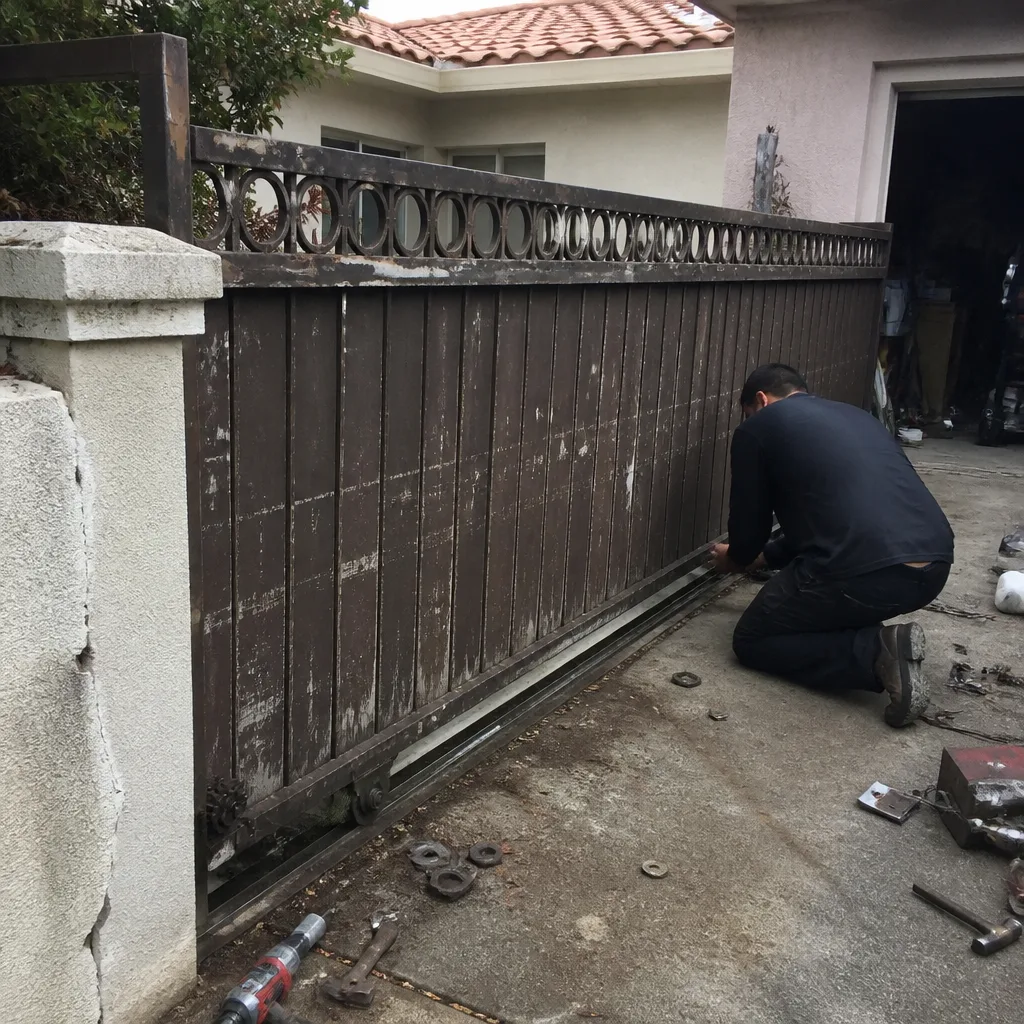 Before
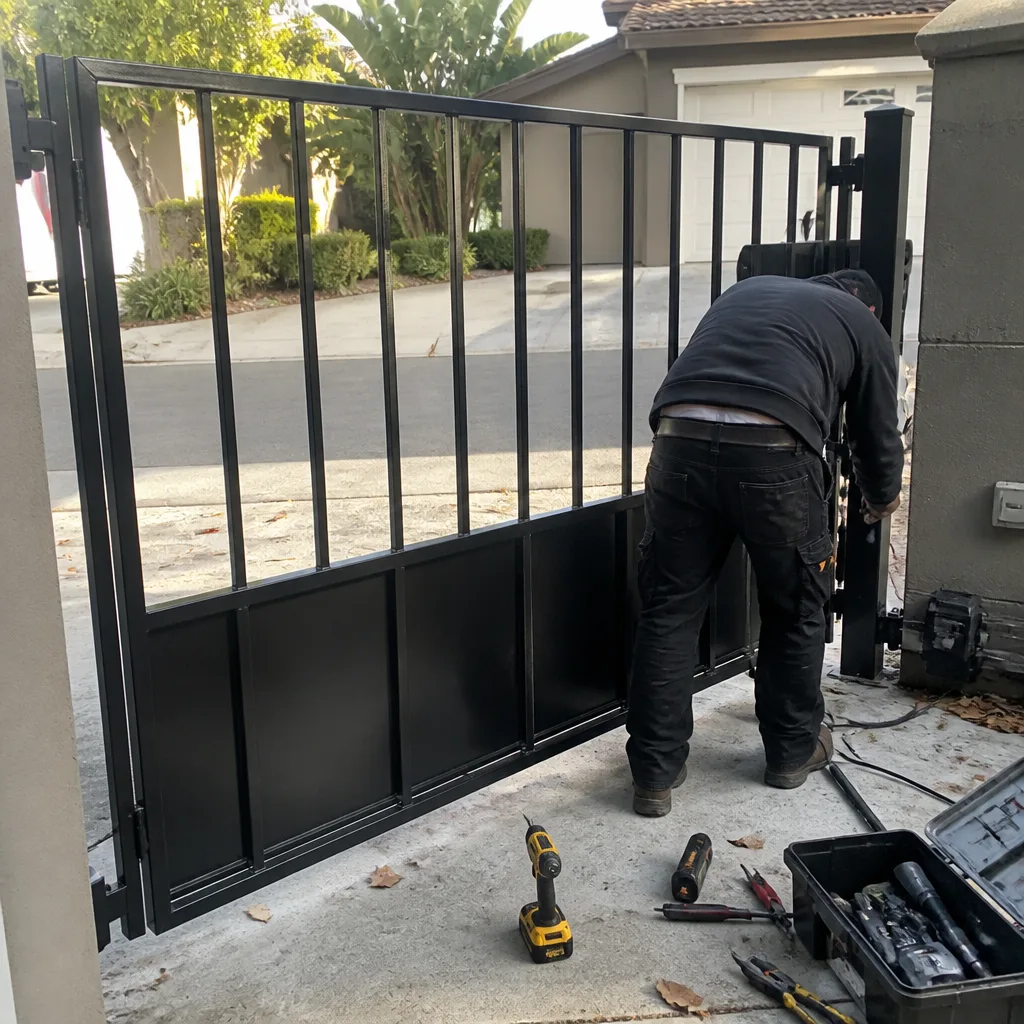 After
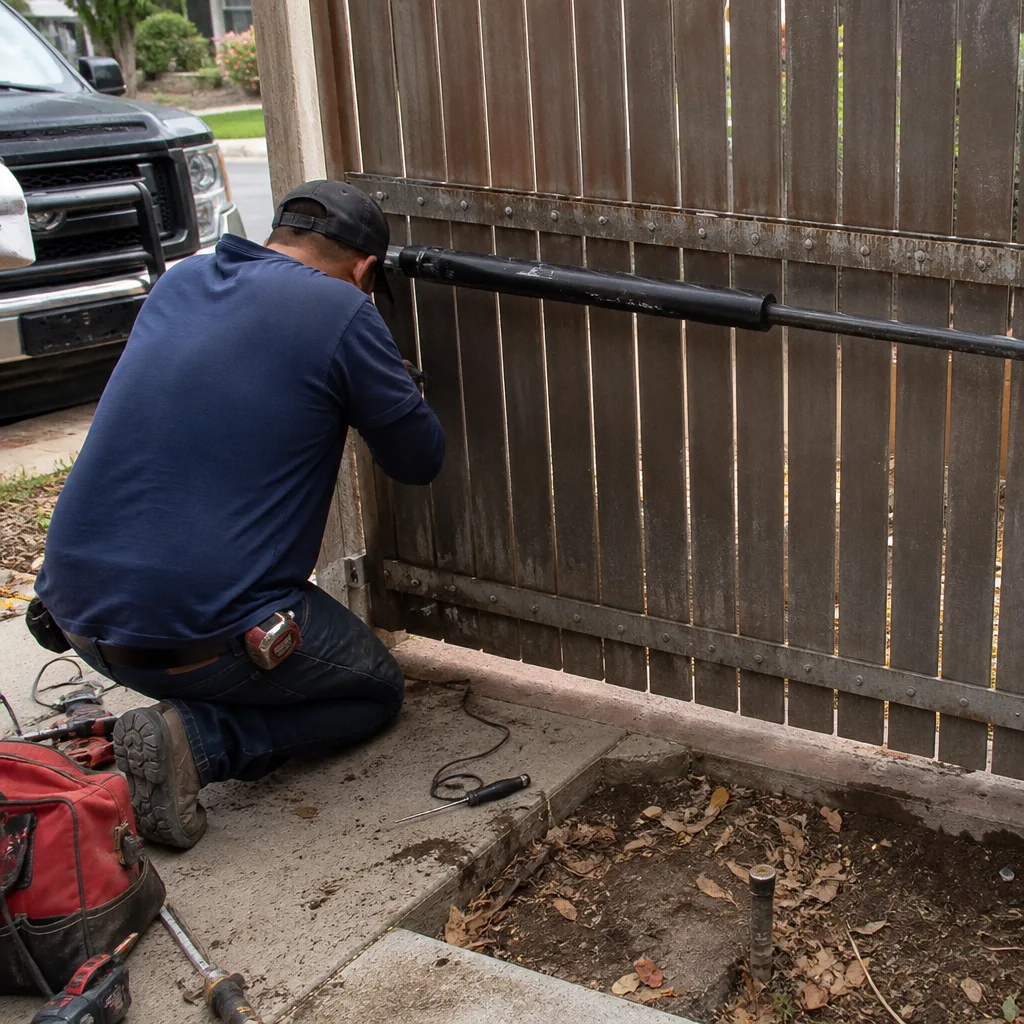 Before
 After
 Before
 After