
Last updated October 30, 2026
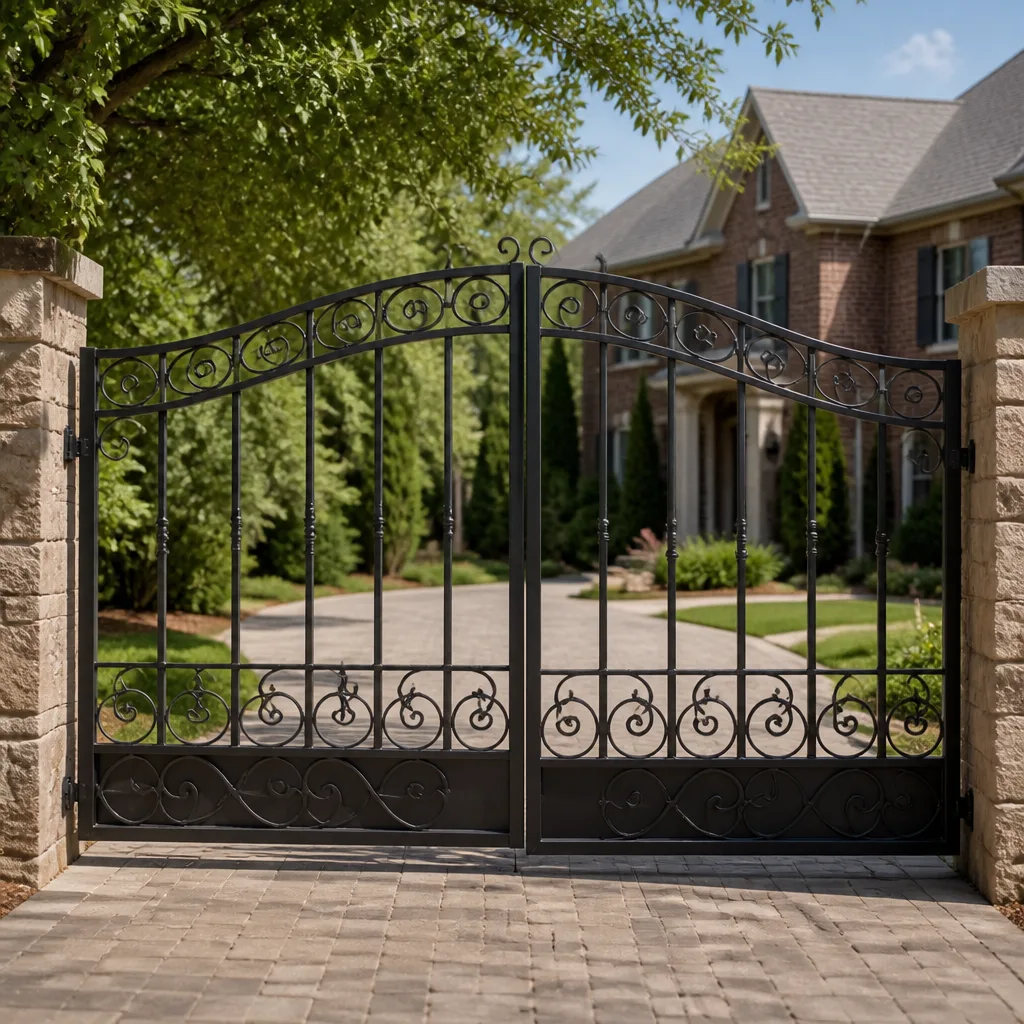 Wrought iron
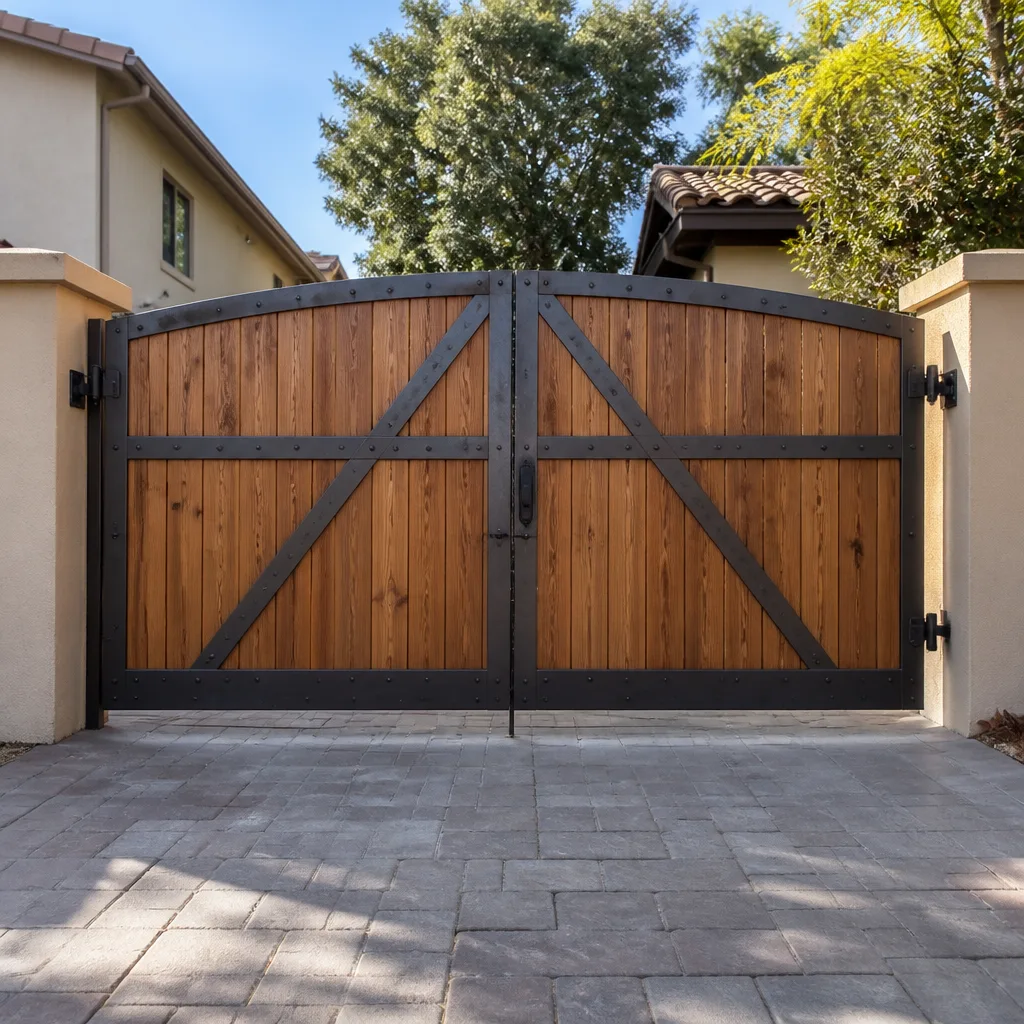 Wood & steel frame
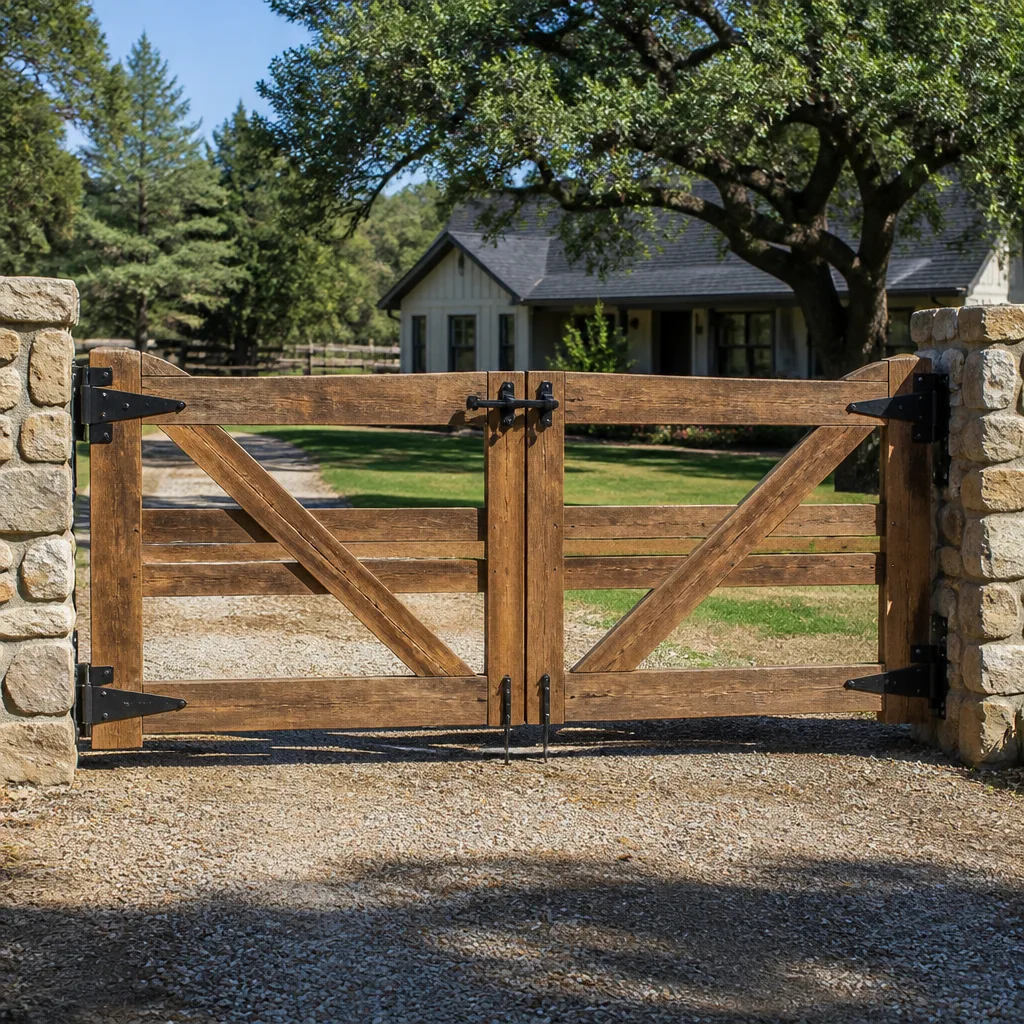 Farm & ranch
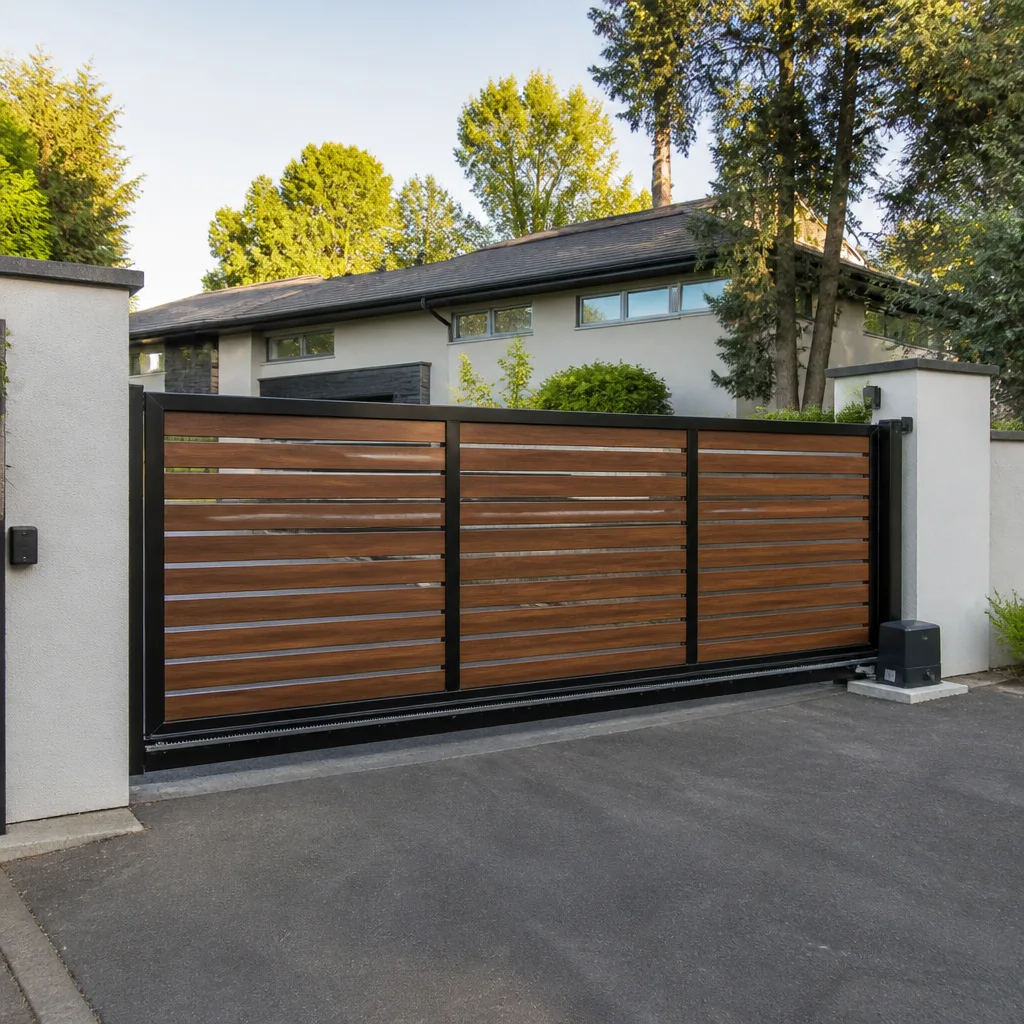 Sliding driveway gates
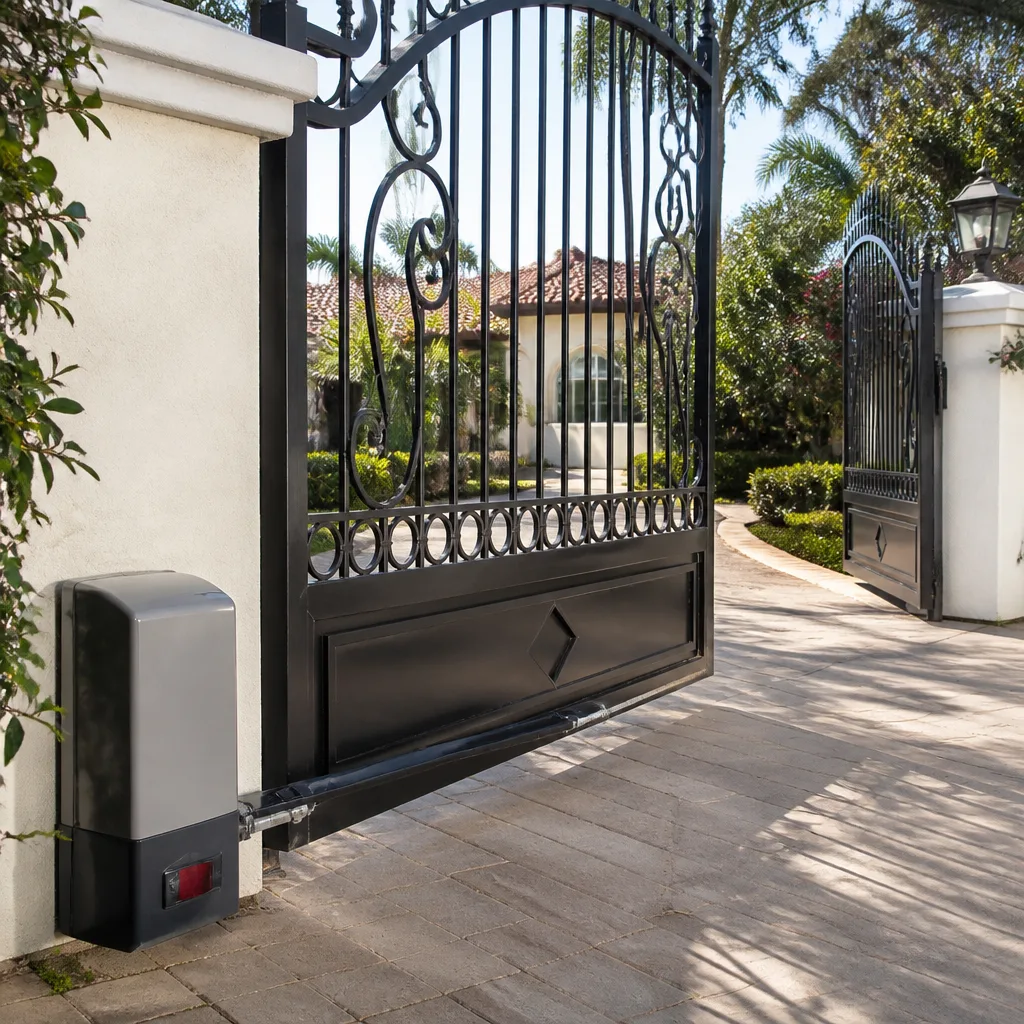 LiftMaster operators
Free on-site gate assessment - hinges, posts, and your LiftMaster or Nice gate operator checked before anything is quoted
The assessment is free and the quote is the invoice.
Get your free estimateHow to Hire a Gate Repair Contractor in San Diego: A Step-by-Step Guide
Ask any gate repair company in San Diego if they can work on your brand of operator. A specialist answers immediately. Everyone else says “probably” or checks their phone. That single question predicts more about the quality of your repair than any Yelp review or flashy truck. San Diego’s mix of coastal salt air, inland heat, and hillside properties puts unusual stress on gate hardware, especially automated systems. This guide walks you through exactly how to separate a genuine gate technician from a general handyman with a socket set, what questions to ask, what licensing matters, and how to spot a padded estimate before you sign it.
Styles & brands we work with
Quick Answer
Hiring a gate repair contractor in San Diego means verifying California licensing, confirming the contractor actually works on your gate’s brand of operator, and getting a written scope with firm pricing before any work begins. Avoid general handymen for electric gate work, and never accept a “diagnose on arrival” open-ended price. A dedicated gate specialist who names specific brands like LiftMaster or FAAC on the first call is the strongest signal you’ve found the right person.
Table of Contents
- Gate Specialist, Automation Installer, or Fencing Contractor: Why the Difference Matters
- Five Interview Questions That Separate Gate Technicians from Generalists
- California Licensing and Insurance for Gate Work: What Applies and How to Verify
- Red Flags in Gate Repair Estimates: What to Reject
- Why Brand Range Matters: The Liability of a Single-Manufacturer Technician
- A Step-by-Step Hiring Process
- What Gate Repair Actually Costs in San Diego
- Common Mistakes to Avoid
- When to Call a Professional
- Frequently Asked Questions
- The Bottom Line
Gate Specialist, Automation Installer, or Fencing Contractor: Why the Difference Matters
Most San Diego homeowners don’t realize that gate repair attracts three very different types of businesses, and hiring the wrong one for your specific job is how you end up paying twice. The distinction is not academic. It determines whether your gate gets fixed in one visit or three, whether the fix lasts a season or a decade, and whether an automated system stays safe.
A fencing contractor builds and hangs gates as part of larger fence projects. Their expertise is posts, rails, and materials. When a chain-link drive gate stops latching or a wooden estate gate sags on its hinges, a fencer can often help. But when a keypad stops talking to a control board, or a swing arm operator fails on the third open of the day, a fencing contractor is outside their trade. Many will tell you that, which is honest. The problem comes when they don’t, and you get a physical repair that ignores the real problem.
An automation installer handles the electronics: operators, safety loops, keypads, intercoms. They’re fluent in control boards and motor voltages. But their focus is installing new systems, typically on new builds or full retrofits. Ask an installer about a rusted hinge post or a sagging cantilever track and you may get a blank look. Their business model is replacement and new integration, not incremental repair of mixed-age hardware.
A gate repair specialist works on the gate and the automation together. That means diagnosing a sticking slide gate that’s tripping the safety sensors, or identifying that a failing roller bearing is overloading the motor and causing the control board to fault. In the San Diego market, where gates range from manual wood estate entrances in Del Cerro to steel cantilever gates serving commercial lots in Kearny Mesa, that combined view matters. A specialist approaches the whole system: the physical gate, the operator, the safety devices, the access controls, the power run. That’s the work home and property managers actually need when a gate misbehaves. Cambridge Gate Repair operates on exactly this model: gate repair, electric gate repair, and gate installation under one roof, which is why we start at the symptom and trace the entire chain before touching a wrench. Our Cambridge Gate Repair home page details the full scope of that approach.
Five Interview Questions That Separate Gate Technicians from Generalists
You don’t need gate expertise to vet a gate contractor. You need five questions and the ability to recognize the difference between a confident answer and an improvisation. These are the same questions we’d ask a competing shop, because they reveal whether someone thinks in gates or thinks in handyman hours.
- “Which brands of operators do you service?” A genuine specialist names them without hesitating: LiftMaster, FAAC, BFT, Linear, DoorKing. A generalist says “all of them” with no specifics, or names the one brand they’ve encountered on YouTube. The brand list is a fingerprint. If they can’t name at least four, their exposure is thin. We’re factory-agnostic across nine major brands including LiftMaster, FAAC, BFT, Linear, Viking, Ghost Controls, DoorKing, Elite, and Mighty Mule, which means the conversation starts with your existing equipment, not a sales pitch for something new.
- “Walk me through how you’d diagnose a gate that opens halfway and reverses.” This is a real-world scenario every San Diego gate technician has faced dozens of times. The right answer references safety sensors, obstruction detection, possible track misalignment, or a failing limit switch. A generalist answer sounds like a guess: “Could be the battery” or “Might need a new motor.” The discussion you want to hear mentions specific components in sequence.
- “Do you repair operators or only replace them?” If the answer is “replace,” understand that you’re talking to a reseller, not a repair technician. Many operators fail because of a $40 limit switch or a $90 capacitor, not a dead motor. A repair-first philosophy is the difference between a $200 board repair and a $1,800 operator replacement. We state this plainly: diagnosed and fixed, not just replaced. That’s the only model that respects a homeowner’s budget.
- “What’s your process for getting approval before you do extra work?” The correct answer describes a written change order or at minimum a call with a clear price before adding scope. The wrong answer is “trust me, it’ll be fair.” On gate work, especially when you’re already into a control board and a technician “finds” a failed loop detector, mid-job pricing is where abuse lives. A real professional quotes before the work, not after it’s done.
- “Can you send me your license number and a certificate of insurance before the visit?” A licensed contractor says “no problem” and sends it. A vague operator stalls. In California, gate work that touches electrical components or modifies structures requires a contractor’s license. We’ll cover verification shortly, but the simple act of asking and watching the response tells you a lot.
California Licensing and Insurance for Gate Work: What Applies and How to Verify
California is stricter than most states about contractor licensing, and gate work sits at an intersection of trades that confuses homeowners and contractors alike. Let’s unpack what actually applies, so you don’t get talked into accepting unlicensed labor or paying for credentials nobody needs.
The core requirement: any contractor performing work valued at $500 or more, including labor and materials, must hold a California Contractor’s State License Board (CSLB) license. For gate work, the most relevant classifications are C-10 (Electrical) for automated gate operators and their low-voltage wiring, and C-61 / D-28 (Doors, Gates, and Activating Devices), which covers gate installation, repair, and activating mechanisms. A D-28 is the most gate-specific classification and indicates the holder has passed an exam in gate work specifically. A handyman with a general B classification may legally pull a permit for larger construction, but gate automation work often requires the electrical competence of a C-10 or the specific D-28 scope.
How to verify in under five minutes: Go to the CSLB’s license check page (cslb.ca.gov), enter the license number, and confirm three things. First, the license status shows “Active” and not “Suspended” or “Expired.” Second, the classification matches the work: D-28 or C-10 for automated gates, D-28 for manual gate structure work. Third, the listed business name matches who you’re actually hiring. A mismatch means a contractor is “borrowing” a license, which voids your protection.
Insurance: ask for a certificate of insurance (COI) directly from the insurer, not a photocopy from the contractor. Confirm general liability coverage of at least $1 million. For work on commercial properties or projects involving multiple trades, some property managers request $2 million or additional insured status. Workers’ compensation is mandatory for any contractor with employees and protects you from liability if a technician is injured on your property. A sole proprietor with no employees may be exempt, but even then, verify that exemption on the CSLB record.
Permits: most gate repairs in San Diego do not require a permit. Replacing an operator, swapping hinges, repairing tracks, installing a new keypad: none of that triggers a permit. But significant structural changes (new columns, cantilever installations, extending a gate structure) or installing a new driveway gate on certain hillside zones may. A competent contractor knows which is which and will tell you before starting, not after the city stops by.
Red Flags in Gate Repair Estimates: What to Reject
The estimate is where the conversation stops being about trust and starts being about paper. In the San Diego gate repair market, we see the same patterns again and again. Here’s what signals trouble before you sign.
- “Diagnose on arrival” pricing: the estimate says something like “will determine after opening panel” with no upper bound. This is an invitation for a diagnostic fee that balloons. A real gate specialist can diagnose most issues over the phone or with a photo, and will provide a firm price for the repair after the first visit. The initial estimate should always state an exact dollar figure for anticipated parts and labor, and a ceiling beyond which they’ll call for approval. We’ll never quote an open-ended number. The price is quoted and agreed before any work starts.
- Vague line items: “Electrical work – $600” or “Gate service – $450” without saying which parts, which brand, which labor hours. This makes it impossible to compare against other quotes. Demand line items: “Replace FAAC 402 control board – $385 part / $95 labor.” If they can’t itemize, they don’t know what they’re doing.
- Pressure to upgrade: the technician “doesn’t really work on” Mighty Mule or Ghost Controls because those are “DIY-level” products. That’s a strong sign of a limited technician redirecting you to their preferred brand rather than diagnosing the fault. A technician who works on nine brands can repair a Mighty Mule as easily as a LiftMaster. When the recommendation is always “replace the whole system,” the problem isn’t your gate; it’s their skill ceiling.
- No written scope: even a simple hinge replacement should generate a written work order describing what’s being done, what parts are being used, and what the outcome is. A contractor who works only on verbal agreements has no obligation when the repair fails in three weeks. Every reputable gate contractor in San Diego provides documentation.
- Subcontractor roulette: you hire Company A, but a person in an unrelated truck shows up. Ask directly: “Are your technicians employees or subcontractors?” Subcontracting on gate work isn’t inherently bad, but it changes who’s responsible for the outcome. If the person doing the work isn’t insured under the company you hired, your protection is much thinner.
Why Brand Range Matters: The Liability of a Single-Manufacturer Technician
Here’s a San Diego scenario we see constantly: a homeowner has a BFT operator installed in 2014, and now the gate won’t close. They call a company from a Google ad, and the technician arrives, considers the old BFT board, and announces the entire system is “obsolete” and needs a $2,500 replacement with the brand they sell. What the homeowner doesn’t realize is that the BFT board is repairable for a quarter of that cost, or that a compatible replacement board exists. But the technician has never touched a BFT board and doesn’t want to learn on the job. So they replace. And they get paid.
This is the hidden cost of single-brand service. A technician certified only in one or two manufacturers has a financial incentive to install those manufacturers, regardless of what’s best for your gate. The problem gets worse with older systems. A DoorKing installed in 2008 or a Viking from 2010 may need a specific component, an obsolete relay, or a particular board revision that an experienced multi-brand technician can source. But a technician whose world is limited to LiftMaster reseller products will tell you the whole system is dead. It’s not. It’s just outside their world.
Your filter question: “What brands do you actually service?” If the answer is one or two brands, dig further. If the answer is four or more, you’re talking to someone with real field time. At Cambridge Gate Repair, our approach is factory-agnostic across nine brands: LiftMaster, FAAC, BFT, Linear, Viking, Ghost Controls, DoorKing, Elite, and Mighty Mule. We repair what you have rather than defaulting to replacement or an upsell. That’s not a marketing line; it’s the basis of every estimate we write. A technician who can diagnose a Viking or a Linear on sight is a technician who’s done this work hundreds of times, not a salesman picking from a product catalog. For more on how that works in practice for electric systems specifically, see our guide on electric gate repair in Rancho Santa Fe.
A Step-by-Step Hiring Process
Here’s the exact process we’d recommend to any homeowner or property manager in San Diego hiring a gate contractor for the first time. It’s methodical, it takes about one afternoon of phone calls and one hour of document review, and it eliminates 90% of the bad actors before they ever step on your property.
- Document the symptom with photos and video. Before you call anyone, take three photos: one of the full gate from 10 feet back, one of the operator or motor housing, and one of any visible damage or wear. If the gate makes a noise, record it. A good technician will use these to pre-diagnose and bring appropriate parts on the first visit. A lesser contractor will ignore the photos and still show up empty-handed.
- Call three companies and ask the five interview questions. Don’t email. Don’t use a contact form. Call. The phone call reveals how comfortable someone is with gates in real time. Ask about brands, ask about the half-open-and-reverse symptom, ask about the license number. The goal is not to fix your gate over the phone; it’s to hear whether the person on the other end actually knows what they’re talking about. Request a free estimate from each.
- Check the CSLB license and request insurance for the two strongest candidates. Verify the license number online, confirm the classification (D-28 for gate work, or a combination of D-28 and C-10 for automated systems), and get a certificate of insurance emailed to you directly. This step takes five minutes and eliminates the unlicensed operators hiding in the search results.
- Compare written estimates side by side. A legitimate estimate shows line items: part, brand, labor hours, total. Compare part brands. One quote may use a name-brand board, another a generic. One may include a service call fee, another waives it. The cheapest quote is not the goal. The most detailed is. A detailed quote from a technician who named the right brands on the phone is worth more than a cheap quote from a handyman who couldn’t.
- Confirm warranty terms in writing before scheduling. Ask what’s covered, for how long, and what happens if the repair fails. Most reputable gate contractors offer a labor warranty of 30 to 90 days on repairs and parts warranties that pass through the manufacturer. Get it written. If a contractor won’t put a warranty in writing, that’s the last sign you’ll get.
- Schedule, confirm the scope, and approve the work. On the day of the visit, confirm the scope one last time before the technician begins. If anything beyond the quoted scope emerges, a professional will call you with options and prices before proceeding. The standard we hold ourselves to: the price is quoted and agreed before any work starts.
What Gate Repair Actually Costs in San Diego
San Diego gate repair pricing is more useful when you see it in bands rather than a single figure, as detailed in our Seasonal Gate Repair Care for San Diego: Year-Round Homeowner’s Guide. Costs vary by system type, part availability, and whether the work is repair or replacement. Here are the ranges we see across San Diego neighborhoods, from Rancho Bernardo to Chula Vista:
- Service call / diagnostic fee: $75 to $150, often waived if you proceed with the repair. Some companies charge for remote diagnostics; a reputable shop usually doesn’t charge for a simple phone assessment.
- Manual gate hinge replacement: $180 to $400 per hinge set, depending on gate weight and whether the post needs reinforcement.
- Track and roller replacement for a slide gate: $350 to $800, including parts and labor. Cantilever systems run toward the upper end.
- Operator limit switch or capacitor replacement: $150 to $400, typically same-day once the part is on the truck.
- Control board replacement (FAAC, LiftMaster, BFT, Viking): $350 to $900, depending on brand and board model. Some boards are repairable for much less; only a technician who’s opened a hundred of them can tell the difference by looking.
- Full operator replacement for a residential swing gate: $1,800 to $4,500 installed, brand- and horsepower-dependent.
- Safety sensor or photo eye replacement: $150 to $350 per pair.
- Keypad or intercom system replacement: $250 to $1,200, depending on system type (standalone keypad vs. integrated telephone entry).
These are labor-and-part ranges we see across San Diego, not exact quotes; every gate is different. Coastal properties in La Jolla and Point Loma face aggressive salt corrosion that can double hardware costs over a lifetime, while east county gates in El Cajon and Ramona deal with extreme dust and heat that shorten operator life. A good San Diego gate contractor will factor those local conditions into their recommendations. For a more detailed look at what full replacement work involves, see our guide on gate installation in Rancho Santa Fe.
Common Mistakes to Avoid
- Hiring a general handyman for electric gate work. Automated gates involve low-voltage wiring, safety loops, and control logic. A general handyman who fixes drywall and swaps faucets is not equipped for a FAAC board diagnosis. The result is usually a repair that holds for a month and fails again.
- Accepting a verbal estimate. Without a written scope and firm price, you have no protection if the bill doubles. San Diego contractors know this; the ones who avoid writing it down are signaling something.
- Choosing based on the lowest quote. A $150 hinge replacement that’s done wrong costs you another $500 to undo. A low price from a contractor who couldn’t name your brand of operator is a red flag disguised as a bargain.
- Not asking about brand range. If you have a Mighty Mule and the technician has only ever installed LiftMaster, you’re paying for their on-the-job education. Brand range is the clearest single indicator of experience.
- Letting a “free estimate” become a hard sell. Free estimates are standard. But a free estimate that turns into an hour-long pitch for a full system replacement was never an estimate; it was a sales visit. A real specialist offers diagnosis and repair options before jumping to replacement.
- Forgetting to verify the license and insurance. The five-minute CSLB check and the COI email take one afternoon and prevent years of regret. Unlicensed gate work is common in San Diego, particularly on the lower-cost end of Craigslist and Thumbtack. Don’t finance someone’s learning curve.
- Ignoring safety sensors and loops. Some homeowners tell a technician to “just bypass the safety.” That’s not just a code violation; it’s a liability that can hurt a child, a pet, or a delivery driver. A professional will never bypass a safety device. If someone offers, walk away.
When to Call a Professional
Some gate problems are straightforward and some are genuinely dangerous. A squeaky hinge you can hit with lithium grease, fine. A sagging gate you can shim, okay. But if your gate reverses unexpectedly, fails to stop, makes a grinding sound from the operator, trips a breaker, or the keypad stops responding while the gate is stuck open, stop troubleshooting and call a professional. Automated gates carry enough force to hurt someone. Failed safety sensors, a misaligned track, or a fried control board are not DIY projects. Cambridge Gate Repair offers free estimates in San Diego; call (833) 589-8195 and we’ll diagnose the issue and give you a firm written price before any work begins.
Frequently Asked Questions
Gate repair in San Diego typically ranges from $150 for minor fixes like a limit switch to $900 for a control board replacement; full operator replacements run $1,800 to $4,500. The exact price depends on your gate’s brand, whether it’s manual or automated, and whether the part is repairable or needs replacing. Call (833) 589-8195 for a free, itemized estimate based on your specific gate.
Yes, for work under $500, but automated gate work almost always exceeds that threshold and requires a CSLB license, typically a D-28 or C-10 classification. Hiring an unlicensed handyman for electric gate repairs voids any protection you’d get through the contractor’s license board and often leaves you without recourse if the repair fails. For automated systems, hire a licensed gate specialist.
We service nine major brands including LiftMaster, FAAC, BFT, Linear, Viking, Ghost Controls, DoorKing, Elite, and Mighty Mule. Most gate repairs don’t require replacing the operator at all. We repair what you have rather than defaulting to replacement. If you’re unsure of your brand, take a photo of the operator housing and send it over; we’ll identify it before we arrive.
Gate repair addresses specific failures in an existing physical gate or automated operator: a broken hinge, a failed board, a stuck motor. Gate installation is the design, build, and full setup of a new gate structure and automation system, often for new construction or full renovations. Some projects start as repairs and reveal deeper structural issues; a specialist can distinguish the two honestly. Our gate repair in Rancho Santa Fe page covers that boundary in more depth.
Same-visit repairs are common for straightforward failures like a limit switch, capacitor, or hinge set, assuming the part is on the truck. For specialized board replacements, the repair often completes within 24 to 48 hours of the first visit once the component is sourced. We carry components for the nine brands we service to minimize second-trip delays.
Yes. Every estimate includes a free phone or photo-based assessment, a firm written price for parts and labor, and a clear scope before any work starts. There are no surprise line items or diagnose-on-arrival open pricing. Call (833) 589-8195 to get your estimate started.
The Bottom Line
The San Diego gate repair market rewards informed homeowners and punishes rushed decisions; for more guides & resources, explore our blog. Ask the brand question, verify the license, demand a written scope, and compare line items rather than bottom lines. Avoid handymen for automated systems and avoid single-brand installers for everything else. The right contractor is a dedicated gate specialist who names your brand, explains the diagnosis in plain English, and puts every dollar on paper before touching your gate. That’s the standard we hold ourselves to on every call, whether it’s a stuck swing gate in Point Loma or a failed electric operator in Rancho Bernardo. Call Cambridge Gate Repair at (833) 589-8195 for a free estimate, and you’ll get the same standard.
Written by the team at Cambridge Gate Repair, serving San Diego since 2014.
See the difference
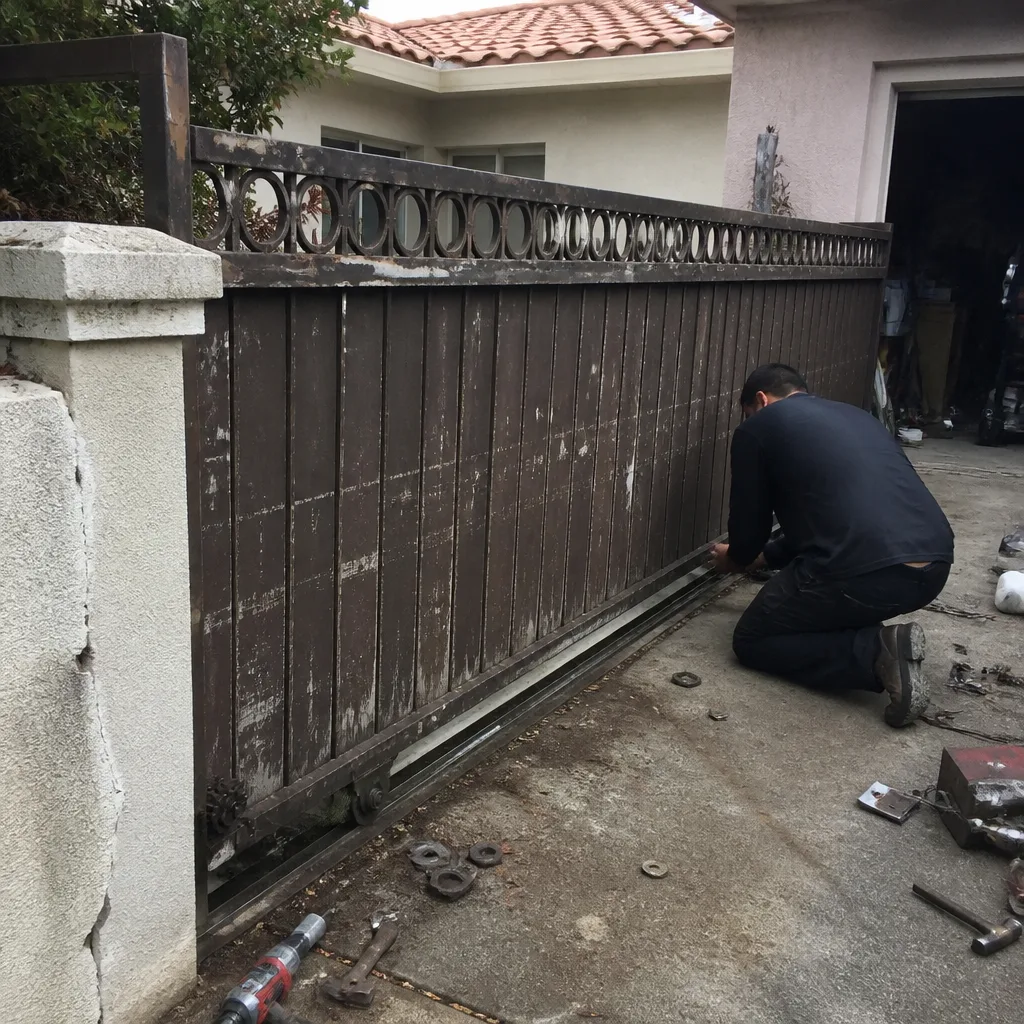 Before
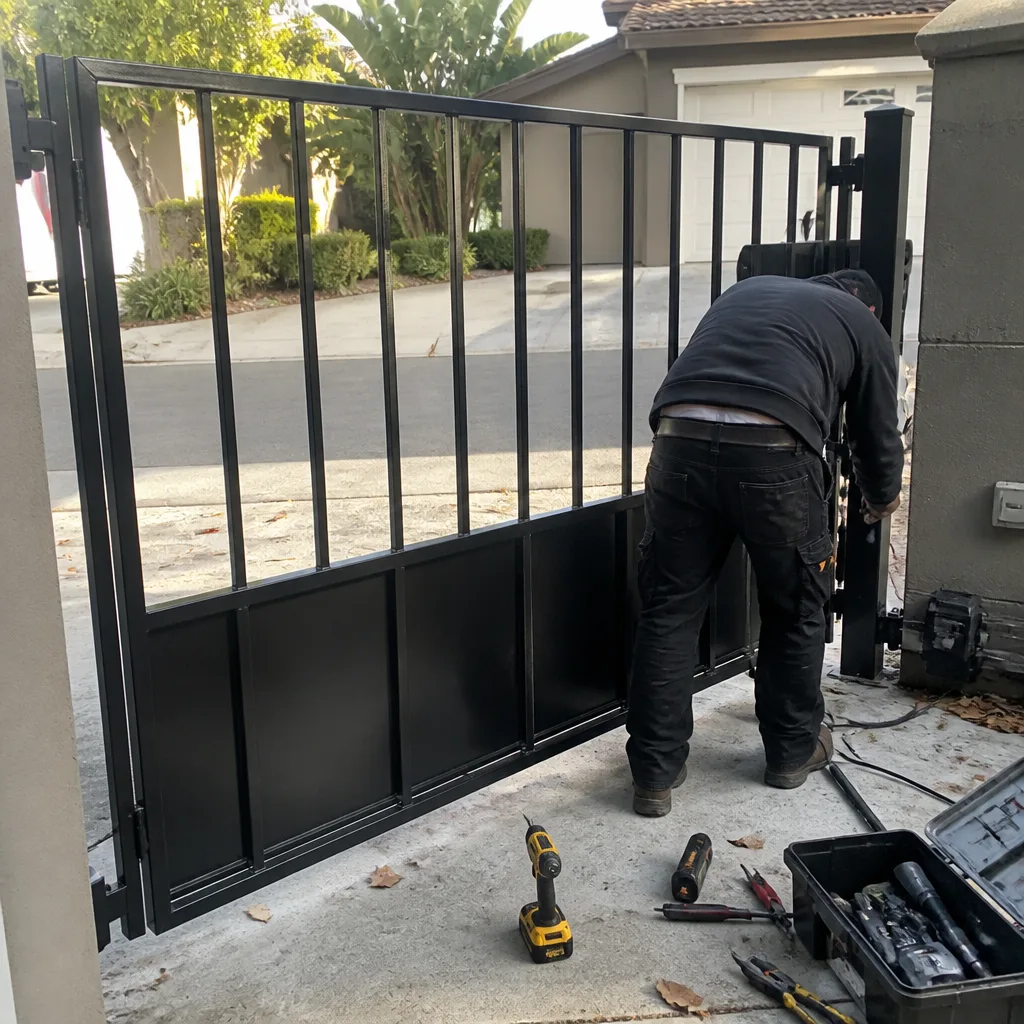 After
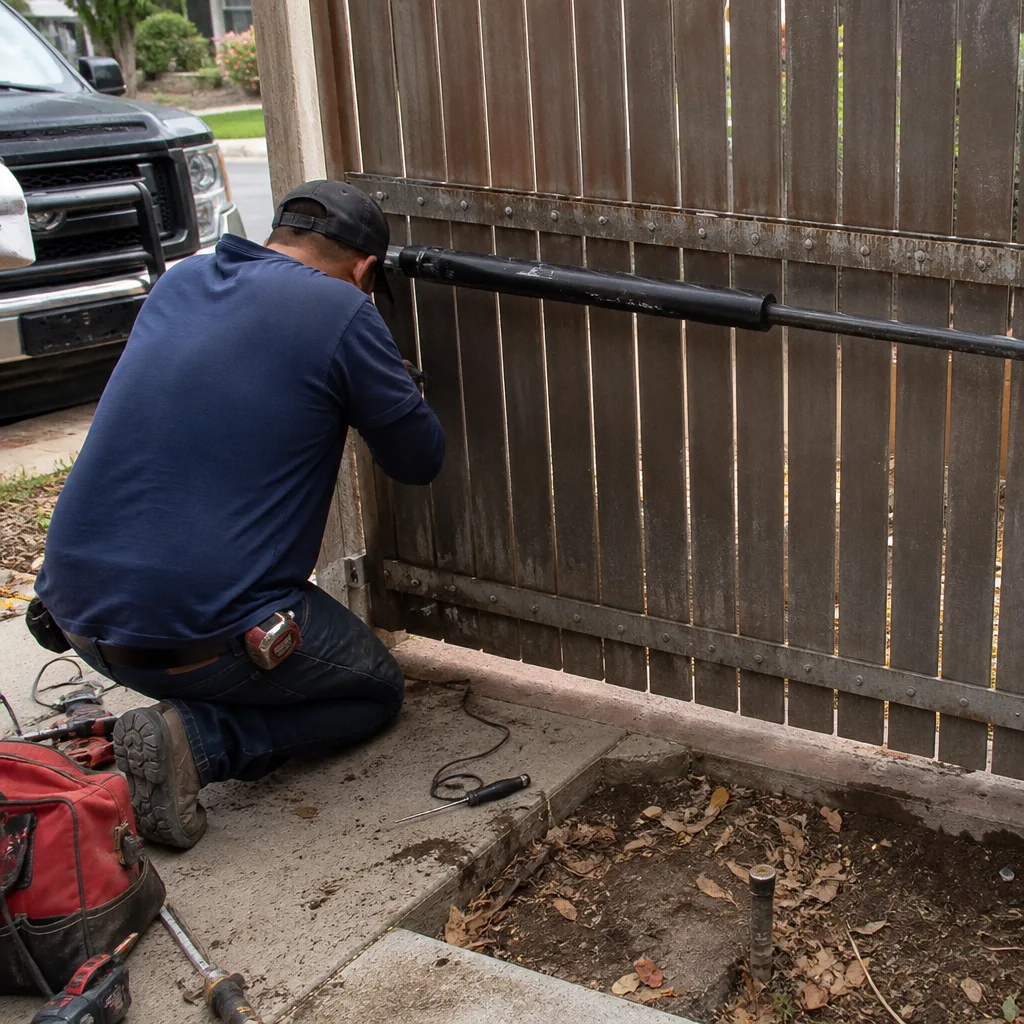 Before
 After
 Before
 After