
Last updated October 30, 2026
 Wrought iron
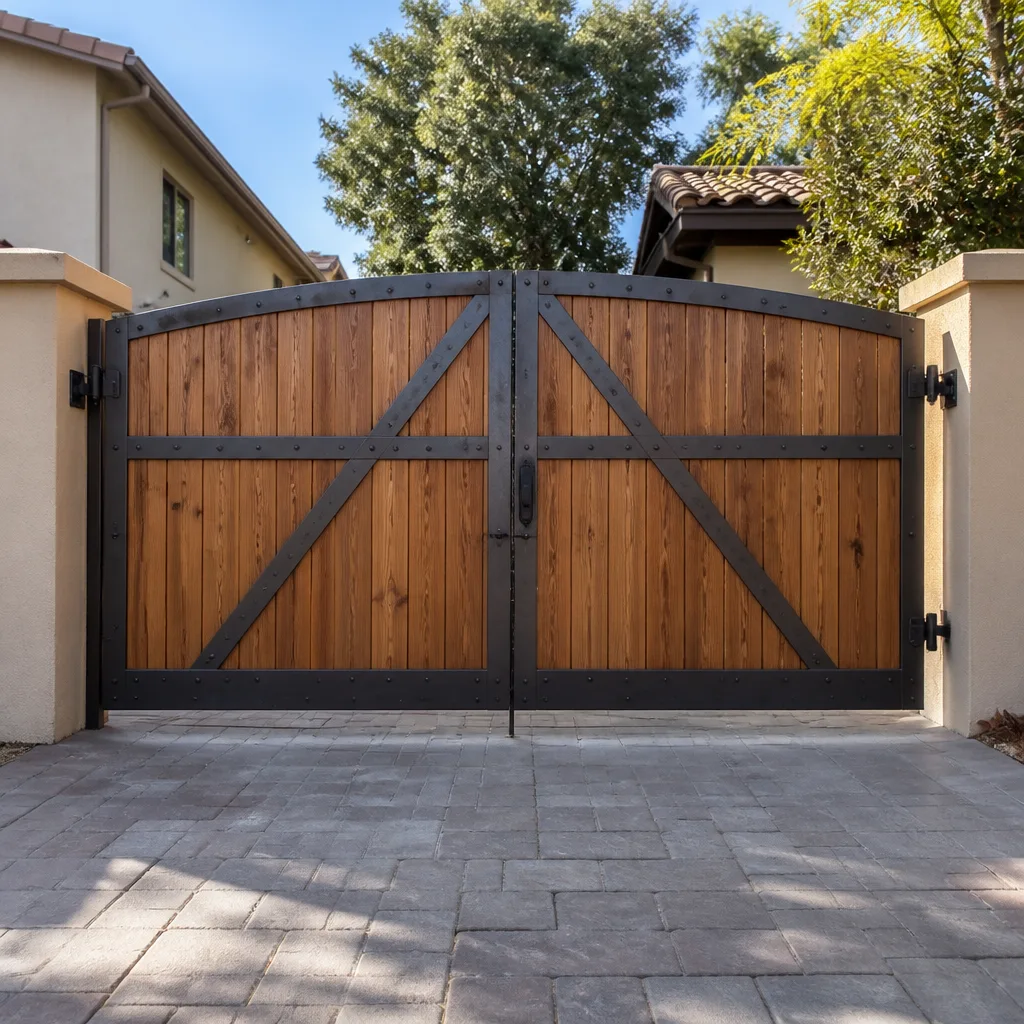 Wood & steel frame
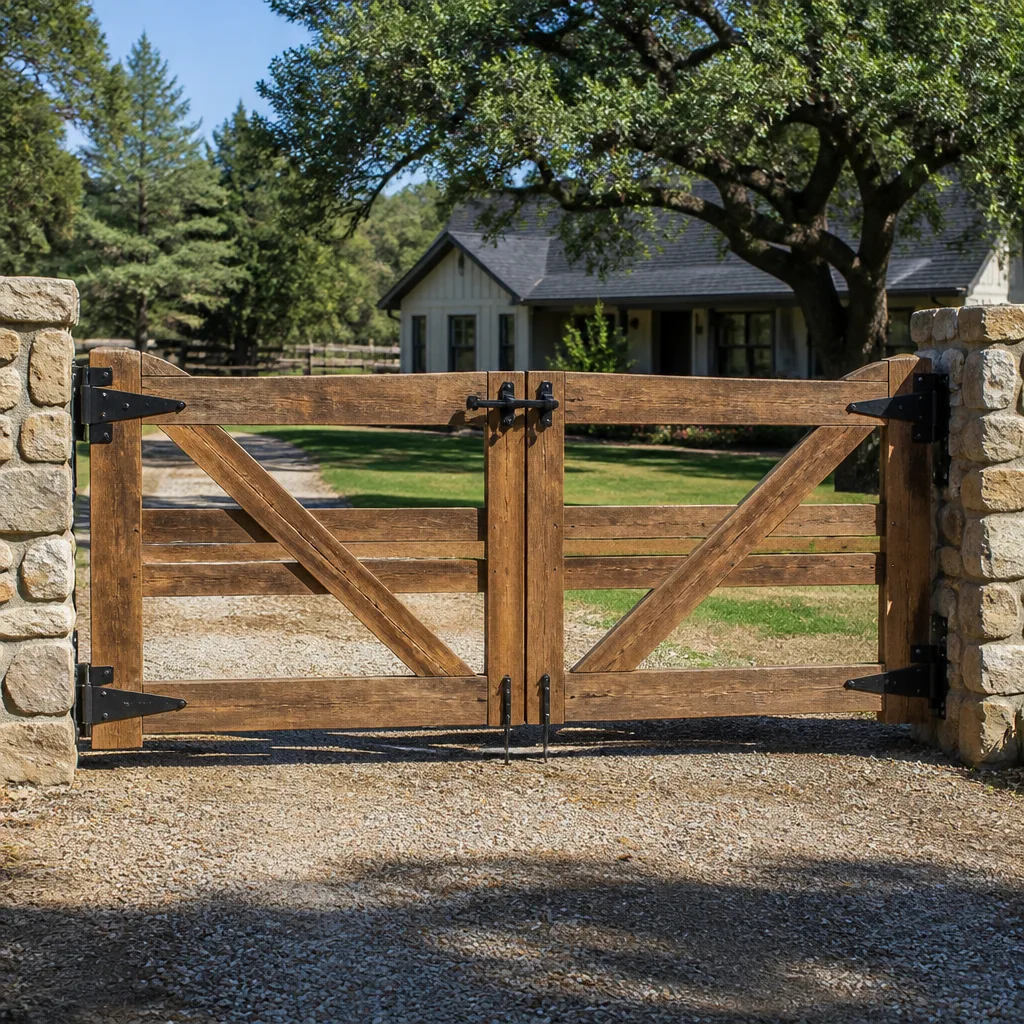 Farm & ranch
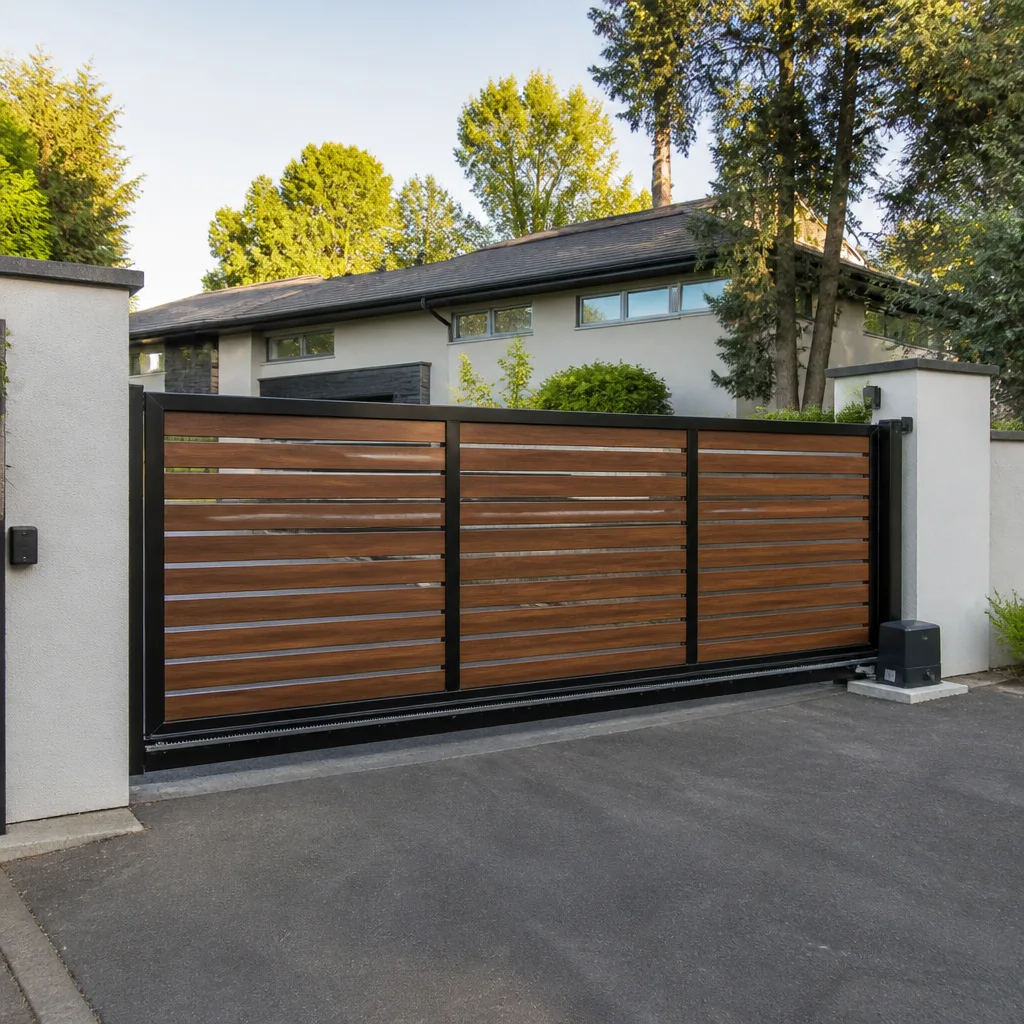 Sliding driveway gates
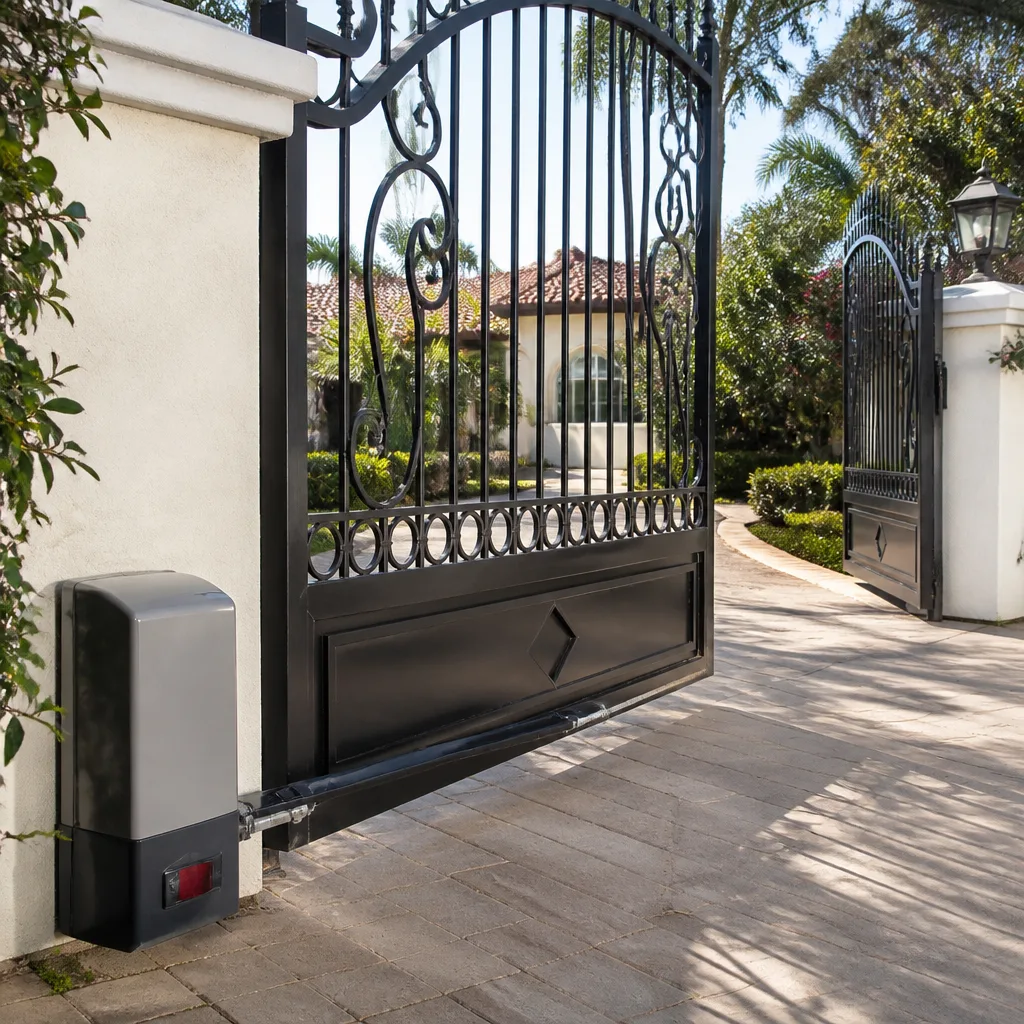 LiftMaster operators
Free on-site gate assessment - hinges, posts, and your LiftMaster or Nice gate operator checked before anything is quoted
The assessment is free and the quote is the invoice.
Get your free estimateGate Repair Warning Signs: A San Diego Homeowner’s Reference Guide
A gate that hesitates for half a second before opening isn’t “working fine” – it’s showing you exactly which component is about to fail, if you know what you’re looking at. Most San Diego homeowners don’t discover their gate is dying until the morning it refuses to open at all, which means a frantic call, a missed appointment, and a repair bill that could have been smaller if the problem had been caught three months earlier. This guide translates the physical symptoms – the sounds, the movements, the rust patterns, the electrical quirks – into the likely causes behind them. By the time you finish reading, you’ll be able to read your gate the way a technician does, and you’ll know which warnings mean “schedule something this week” versus “call someone today.”
Quick Answer
Gate failures almost never happen without warning. Grinding, clicking, humming, slow operation, jerky movement, visible rust at weld points, post lean, and inconsistent remote response are all early indicators of specific mechanical or electrical problems. In San Diego’s coastal climate, salt air accelerates corrosion on gate hardware year-round, which means local homeowners should inspect their gates more often than inland residents do. Catch these signs early and most repairs cost a few hundred dollars. Ignore them and you’re looking at a full operator replacement or a structural rebuild.
Styles & brands we work with
Table of Contents
- Sound-Based Diagnosis: What Your Gate Is Telling You
- Movement-Based Diagnosis: Slow, Jerky, and Incomplete Travel
- Visual Indicators: Rust, Weld Cracks, Post Lean, and Ground Scoring
- Electrical Warning Signs: Remotes, Lights, and Intermittent Operation
- Severity Triage: Schedule It or Call Today
- San Diego-Specific Factors That Accelerate Gate Wear
- What You Can Check Yourself vs. What Needs a Technician
Sound-Based Diagnosis: What Your Gate Is Telling You
Every gate makes some noise. A smooth electric operator produces a consistent, low-level mechanical sound – a steady whir that doesn’t change pitch or rhythm. When that baseline sound changes, the sound itself is diagnostic. In our experience working on gates across San Diego, from Rancho Santa Fe estates to Chula Vista townhomes, the first warning sign homeowners notice is almost always auditory. Here’s what each sound typically indicates in swing versus slide gate systems.
Grinding in a Slide Gate
Grinding on a slide gate almost always points to the track, the wheels, or the rack-and-pinion gear. Slide gates roll on steel wheels along a metal track set into the driveway or mounted on a concrete base. When sand, gravel, or debris accumulates in the track – common in San Diego’s canyon neighborhoods where wind blows silt across driveways – the wheels grind against it. The fix is often simple: clean the track, lubricate the wheels, adjust the alignment. But if the grinding has persisted for months, the wheels may have worn flat spots, and the rack gear that pulls the gate may have chewed teeth. At that point, components need replacement, not cleaning.
Grinding in a Swing Gate
A swing gate that grinds at the hinge is telling you the hinge bearings are dry or failing. Swing gates move less distance than slide gates, so hinge wear accumulates slowly, but San Diego’s salt air works against you the entire time. Coastal moisture corrodes bearing surfaces, and what starts as a dry-metal scrape becomes a structural problem when the hinge pin itself begins to wear. If you catch it early, lubrication and adjustment may buy you time. If the hinge has play – meaning you can wiggle the gate leaf by hand – the hinge needs replacement before the gate drops.
Clicking at the Operator
A rapid clicking sound when you press the remote usually means the operator’s control board is receiving the signal but the motor isn’t engaging. This is the sound of a relay or contactor trying to close. Causes range from a failed capacitor (common on older Viking and Elite operators) to a blown motor winding. Clicking is one of the clearest warning signs you’ll get, because it means the electronics are alive but the power stage is dead. It’s repairable, and on most brands – electric gate repair typically involves replacing the capacitor or the control board rather than the entire operator.
Humming That Doesn’t Stop
A continuous hum with no movement means the motor is getting power but the output shaft isn’t turning. On a slide gate, this often points to a seized drive sprocket or a jammed chain. On a swing gate, it’s usually a failed capacitor in the start circuit. The danger here is heat: a humming motor that can’t turn draws more current and will eventually burn out its own windings. If you hear this, cut power to the operator at the breaker and call a technician. Don’t keep pressing the remote to “test” it. Every attempt makes the eventual repair more expensive.
Squealing During Operation
Squealing is usually belt or chain related. Slide gate operators use a drive chain that connects the motor sprocket to the gate’s rack. When that chain loses tension, it slips on the sprocket and produces a high-pitched squeal. Swing gate operators use a belt or a screw drive; a squeal there means the belt is stretched or the screw needs lubrication. Squealing is an early-stage sound. It means the component is losing efficiency but hasn’t failed yet. Lubrication and tension adjustment often resolve it for another year or two.
Sound Changes by Gate Type
Gate type matters when interpreting sounds. Swing gates hinge and rotate, so their wear concentrates at hinges, actuator arms, and pivot points. Slide gates travel along a longer path, so their wear spreads across wheels, tracks, chains, and rack gears. The same grinding sound means different things in each system. A technician who works on both types every week can pinpoint the source in minutes, which is why diagnosis on a gate is usually faster – and cheaper – than most homeowners expect. For reference, see our gate repair service in Rancho Santa Fe for examples of the range of systems we see on a typical week.
Movement-Based Diagnosis: Slow, Jerky, and Incomplete Travel
Problems you can see are easier to catch than problems you can hear, but they’re also easier to rationalize. A gate that opens slightly slower than it did last year gets normalized. A pause before movement gets accepted as “just how it is.” These are warnings, and they map to specific failure points.
Slow Operation
An electric gate that opens noticeably slower than it used to is working harder than it was designed to. On slide gates, the usual culprits are debris in the track, failing wheels, insufficient lubrication on the drive chain, or a motor that’s losing torque. On swing gates, slow operation often points to hinge wear, a low-voltage condition at the operator, or an actuator arm that’s losing efficiency. Low voltage deserves special attention in San Diego’s older neighborhoods, where some homes still have aging electrical panels that deliver inconsistent current to gate operators. A technician can measure the actual voltage at the operator and tell you whether the problem is the gate or the power feeding it.
Jerky, Start-Stop Movement
Jerky movement is more serious than slow movement. When a gate stutters, pauses, and resumes mid-travel, the problem is usually mechanical binding – the gate is encountering resistance at a specific point in its arc or track, and the operator is fighting through it. On slide gates, the cause is often a bent section of track, a wheel that’s flattened on one side, or a rack gear with missing teeth. On swing gates, jerky movement usually means a hinge is binding or the gate has shifted slightly on its posts. Either way, the binding point is overloading the operator every time the gate opens. That overload is cumulative. An operator that fights through resistance daily will fail prematurely, and operator replacement costs significantly more than track or hinge repair.
Incomplete Travel
A gate that starts to open but stops partway, then reverses or just gives up, is failing to complete its cycle. This is a classic sign of a malfunctioning limit switch or an obstruction sensor triggering falsely. Limit switches tell the operator where “fully open” and “fully closed” are. When that switch fails, the gate forgets its stopping point. Obstruction sensors – the photo eyes or safety edges installed on electric gates – are designed to stop or reverse the gate when something is in the path. A dirty lens or a misaligned sensor can trigger false obstructions. This is one of the more dangerous failure modes, because a gate that reverses mid-cycle can close on a person or vehicle. If your gate is reversing without an obvious obstruction, stop using the automatic function and switch to manual mode until it’s diagnosed.
Reversal Behavior
Reversal should only happen when the gate encounters an actual obstruction. If it reverses on a clear path, the problem is either a sensor fault or a limit switch issue. In Santa Fe-style and Mediterranean-style homes common throughout San Diego County, we often see false reversals caused by sunlight hitting photo eye sensors at certain times of day. Sensors use infrared beams, and direct low-angle sunlight – especially in fall and spring – can overwhelm them. A simple shield or repositioning fixes it. A Gate Installation in Rancho Santa Fe often includes positioning sensors to avoid this exact problem from day one.
Gate Drifts After Stopping
A gate that creeps or drifts a few inches after it stops is a mechanical problem, not an electrical one. Manual gates drift when hinges wear or posts shift. Electric gates drift when the operator’s brake or lock mechanism fails, or when the gate’s own weight begins to work against the operator. On a slide gate, drift often traces to worn chain tension. On a swing gate, it’s usually hinge play or post lean. Drift matters because the gate is slowly losing its geometry, and geometry is everything in gate systems. A gate that’s half an inch out of square today can be two inches out of square in six months.
Visual Indicators: Rust, Weld Cracks, Post Lean, and Ground Scoring
Visual inspection requires no tools and no technical knowledge. Walk around your gate once a month and look at it. In San Diego, where gates are visible from the street and often serve as architectural statements, most homeowners look at their gate every day without actually seeing it. Train yourself to look at specific points, and the gate will tell you what’s failing.
Rust at Weld Points and Hardware
Rust anywhere is a signal, but rust at specific locations is a warning. Weld joints are the most vulnerable points on any fabricated steel or iron gate, because welding changes the metal’s structure and creates micro-crevices where moisture collects. In coastal San Diego neighborhoods – Point Loma, Ocean Beach, La Jolla, Coronado – airborne salt accelerates this process year-round. Surface rust can be wire-brushed and repainted. Rust that flakes or pits the metal means the section is losing material. Rust at a weld bead, especially on a bottom rail or hinge plate, often hides a crack underneath. When the rust line follows the weld, have a fabricator inspect it. That’s the difference between a repaint and a structural repair.
Weld Cracks and Stress Fractures
Cracks form at welds because that’s where stress concentrates. A swing gate’s entire weight hangs from two or three hinges, and every open-close cycle flexes those welds. A slide gate’s weight rolls along its top and bottom rails, flexing the frame members where they meet. Over years, the flexing produces tiny cracks that grow into visible ones. Look carefully at hinge plates, at the joints between vertical pickets and horizontal rails, and anywhere metal meets metal. Hairline cracks are repairable – a fabricator grinds out the crack, re-welds, and reinforces the joint. Full breaks require section replacement. Catch cracks early and the repair is measured in hundreds, not thousands.
Post Lean
Gate posts are the foundation of the entire system. When a post leans, the gate that hangs from it or rolls past it loses alignment, and every other component compensates. Hinges bind. Latches misalign. Operators strain. Post lean is progressive – it doesn’t straighten itself out, and the longer it goes unaddressed, the more expensive the fix becomes. The root cause is usually one of two things: the post wasn’t set deep enough in concrete originally, or the soil around the post is eroding. San Diego’s freeze-thaw cycles are mild compared to other climates, but our heavy winter rain events saturate soil, and saturated soil loses bearing capacity. Check your posts with a level once a year. If a post is more than a quarter inch out of plumb, have it evaluated.
Ground Scoring Under a Swing Gate
Swing gates hang above the ground, and the distance between the gate’s bottom rail and the driveway surface should stay consistent. If you see arcing scrape marks in the concrete or pavers under the gate, the gate is dragging – or it’s sagging so close to the ground that it drags when the driveway surface shifts with temperature. Ground scoring means hinge wear, post lean, or a structure that’s bending under its own weight. It’s a visible record of a problem you can feel: the gate is lower than it should be. If the scoring is getting deeper over time, the gate is losing height steadily, and the hinge system is the likely point of failure.
Wheel and Track Wear on Slide Gates
Slide gate wheels should be round and should run centered on the track. Look at them. If the wheels have flat spots – visible as a shiny flat area on the rolling surface – they’ve stopped rolling and started sliding at some point in their rotation. That flat spot gets worse with every cycle, like a shopping cart wheel. Look at the track too. Deep grooves, gouges, or a track that’s shiny on one edge but not the other means the gate is out of alignment. The first wheel to go takes the track with it, and then the next wheel, and then the operator starts working against a system that’s binding at three points simultaneously. Replacement of all wheels and realignment of the track is usually the right fix, and it’s far cheaper before the operator fails too.
Electrical Warning Signs: Remotes, Lights, and Intermittent Operation
Electrical problems are the most misunderstood category of gate warning sign, because they’re inconsistent. A mechanical problem usually stays broken. An electrical problem comes and goes, so the homeowner starts to doubt whether anything is really wrong. That inconsistency is itself the warning.
Remote Works Sometimes, Not Others
An intermittent remote response almost never means the remote itself is failing, unless the battery is dying – and that’s the first thing to replace, because it’s a two-dollar fix. But if the remote works at some times and not others, the problem is usually at the receiver or the control board. Receiver antennas corrode. Control board connections loosen over years of temperature cycling, and San Diego’s morning marine layer followed by afternoon sun creates daily expansion and contraction on every electrical component mounted outdoors. Intermittent operation is often the first sign that a control board is developing a connection fault. Ghost Controls boards and DoorKing boards both respond to moisture intrusion, and once a board begins failing intermittently, it usually progresses to full failure within months.
Operator Lights Behave Erratically
Most electric gate operators include diagnostic lights – small LEDs on the control board or a larger status light on the operator housing. Those lights have specific meanings spelled out in the manufacturer’s manual. A blinking pattern that changes when the gate misbehaves is a diagnostic code, not decoration. If your operator flashes three times and pauses, or stays solid when it used to blink, that’s the board telling you what’s wrong. The problem is that each brand uses different codes, and without the manual, the patterns are meaningless. A technician who works on LiftMaster, FAAC, and Elite operators regularly reads those codes in seconds. The lights are a built-in early warning system that most homeowners never learn to read.
Gate Works “Most of the Time”
A gate that works 95 percent of the time is, in some ways, more dangerous than a gate that won’t open at all. The 5 percent failure rate is unpredictable – you never know when it will strike, and you never know whether it will close on a car, a child, or a delivery driver. That intermittent failure is also the hardest problem to diagnose, because it doesn’t reproduce on command. Intermittent problems usually trace to loose connections, corroded contacts, moisture ingress into the control board, or a sensor that’s drifting out of alignment. Every one of those gets worse over time. Waiting until the problem becomes consistent means waiting until the component has fully failed, at which point diagnosis is easy but the repair is more extensive.
Multiple Gate Functions Fail Simultaneously
When the remote, the keypad, and the intercom all stop working at once, the problem is power. Gate operators are wired to a dedicated circuit, and when that circuit trips, every access-control device goes with it. Check the breaker. If the breaker was tripped, reset it once. If it trips again, don’t reset it a third time – a breaker that repeatedly trips means something on that circuit is drawing too much current, and that’s an electrical fault, not a nuisance. Call an electrician or a gate technician who can trace the draw. The same logic applies to systems on solar power in San Diego’s more rural areas. A solar gate system that drains its battery repeatedly has a charging problem, not a battery problem.
Severity Triage: Schedule It or Call Today
Not every warning sign requires immediate action. Understanding which symptoms are urgent and which can wait a week or two helps you plan around your budget, your schedule, and your gate’s actual condition. Here’s a practical triage system based on what we see in San Diego service calls.
Call Today: Same-Day or Emergency Situations
These symptoms require same-day attention:
- Gate reverses with no obstruction present. This is a safety failure and could close on a person, pet, or vehicle at any moment. Switch to manual mode and call for diagnosis immediately.
- Gate won’t open at all and you can’t disengage the operator. If you’re locked in or locked out, the problem is no longer just about the gate – it’s about access to your property. Emergency service exists for exactly this situation.
- Humming motor with no movement. A stalled motor draws excessive current and creates heat. Cut power at the breaker and call. Every minute the motor sits stalled shortens its remaining life.
- Gate dropped visibly on one side. A gate that’s falling has already lost structural integrity. It can fail catastrophically, and that’s a safety issue for anyone near it.
- Sparks, burning smell, or smoke from the operator. Cut power immediately and call. This is an electrical fire risk.
Schedule This Week: Developing Problems
These symptoms need attention soon but don’t require an emergency call:
- Grinding, squealing, or clicking sounds that are new or getting worse.
- Slow operation, especially if the gate is noticeably slower than it was three months ago.
- Jerky or stuttering movement in an otherwise functional gate.
- Visible rust at weld points, hinge plates, or track hardware that hasn’t progressed to pitting or flaking.
- Remote works inconsistently even after battery replacement.
- Post lean of less than half an inch that’s new or progressing.
Monitor and Document: Early-Stage Indicators
These symptoms don’t require immediate action, but they’re worth tracking so you notice if they accelerate:
- Faint surface rust appearing on non-structural areas.
- Hairline cracks at welds that haven’t grown over several months.
- Minor ground scoring under a swing gate that stays consistent.
- Occasional remote delay – the gate responds, but a beat later than it used to.
The triage principle is simple: safety failures are always urgent. Mechanical degradation is urgent-ish. Cosmetic deterioration deserves monitoring. And when in doubt, a phone call costs nothing. Cambridge Gate Repair offers free estimates in San Diego, and we’ll tell you honestly whether your gate needs attention today or can wait. Call (833) 589-8195.
San Diego-Specific Factors That Accelerate Gate Wear
San Diego’s climate is mild by national standards, but it presents specific challenges for gate systems. Understanding these local factors helps you anticipate problems before they appear.
Coastal Salt Air
Homes within roughly five miles of the coast deal with airborne salt year-round. Salt accelerates corrosion on exposed steel, iron, aluminum, and electrical connections. A powder-coated steel gate in Point Loma may develop surface rust within three years, while the same gate in Rancho Bernardo shows nothing for a decade. Coastal gates need more frequent inspection, more aggressive rust treatment, and better-sealed electrical enclosures. See our Seasonal Gate Repair Care for San Diego: Year-Round Homeowner’s Guide for a full maintenance calendar. If you live within five miles of the water, inspect your gate every three months instead of every six.
Marine Layer and Temperature Cycling
San Diego’s morning marine layer saturates everything with moisture, and the afternoon sun bakes it dry. That daily cycle creates expansion and contraction stresses on every metal component and every electrical connection. Control boards mounted in unsealed metal boxes corrode at their connection points. Wires develop stress fractures where they enter conduit fittings. Operators with plastic housing fare better than metal housing, but even quality brands like Viking and Elite feel the effect after enough years. The pattern is predictable: connection failures start intermittent, then become permanent.
Winter Rain Events
San Diego’s rain comes in concentrated bursts – a few intense storms between November and March, followed by long dry spells. When the rain hits, dry, cracked soil suddenly saturates, and posts lose bearing capacity. That’s when post lean develops or accelerates. Rain also exposes drainage problems: water pooling at the base of a post, running through an operator pit, or collecting in a slide gate track. After every significant rain event, check your gate posts and your operator area for standing water.
Canyon Wind and Debris
Neighborhoods in canyon country – Mission Valley, Clairemont Mesa, Scripps Ranch, the neighborhoods around the 163 corridor – get persistent wind that carries sand, leaves, and debris across driveways. Slide gate tracks collect that debris quickly, and the debris grinds against wheels and chains. Homes in these areas should clean slide gate tracks quarterly, more often if landscaping drops leaves near the gate line. A track full of wet, compressed leaves is a grinding compound masquerading as yard waste.
Local Gate Styles and Materials
San Diego’s dominant architectural styles – Spanish Revival, Mediterranean, modern coastal, and the infill contemporary styles in urban neighborhoods – share a common gate vocabulary: steel and iron frames with stucco columns, often with decorative details. Those stucco columns look solid but frequently conceal posts that were set in the wet concrete pour rather than being anchored afterward. That construction detail matters: a post set in wet concrete is difficult to inspect, and when it fails, the repair involves demolition. Gates on stucco columns require a different repair approach than gates on exposed steel posts, and a San Diego gate technician needs to understand both. DoorKing slide operators and Ghost Controls swing operators are both common throughout the county, and each system ages differently in our specific conditions.
What You Can Check Yourself vs. What Needs a Technician
Homeowners can do more than they think to extend gate life and catch problems early – but there are bright lines where DIY becomes dangerous. Here’s the honest breakdown.
Safe to Do Yourself
- Monthly visual inspection. Walk around the gate. Look at hinges, welds, wheels, track, and posts. Look for rust, cracks, lean, and scoring. This takes ten minutes and catches most problems at the earliest stage.
- Track cleaning. For slide gates, remove debris from the track and wipe down the wheels. A broom, a rag, and five minutes prevent the most common slide gate failure mode. Cambridge Gate Repair home has more maintenance guidance if you want the detailed version.
- Lubrication. Gate hinges and slide gate wheels benefit from periodic lubrication with a gate-rated lubricant. Don’t use WD-40 as a long-term lubricant – it cleans and penetrates but doesn’t last. Use a lithium grease or silicone spray appropriate for the component.
- Remote battery replacement. If your remote is intermittent, replace the battery before anything else. It’s the cheapest possible fix and resolves a surprising percentage of “gate problems.”
- Photo eye cleaning. Wipe the small lenses on the photo eye sensors near the base of the gate. Dirty lenses cause false obstructions and reversals.
- Documentation. Write down what you observe. Date-stamped notes about sounds, speeds, and visible changes help a technician diagnose faster, and they help you notice acceleration that you’d otherwise miss.
Leave to a Technician
Anything involving the operator, the control board, high-tension components, or structural repair belongs with a trained professional. Electric gate operators contain capacitors that store lethal voltage even after power is disconnected. Control boards are sensitive to static discharge and incorrect wiring. Gate springs – especially the torsion springs on some swing gates – are under enough tension to cause serious injury if released improperly. Hinge replacement and post re-setting require lifting or supporting the gate’s full weight, and an uncontrolled gate leaf can crush or maim. We’ve seen the aftermath of DIY operator repairs, and the pattern is consistent: the repair itself is attempted to save money, and the resulting damage costs three times what the original repair would have. If the problem is electrical, structural, or involves the operator’s internals, call someone who does this every day. For readers in the Rancho Santa Fe area, our gate installation service includes a complete system safety check on every visit, which catches the problems DIY inspection misses.
Common Mistakes to Avoid
- Ignoring intermittent operation because the gate “works most of the time.” Intermittent behavior is a diagnosis, not a quirk. It means a component is failing. Waiting until it’s consistent means waiting until it’s fully dead, and the repair bill grows accordingly.
- Lubricating a grinding sound without cleaning the component first. Lubricant on top of dirt creates a grinding paste that accelerates wear. Clean, then lubricate, in that order.
- Adjusting limit switches to fix a reversing gate. A gate that reverses incorrectly is usually fighting an obstruction sensor or a binding point. Adjusting the limit switch masks the problem while the real issue worsens.
- Ignoring rust because it’s “just cosmetic.” Rust at a weld point or a hinge plate is a structural warning, not a surface issue. In coastal San Diego neighborhoods, rust progresses faster than most homeowners think.
- Using the gate normally after it starts reversing with no obstruction. This is a safety system failure. The gate could close on someone tomorrow. Switch to manual mode and call for diagnosis.
- Replacing the operator when the problem is mechanical. A burned-out operator is usually the victim, not the cause. Track binding, hinge wear, or a failing wheel overloads the motor until it dies. Fix the mechanical problem first, or you’ll replace the operator again in two years.
- Assuming a manual gate can’t fail structurally. Manual gates don’t have electrical components, but they have hinges, welds, posts, and their own weight working against them. Manual gates need the same visual inspection as electric ones.
See the difference
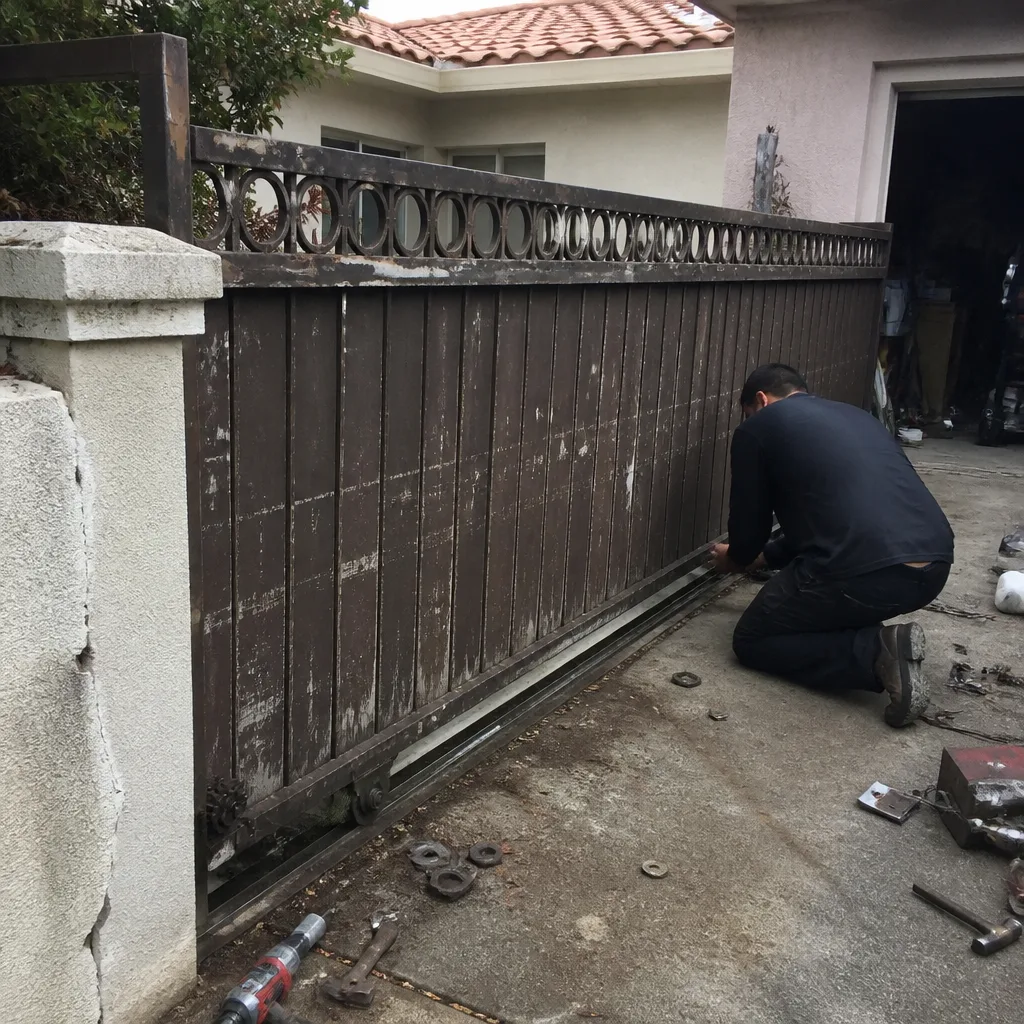 Before
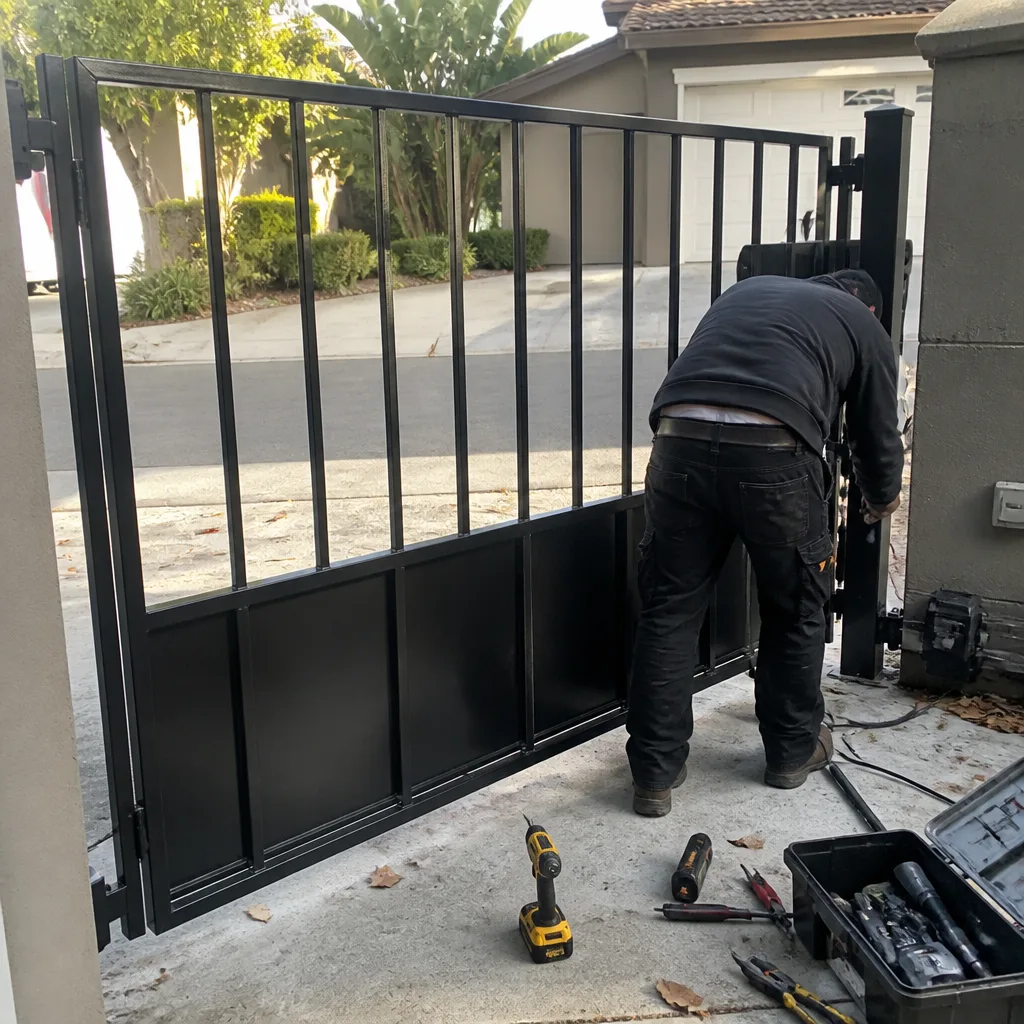 After
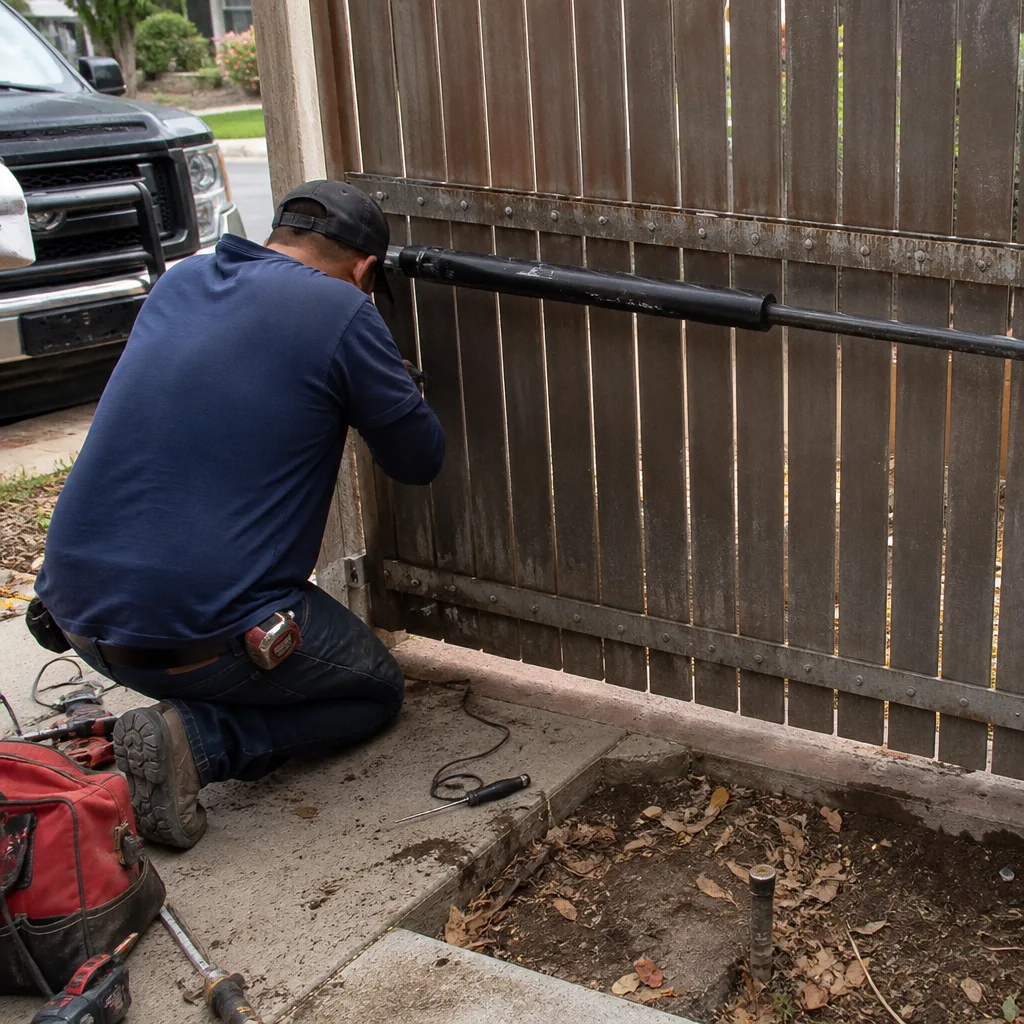 Before
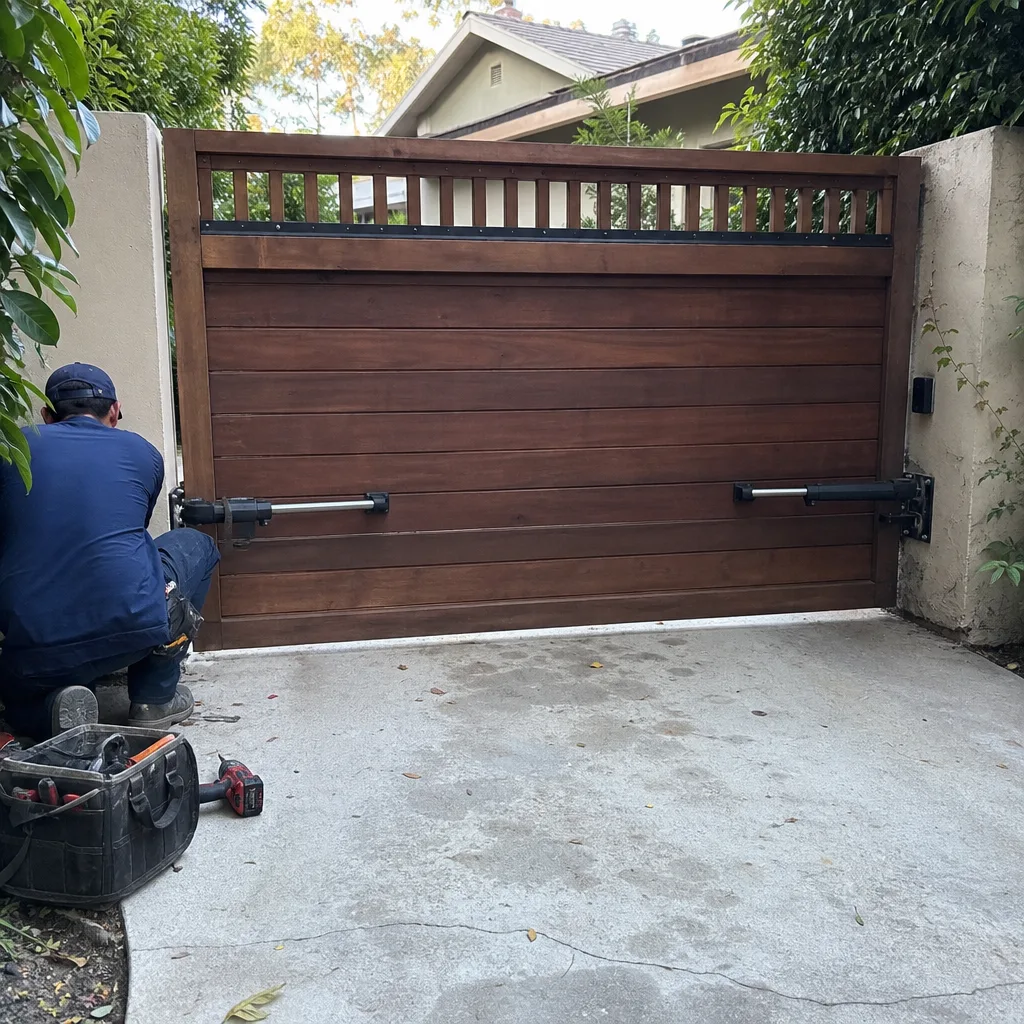 After
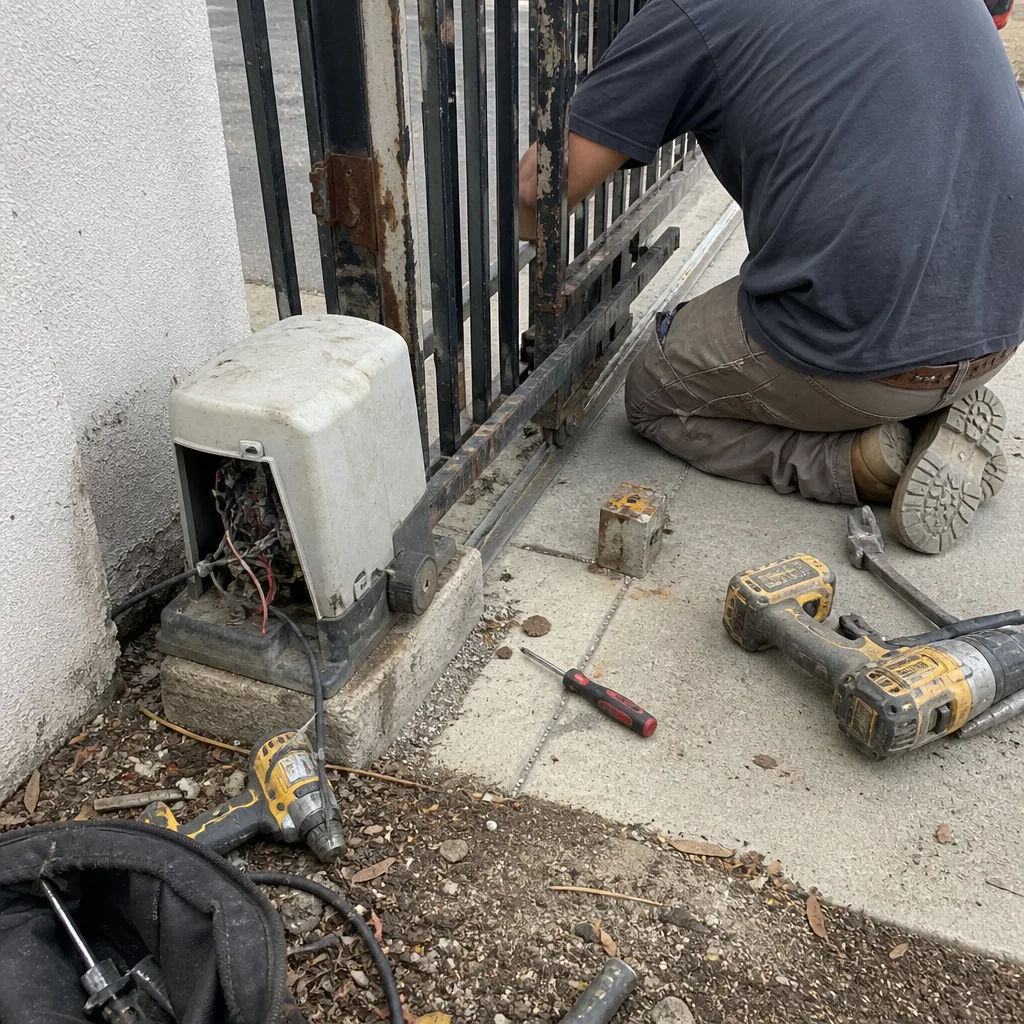 Before
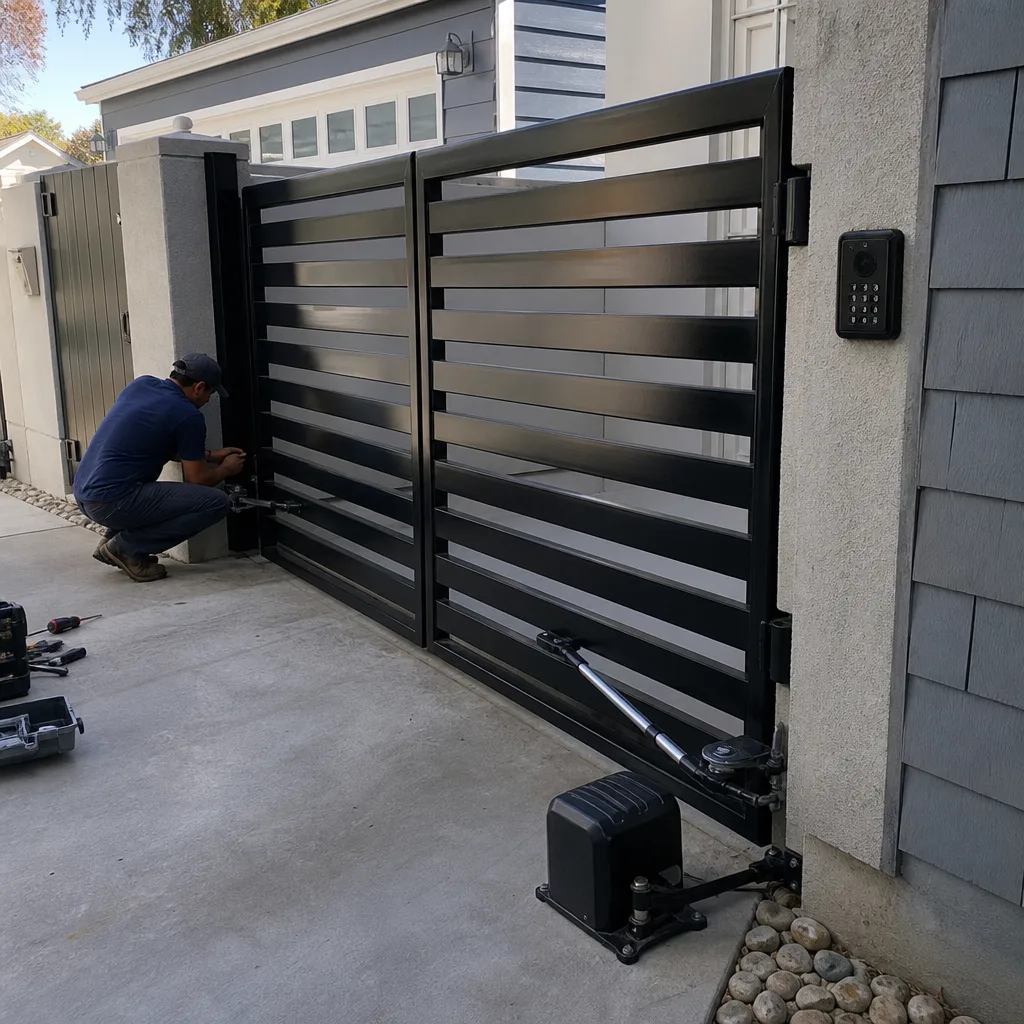 After
When to Call a Professional
Call a gate professional when the problem is electrical, structural, or has already defeated your own diagnosis. If you’ve checked the remote batteries, cleaned the track, and the gate still misbehaves, you’re past the shade-tree stage. Call when you see weld cracks, post lean, or a gate that’s visibly dropping. Call when the operator hums without moving, clicks without engaging, or sparks. Call when the gate reverses without reason. These are not adjustments; they’re failures in progress, and they need someone who reads gate systems professionally, someone who works on gates every day, not among a list of other trades. Cambridge Gate Repair offers free estimates in San Diego – call (833) 589-8195 and we’ll diagnose the problem, quote the repair before anything starts, and tell you honestly whether the gate can be saved or has reached the end of its service life.
Frequently Asked Questions
Slide gate track and wheel failure is the most common gate problem in San Diego, especially in canyon neighborhoods where wind-blown debris accumulates in tracks. The fix is usually straightforward – clean, lubricate, and adjust – but ignored track problems eventually destroy the wheels, the chain, and the operator itself.
Gate repair in San Diego typically ranges from $150 to $800 for mechanical issues like hinges, wheels, and track adjustments, and from $300 to $1,500 for electrical repairs like control boards, sensors, and operator components. The final number depends on your gate type, the component that failed, and whether the problem is isolated or has caused cascading damage. Call (833) 589-8195 for an exact quote – estimates are free, and we give you the price before any work begins.
Emergency gate repairs are often available same-day for safety failures like reversal without obstruction, gates that won’t open, or operators that are smoking or humming without movement. Non-emergency mechanical work is usually scheduled within a few days. If your gate is stuck open or stuck closed and you can’t use it, call (833) 589-8195 and we’ll prioritize the call based on the situation.
A grinding noise usually comes from a dirty track on a slide gate or dry hinge bearings on a swing gate. You can safely clean the track, wipe the wheels, and lubricate the hinges with a gate-rated lubricant. If the grinding persists after cleaning and lubrication, the component is worn past the maintenance stage and needs replacement, which is a technician’s job.
If the remote works but the keypad doesn’t, the problem is isolated to the keypad or its wiring. Keypads fail for simple reasons: dead internal batteries, corroded keypad terminals, or water ingress into the keypad housing. It’s a field-replaceable component and usually takes under an hour to diagnose and swap. Some access systems use a separate receiver for the keypad, and that receiver can fail independently of the gate operator.
Yes. A gate that reverses without an obvious obstruction is a safety system failure, and the gate could close on a person or vehicle at any time. It usually means a photo eye sensor has failed, a safety edge is damaged, or the control board is misreading sensor input. Switch the gate to manual mode and call for a professional diagnosis. This is one of the situations where same-day service is justified.
Yes, we work throughout San Diego County, including Rancho Santa Fe, where large custom gates and estate entrances are common. Gates in that area tend to be heavier, with longer leaves and higher cycle counts, which means wear patterns develop differently than on smaller residential gates. See our Gate Repair in Rancho Santa Fe page for details on service in that area.
The Bottom Line
Your gate speaks to you every time it opens. The sounds it makes, the way it moves, the rust on its welds, and the quirks in its electronics are all diagnostic information – and in San Diego’s specific climate conditions, they’re information you should act on sooner rather than later. Catch a grinding track before the wheels flatten and you’ll pay for a cleaning and adjustment. Catch it after the operator burns out and you’re paying for wheels, track work, and a new motor. The triage is straightforward: safety failures are today problems, mechanical degradation is this-week problems, and cosmetic issues deserve monthly monitoring. If you’re not sure what your gate is telling you, call us at (833) 589-8195. The estimate is free, and you’ll know exactly where your gate stands – diagnosed and quoted before any work begins.
Written by the team at Cambridge Gate Repair, serving San Diego since 2014.