
Last updated October 30, 2026
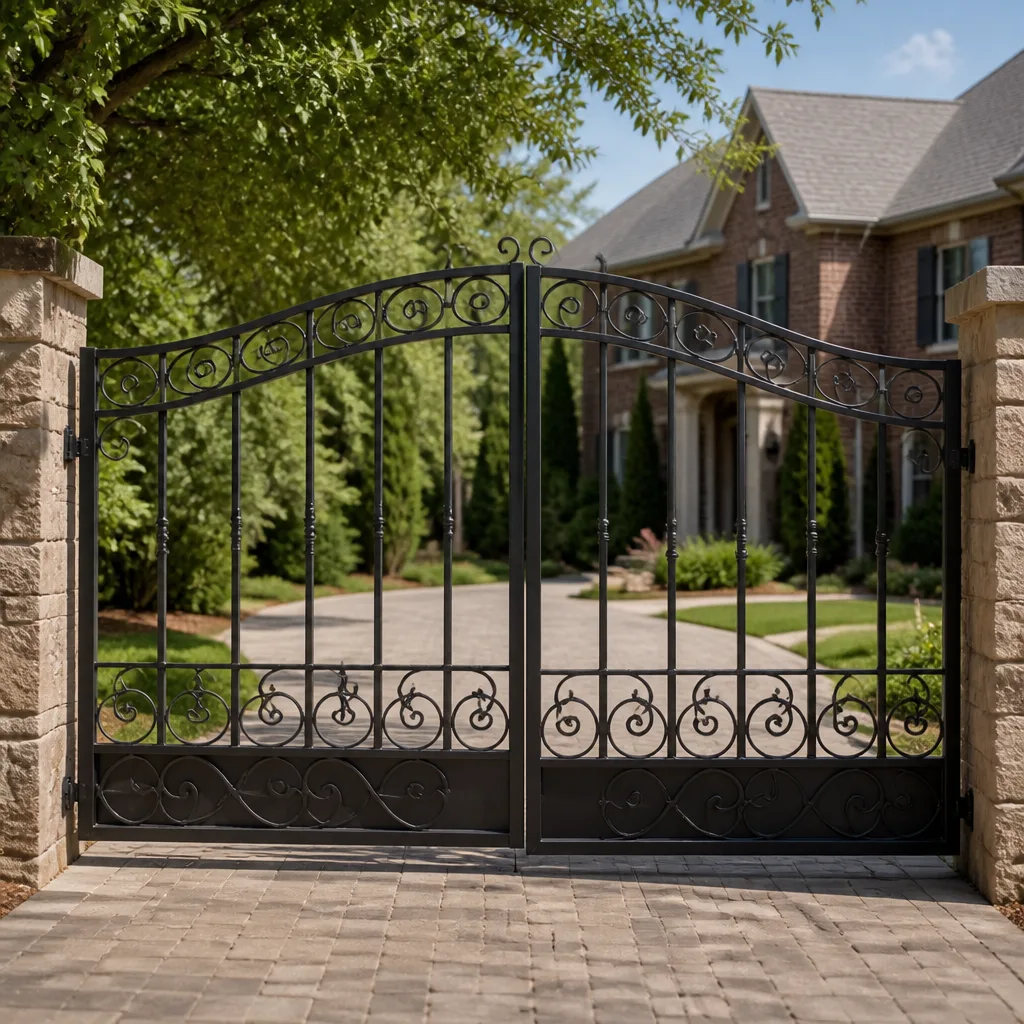 Wrought iron
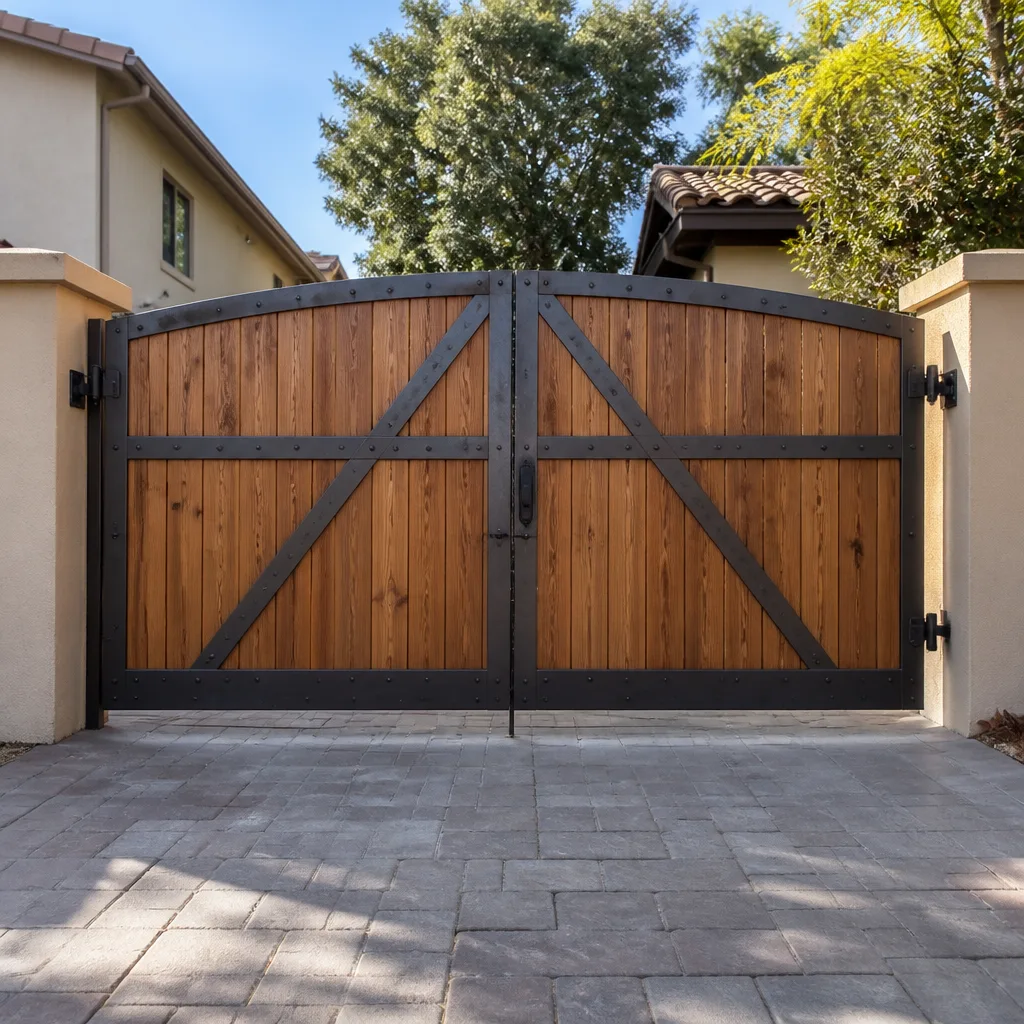 Wood & steel frame
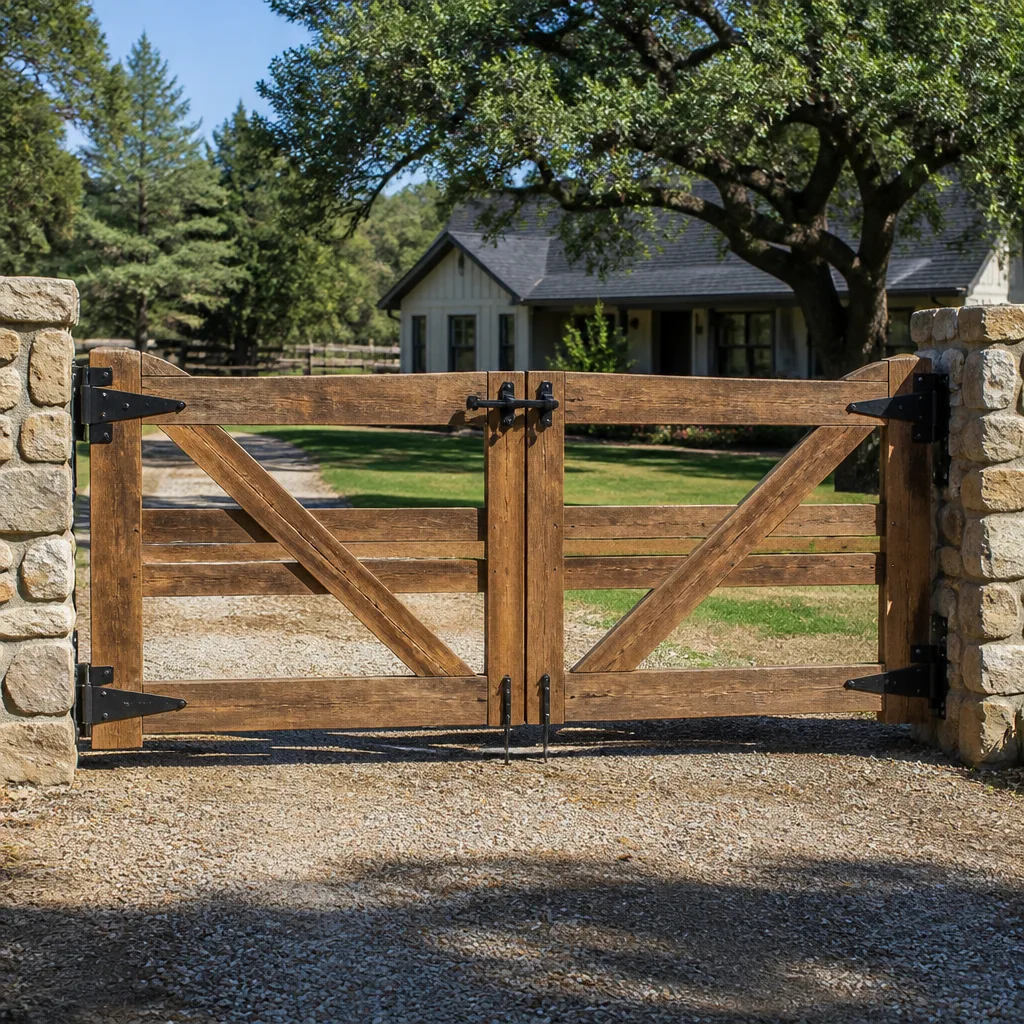 Farm & ranch
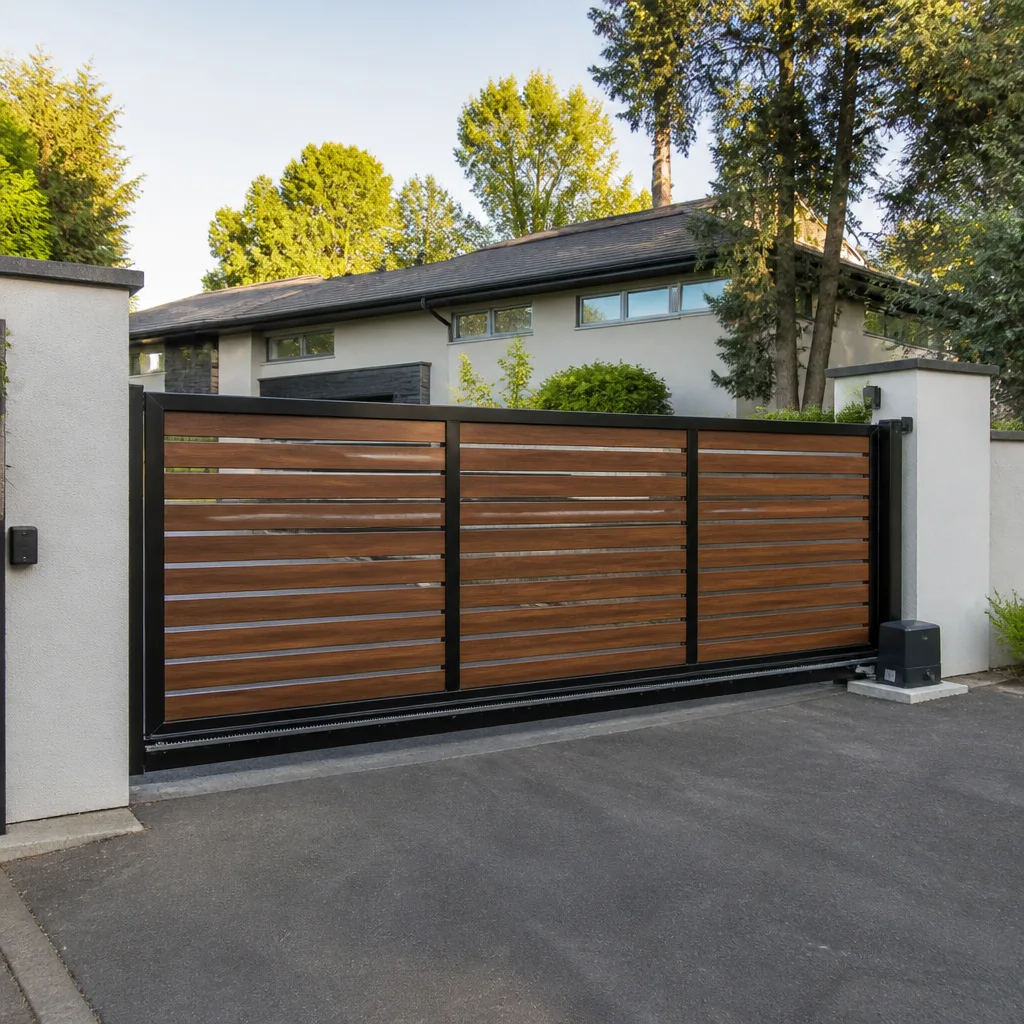 Sliding driveway gates
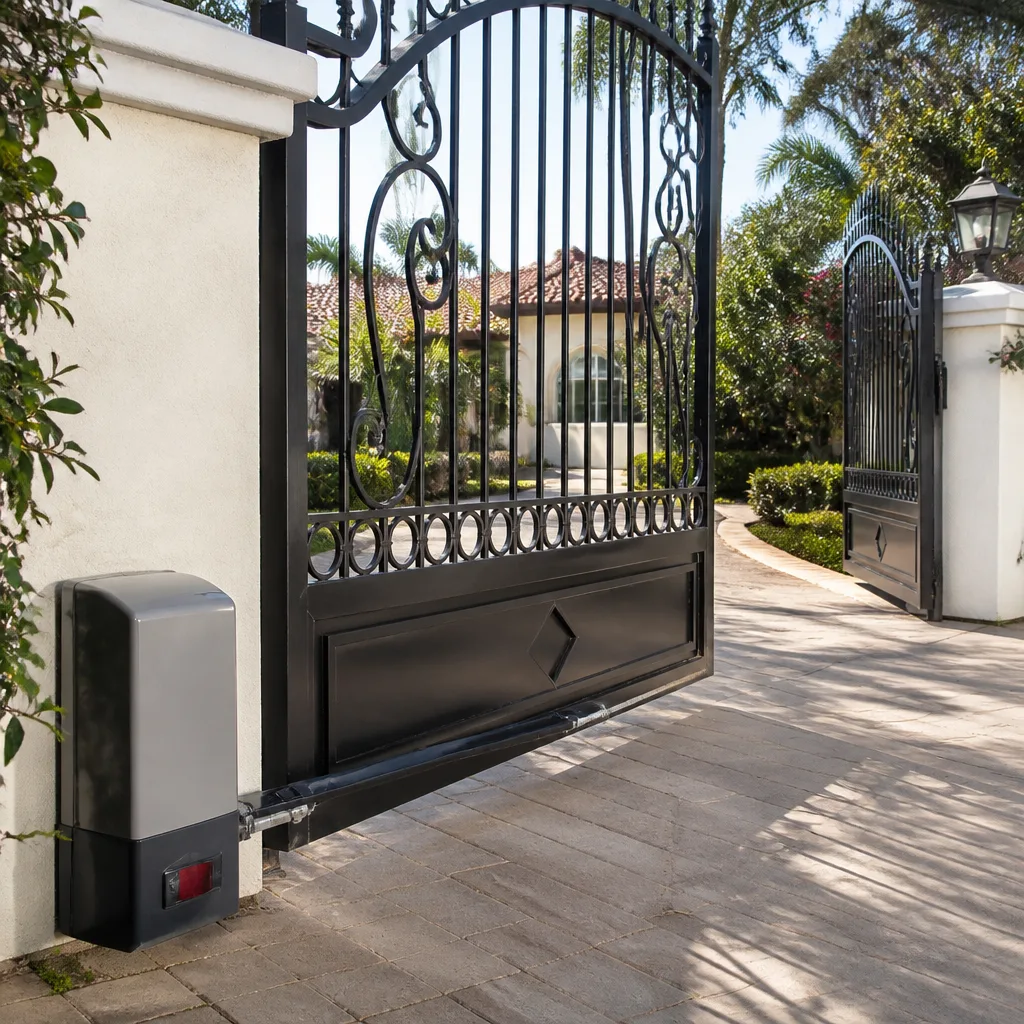 LiftMaster operators
Free on-site gate assessment - hinges, posts, and your LiftMaster or Nice gate operator checked before anything is quoted
The assessment is free and the quote is the invoice.
Get your free estimateGate Repair Permits, Codes & Inspections in CA: What You Need to Know
A gate that was repaired without a required permit can flag during a property sale inspection and force you to either pull the permit retroactively or tear out the work, entirely at your expense. Most California homeowners assume gate work is permit-free, and for purely mechanical repairs they’re usually right. But the line shifts the moment automation, electrical connections, or structural posts enter the picture. This guide draws that line clearly, covering San Diego County and city-level code interactions, the UL 325 standard that governs automated gates, HOA overlays in communities like Rancho Santa Fe, and how to verify your gate’s compliance before you touch a single bolt.
Quick Answer
In California, purely mechanical gate repairs such as replacing hinges, wheels, or a manual latch typically require no permit. However, work involving new electrical circuits, automated operators, or structural changes to posts and footings often triggers building and electrical permit requirements, particularly in incorporated cities like San Diego. Unincorporated areas such as Rancho Santa Fe follow County of San Diego rules, which can differ, and HOAs may impose a separate approval layer regardless of what the building department says.
Styles & brands we work with
Table of Contents
- Mechanical vs. Structural: Where the Permit Line Actually Sits
- Electrical and Automation Work: When the Permit Requirement Kicks In
- San Diego City vs. County Codes: Rancho Santa Fe Is a Different Rulebook
- UL 325 and Automated Gate Safety: What Gets Inspected
- The HOA Overlay: Deed Restrictions Beyond Building Permits
- How to Verify Your Gate’s Compliance Before Any Work Begins
- Insurance Implications: Why Unpermitted Gate Work Can Hurt Claims
Mechanical vs. Structural: Where the Permit Line Actually Sits
California building codes draw a practical distinction between work that restores a gate to its original function and work that changes what the gate is or how it’s anchored. Replacing a worn hinge, swapping out a dead caster wheel, adjusting a sagging chain, or installing a new manual latch are all considered ordinary maintenance. These jobs require no permit in San Diego or anywhere else in the state because they do not alter the structure, the electrical system, or the gate’s engineered footprint.
What changes the classification is anything that touches the posts, the footings, or the gate’s structural geometry. If a repair requires digging out and re-setting a post, pouring a new concrete footing, or welding new structural members onto an existing frame, you have crossed from maintenance into modification. At that point, California Building Code Chapter 1 and the local adopting ordinance govern whether a permit is required, and in most jurisdictions the answer is yes when the work exceeds a defined threshold.
Here is the practical breakdown we give homeowners in San Diego:
- No permit typically required: hinge and roller replacement, latch and lock hardware, chain and tension adjustments, track cleaning and realignment, wheel or caster replacement, painting and surface rust treatment.
- Permit likely required: post replacement or relocation, new footing pours, cantilever or slide gate frame modification, converting a manual gate to accept an automated operator when structural reinforcement is needed, replacing a gate with one that changes the clear opening or load path.
- Gray zone that needs a call to the building department: replacing a wood gate with a heavier steel one on the same posts, extending gate height beyond what the original posts were engineered for, or adding a pedestrian gate cut into an existing vehicle gate leaf.
In our experience, the most common surprise for homeowners is the post issue. A sagging gate is often blamed on hinges when the real problem is a post that has shifted in its footing. Replacing those hinges is a no-permit repair. Digging up and re-setting that post is not, because the footing is governed by local soil and wind load requirements, which vary between coastal San Diego neighborhoods and inland areas with different seismic and wind exposure categories.
Electrical and Automation Work: When the Permit Requirement Kicks In
Any new electrical circuit feeding a gate operator requires an electrical permit under the California Electrical Code, without exception. This is true whether the work is done by a licensed electrician, a general contractor, or a gate specialist. The permit exists because a gate operator draws power continuously and must be wired to code for the location, which means proper conduit, GFCI protection where required, and a dedicated circuit in most installations.
Here is where it gets specific. If you are repairing an existing operator, replacing a control board, swapping out a failed loop detector, or installing a new remote receiver on a gate that already has power and automation, no electrical permit is typically needed. Those are component-level repairs on an existing, already-inspected circuit. The permit requirement attaches to the introduction of new power, not to the replacement of parts on an existing powered system.
Scenarios that commonly require an electrical permit in San Diego County:
- Converting a manual gate to an automated one where no power exists at the gate location. This means a new circuit run, new conduit, and a new breaker.
- Adding a second operator to a bi-parting gate where only one side was previously automated.
- Upgrading from a 120V operator to a low-voltage DC operator if the upgrade changes the supply wiring topology.
- Installing a new access control pedestal, keypad, or intercom that requires hardwired power rather than battery or solar.
The permit is pulled through the local building department, in San Diego that’s the Development Services Department, and the electrical work is inspected before the circuit is energized. A gate specialist who works on LiftMaster or Viking operators will handle the mechanical side of automation, but the electrical rough-in and final connection must meet the code that the inspector will check. This is one reason we recommend using a company that offers our Gate Repair services and understands both the gate mechanics and the electrical interface rather than a general handyman who has never pulled a permit for a gate circuit.
San Diego City vs. County Codes: Rancho Santa Fe Is a Different Rulebook
California gives local jurisdictions the authority to adopt the state building codes with amendments, and San Diego is a particularly good example of how this creates different rules just a few miles apart. The City of San Diego operates its own building department with its own fee schedules, inspection protocols, and published guidelines for residential gate work. Cambridge Gate Repair home deals with both systems regularly, and the practical differences are more than academic.
Unincorporated areas, including Rancho Santa Fe, fall under the County of San Diego’s Planning and Development Services. The County’s permitting thresholds for residential gate work are generally more permissive on the structural side, but its review process for automated gates can be more involved when the property is in a designated high-fire-severity zone, which much of Rancho Santa Fe is. A gate that requires a permit in the City of San Diego because it changes the structural post system may not require one under County rules if the posts are replaced in-kind and the gate weight remains within the original engineered load.
The practical takeaway for anyone in San Diego County:
- If your property is inside San Diego city limits, check with the City’s Development Services Department before any post, footing, or electrical work.
- If you live in Rancho Santa Fe, Solana Beach, Del Mar, Encinitas, or another unincorporated pocket, the County is your permitting authority, and the rules differ enough that assuming what applies in the city is a mistake.
- Fire zone requirements can override what would otherwise be a simple exemption. A brush management clearance around a new gate may be required as part of the permit in areas the County maps as Very High Fire Hazard Severity Zones.
For a deeper look at how this plays out in one specific community, see Gate Repair in Rancho Santa Fe, which covers the local code nuances and typical repair scenarios there.
UL 325 and Automated Gate Safety: What Gets Inspected
UL 325 is the safety standard that governs automated gate operators, and it has been mandatory for all gate operators manufactured or installed in the United States since 2001. It exists because automated gates have killed people, mostly children, when entrapment protection was absent or failed. California enforces UL 325 at the installation and inspection level, which means any permitted automated gate installation will be checked for compliance before the permit is signed off.
What UL 325 requires depends on the gate’s class, but for a typical residential vehicular gate, the standard mandates at least two independent means of entrapment protection. In practice this commonly means:
- A primary inherent entrapment sensor built into the operator, such as a current-sensing motor that reverses when it encounters resistance.
- A secondary external device, which is usually photoelectric sensors mounted on the gate posts or edge sensors on the leading edge of the gate leaf that reverse the gate upon contact.
- For slide gates specifically, guard posts or safety edges to prevent the type of entrapment that occurred in fatal incidents before UL 325’s predecessor standards were strengthened.
Operators from brands like Ghost Controls and DoorKing are built to the standard, but the standard is only met when the operator and the safety devices are installed correctly and tested together. An inspector checking a permitted installation will watch the gate reverse under both primary and secondary entrapment scenarios. If the gate does not reverse, the installation fails inspection regardless of the operator brand or the installer’s credentials.
What often surprises homeowners is that UL 325 applies to gate operators already installed, not just new ones. If you have an older gate operator that predates the standard or that has had its safety devices disconnected, the gate is not code-compliant, and that non-compliance carries liability. The liability is personal in California: if the gate injures someone and the entrapment protection was absent or disabled, the property owner faces premises liability regardless of who disconnected the safety device. We regularly see Linear and Viking operators from the 2005 to 2012 era in San Diego that have working motors but dead photoelectric sensors, and the homeowner has no idea the gate would not pass a UL 325 check. For help diagnosing these issues, see our Gate Repair Troubleshooting: Common Problems and How to Fix Them.
The HOA Overlay: Deed Restrictions Beyond Building Permits
In Rancho Santa Fe and many other planned communities in San Diego County, the building permit is only one layer of approval. Homeowners associations enforce deed restrictions, sometimes called CC&Rs (covenants, conditions, and restrictions), that govern what a gate may look like, how high it may be, what materials may be used, and whether an automated operator is allowed at all. These restrictions exist entirely outside the building code and are enforced by the HOA, not by any government agency.
A gate that sails through the County permitting process can still violate an HOA’s architectural guidelines, and the HOA can compel you to remove or modify it. This is not hypothetical in San Diego. Rancho Santa Fe is known for some of the strictest architectural review protocols in the county, and gate replacements there routinely require submission of drawings, material samples, and color swatches to an architectural review committee before any work can legally begin under the deed restrictions.
The HOA layer matters for repairs too, not just installations. If a repair changes the gate’s appearance, even slightly, the HOA may require approval. Examples we have seen trigger HOA review in San Diego communities:
- Replacing a wood gate with a steel gate, even if the dimensions are identical.
- Adding an operator arm, keypad, or intercom to a previously manual gate in a community where visible automation hardware is restricted.
- Repainting a gate in a color that falls outside the HOA’s approved palette.
- Replacing a chain-link or simple pipe gate with a decorative wrought-iron design in a community with strict streetscape standards.
The practical rule: if you live in an HOA-governed community in San Diego, check your CC&Rs before you check with the building department. The building department cares about safety and engineering. The HOA cares about aesthetics and conformance to a community standard, and its enforcement power is often faster and more aggressive than any permit inspector.
If you are considering a new gate rather than a repair, see Gate Installation in Rancho Santa Fe for how the HOA and County approval processes interact on full replacement projects.
How to Verify Your Gate’s Compliance Before Any Work Begins
Before you authorize any repair, you can establish exactly where your gate stands on permits, HOA approval, and safety compliance. Watch for Gate Repair Warning Signs: A San Diego Homeowner’s Reference Guide to catch problems early. This is an insurance and resale issue as much as a code issue, and the verification process in San Diego is generally straightforward once you know the right questions to ask.
Step-by-step compliance check for an existing gate
- Pull the permit history. If the gate was installed or significantly modified under a previous owner, the permit should be on file with the City of San Diego or the County of San Diego, depending on jurisdiction. Both agencies keep searchable online records, and a permit that was pulled and finalized for the gate installation or for the electrical circuit feeding it is what you want to find.
- Check the operator’s UL 325 label. Every compliant operator carries a label or embossed marking indicating UL 325 compliance. The label is usually on the operator housing or the control board enclosure. If the operator is pre-2001 or the label is missing, assume the operator is not compliant and plan for replacement during any significant repair.
- Test the entrapment devices yourself. Place a solid object in the gate’s path and activate the gate. The gate should reverse before it applies meaningful pressure. Do the same with the photoelectric sensor by breaking the beam while the gate is closing. If the gate does not reverse in both scenarios, the safety devices are not functioning and the gate is not UL 325 compliant in practice, whatever the label says.
- Verify HOA approval status. Contact your HOA management company and ask for confirmation that the gate’s current design, height, materials, and automation are reflected in an approved architectural record. This is free and takes one phone call, but we see homeowners skip it and discover at resale that the previous owner never sought approval for the gate installation.
- Document everything. Keep a file with the permit number, HOA approval letter, operator brand and model, and the date of your entrapment test. If you ever need to file an insurance claim or answer a buyer’s inspection objection, this file is your answer.
This verification order matters. Permits establish that the work was legal when done. The UL 325 check establishes that the gate is safe today. The HOA check establishes that the community’s private rules were followed. All three are separate questions, and all three can come up during a property transaction in San Diego.
Insurance Implications: Why Unpermitted Gate Work Can Hurt Claims
Insurance companies in California have become more aggressive about denying claims related to unpermitted work, and gates are no exception. If a gate falls or fails and injures someone, and the investigation reveals that the gate was installed or structurally modified without a required permit, the property owner’s liability exposure increases significantly. Some policies contain exclusions for losses arising from illegal construction or unpermitted modifications.
The logic from the insurer’s perspective is straightforward: a permit creates a paper trail showing that the work was reviewed and inspected by a jurisdiction. Without that paper trail, the insurer cannot verify that the work met code, and in a claim situation, ambiguity favors the insurer’s bottom line. This applies to structural repairs on gates, to electrical work for operators, and in some cases to the automation itself if the operator was connected to a circuit that was never inspected.
For electric gate issues, Electric Gate Repair in Rancho Santa Fe covers how operator and electrical repairs intersect with compliance and safety requirements in more detail.
The resale issue is related but distinct. During escrow, a buyer’s home inspector or a specialized gate evaluation may flag an unpermitted gate installation or modification. At that point, choices narrow quickly: pull a retroactive permit if the jurisdiction allows it, bring the work into compliance at your expense, or negotiate a credit with the buyer. Retroactive permitting in San Diego is possible for some work and not for others, and it is always more expensive than permitting in the first place.
Common Mistakes to Avoid
- Assuming all gate work is permit-free. Mechanical repairs are. Automation electrical work and structural post modifications often are not. The assumption costs money when it’s wrong.
- Applying city rules to County property. A permit that the City of San Diego would require may not be required in unincorporated Rancho Santa Fe, and vice versa on fire-zone brush requirements. Check with the jurisdiction that actually governs your parcel.
- Ignoring the HOA because the building department approved the work. San Diego HOAs, especially in Rancho Santa Fe, enforce architectural restrictions that exist entirely outside the building code. A building permit means nothing to an HOA that never approved the design.
- Disconnecting or bypassing entrapment sensors. A gate that doesn’t reverse is a liability regardless of what the permit paperwork says. Disabling photoelectric sensors or edge sensors to make a finicky gate keep working is a common fix that creates uncommon risk.
- Replacing an operator without checking UL 325 compliance. An older Linear or Viking operator may spin the motor fine while failing every UL 325 test. Replacing the motor on a non-compliant operator is money spent on a liability.
- Doing structural work on posts without checking footing requirements. California wind and seismic loads vary enough across San Diego that a footing adequate in one neighborhood may not be adequate in another. This is exactly what permits and plan reviews are for.
- Losing the paper trail. A missing permit number or HOA approval letter from ten years ago becomes a negotiation problem during escrow. Keep the documents.
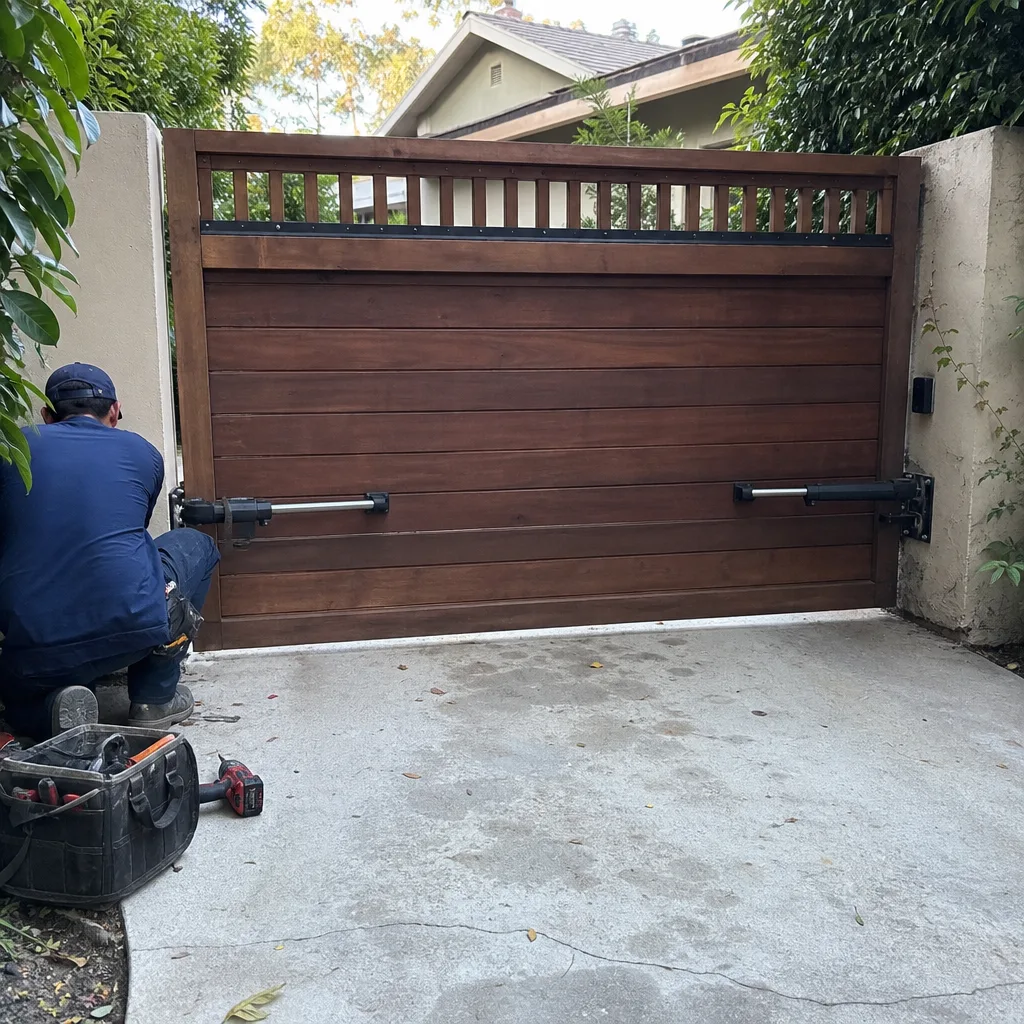
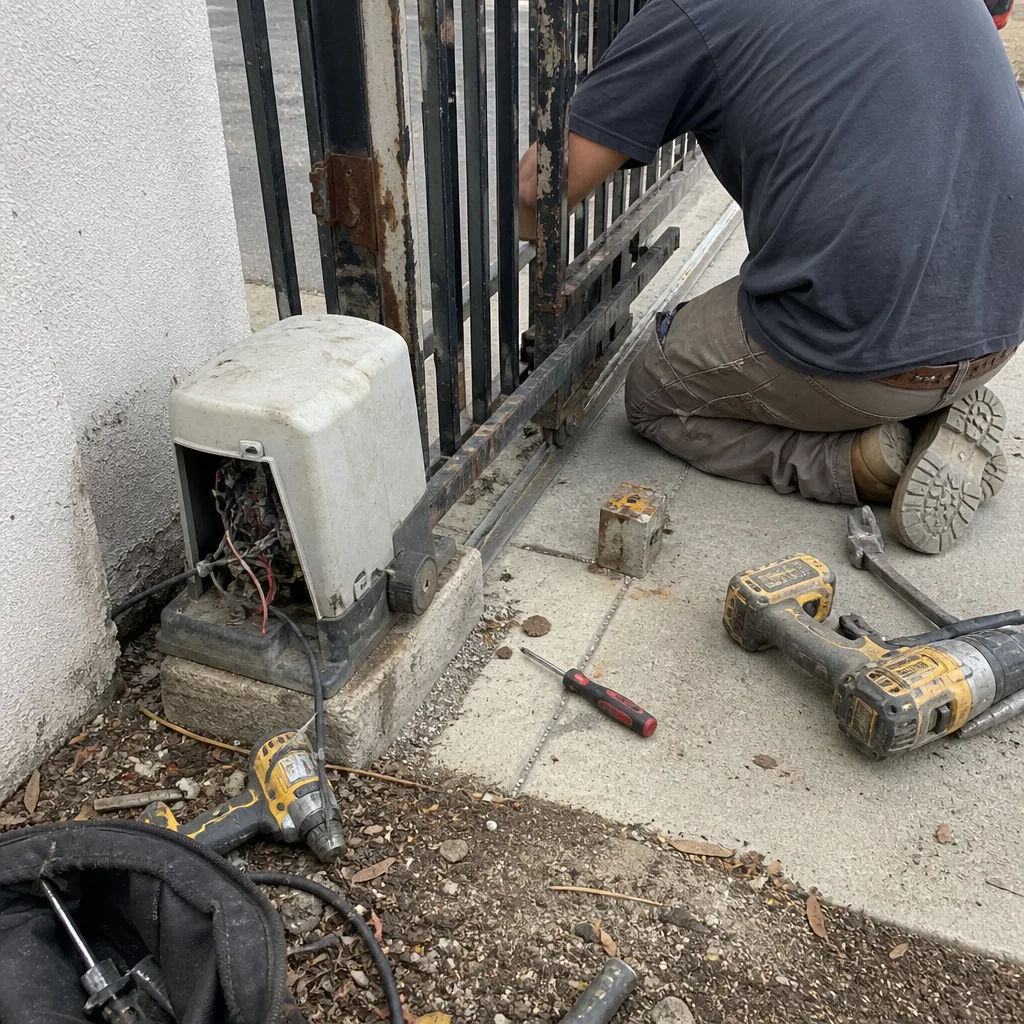
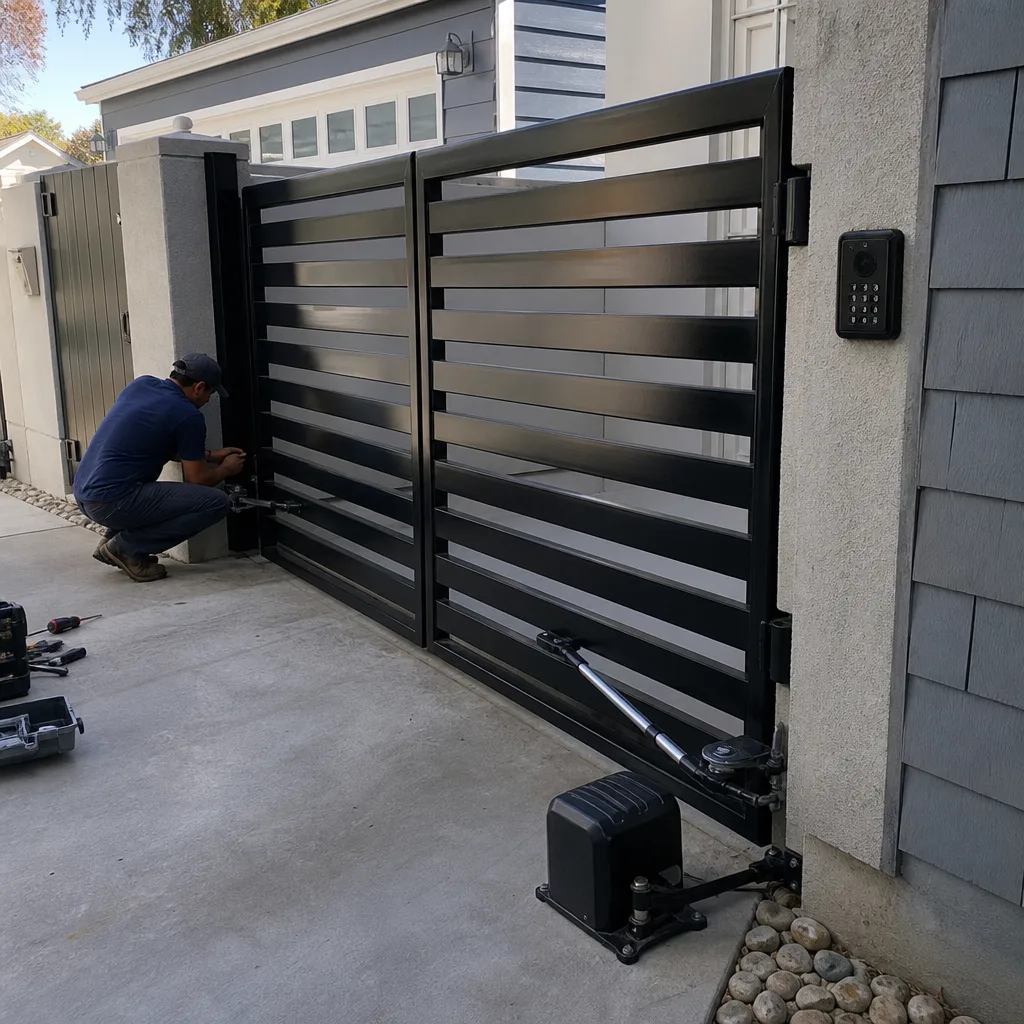
See the difference
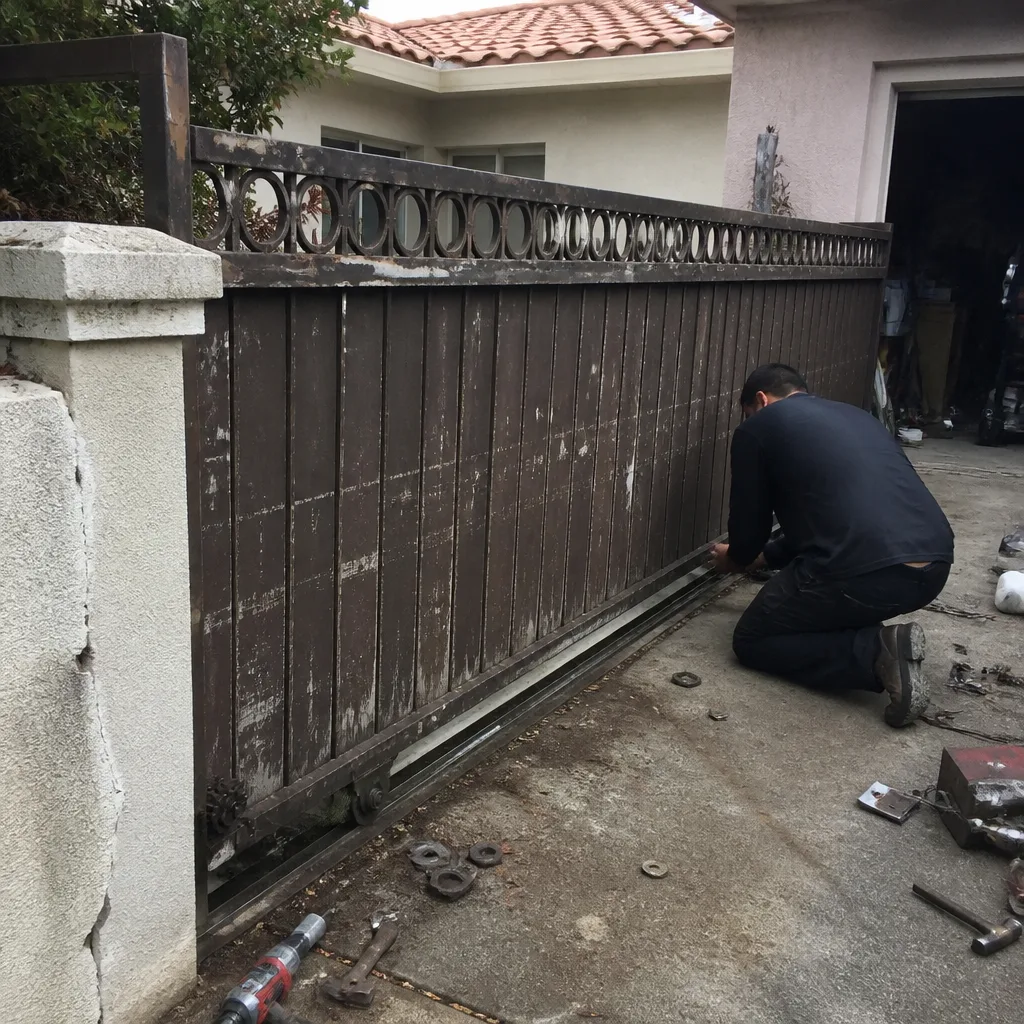 Before
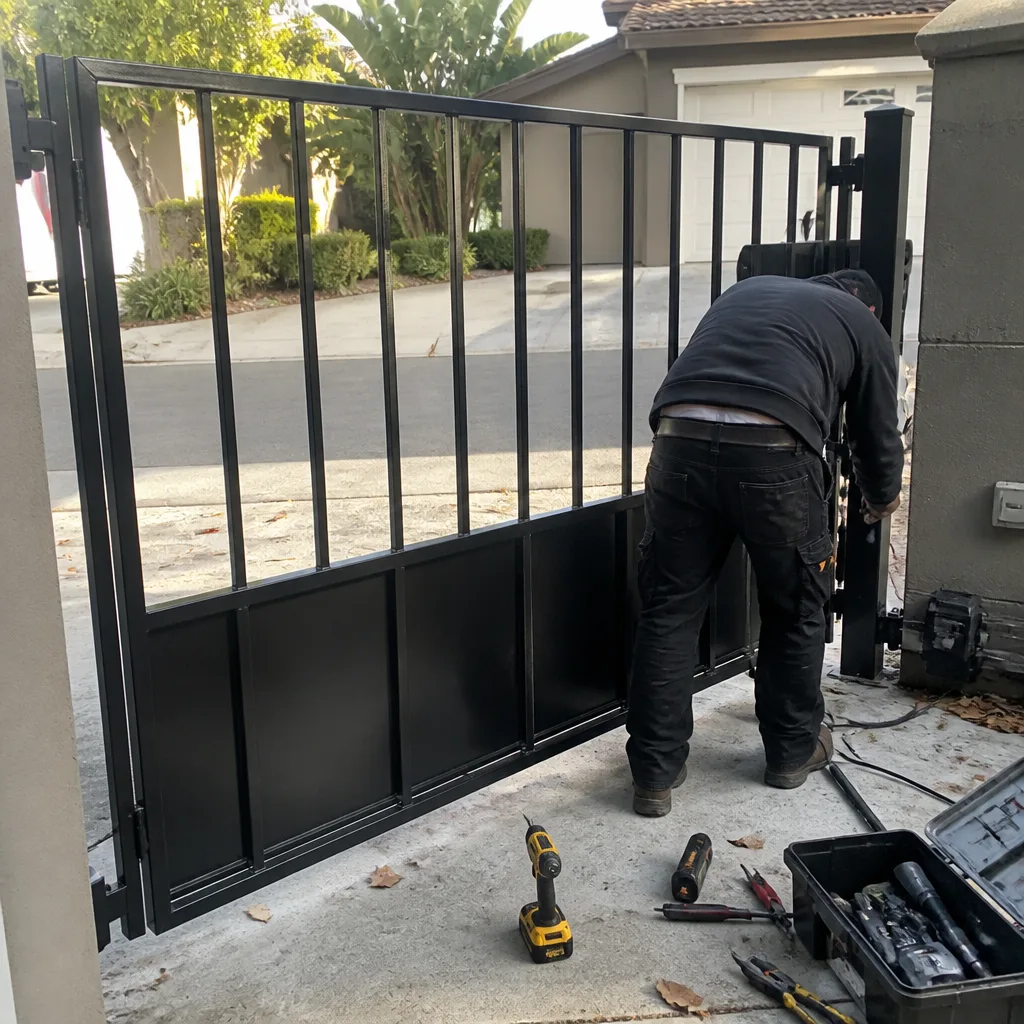 After
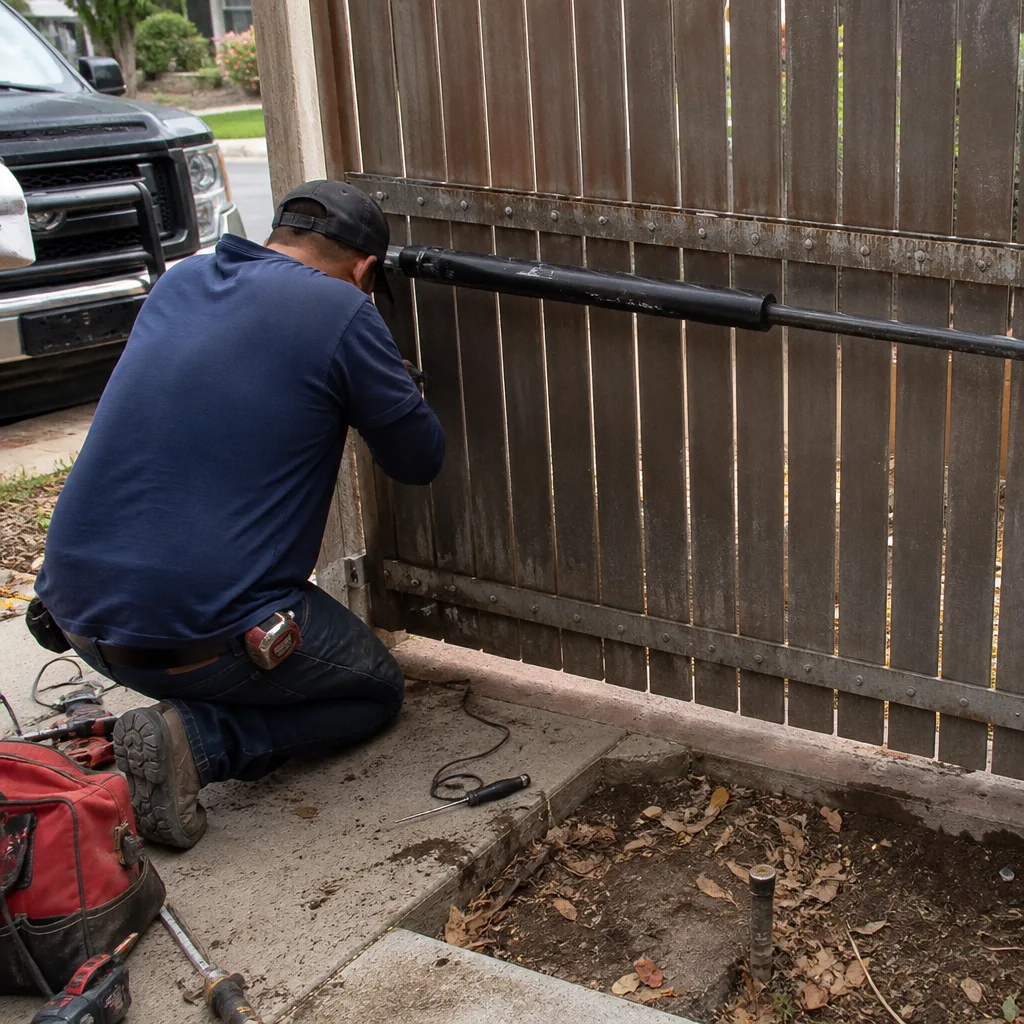 Before
 After
 Before
 After
When to Call a Professional
Some gate decisions are worth a second set of eyes. If your gate requires post work, footing work, or new electrical, the code implications are real enough that a professional evaluation before you start is the cheapest insurance you can buy. The same applies to any automated gate that fails an entrapment test, any operator older than about fifteen years, and any HOA-governed property where a replacement or visible modification is planned. If a gate has sagged enough to drag, has a post that moves when you push it, or has an operator that trips a breaker, stop and get a diagnosis before attempting a fix. Cambridge Gate Repair offers free estimates in San Diego, call (833) 589-8195.
Frequently Asked Questions
No permit is required for mechanical repairs like hinge replacement, wheel replacement, latch repair, or track adjustment, because these do not alter the gate’s structure or electrical system. A permit is typically required only when the repair involves structural posts, footings, or new electrical work for automation.
Permit fees vary by scope: a simple electrical permit for a new gate operator circuit is generally a few hundred dollars, while a structural permit involving posts and footings runs higher because plan review is required. Call the City of San Diego Development Services Department or the County’s Planning and Development Services for current fee schedules, or call us at (833) 589-8195 for help determining what scope applies to your gate.
No, Rancho Santa Fe falls under the County of San Diego’s permitting jurisdiction, not the City’s, and the County’s threshold for structural gate work differs. Rancho Santa Fe properties also frequently carry HOA architectural restrictions and fire-zone brush requirements that the City would not impose.
UL 325 is the federal safety standard for automated gate operators, requiring at least two independent entrapment protection devices on residential vehicular gates. Every operator installed since 2001 must carry a UL 325 label, and any automated gate, regardless of operator age, must pass a functional entrapment test to be considered safe and compliant.
If power already exists at the gate and you are replacing an existing operator on that circuit, no permit is required for the operator swap itself. If the gate is manual and you are running new electrical to power an operator, the new circuit requires an electrical permit and inspection under the California Electrical Code.
Yes, potentially. If a home inspection or specialized gate review flags unpermitted structural or electrical work during escrow, you may need to pull a retroactive permit, bring the work into compliance, or negotiate a credit with the buyer. Retroactive permitting is always more expensive and may not be possible in every jurisdiction.
The Bottom Line
The California permit question for gate work has a clear line once you know where to look. Mechanical repairs stay permit-free. Structural changes to posts and footings cross into permit territory. Electrical work for operators crosses into permit territory. And in HOA-governed communities in San Diego, including Rancho Santa Fe, deed restrictions add an approval layer the building department doesn’t manage. Verify your gate’s permit history, HOA status, and UL 325 compliance before authorizing any work, and keep the documentation. You can find more guides & resources on our blog to help you stay informed. The cost of a permit is small compared to the cost of discovering its absence during a sale.
Written by the team at Cambridge Gate Repair, serving San Diego since 2014.