
Last updated October 30, 2026
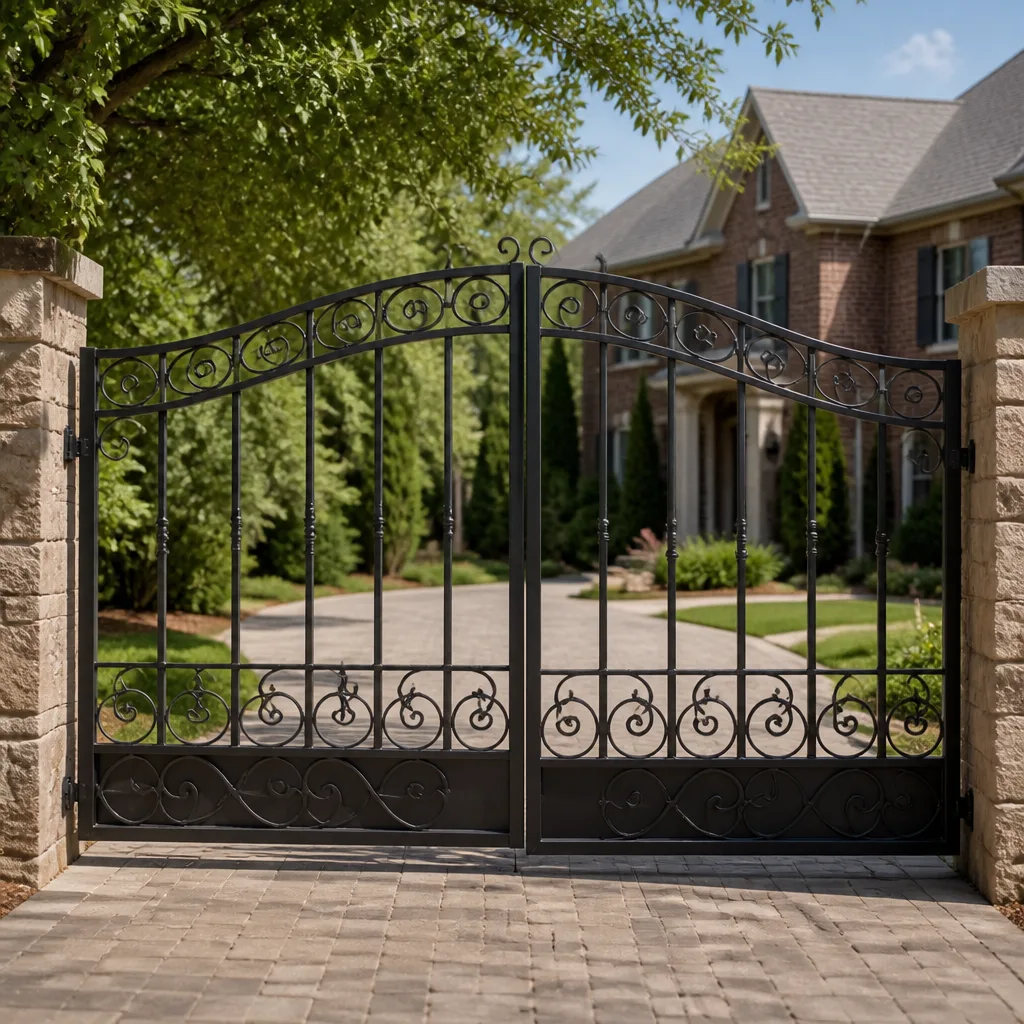 Wrought iron
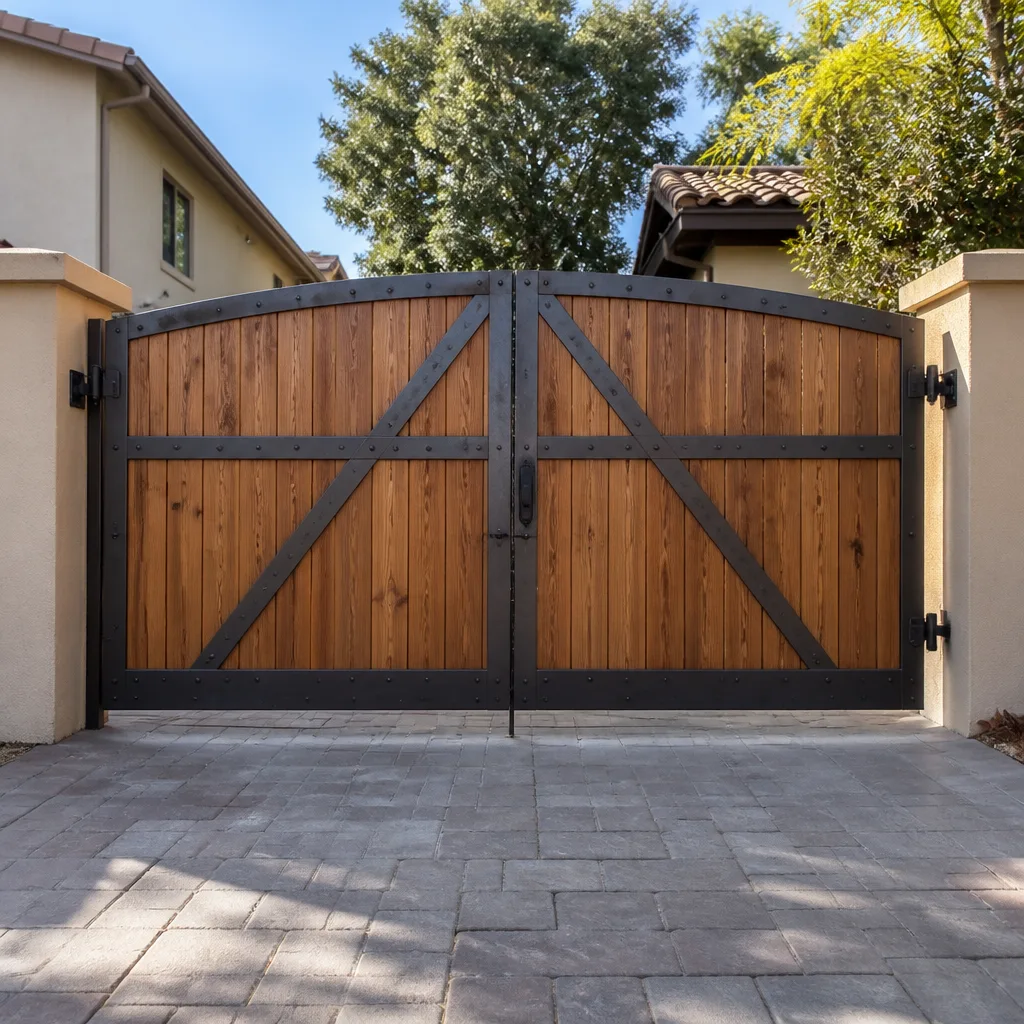 Wood & steel frame
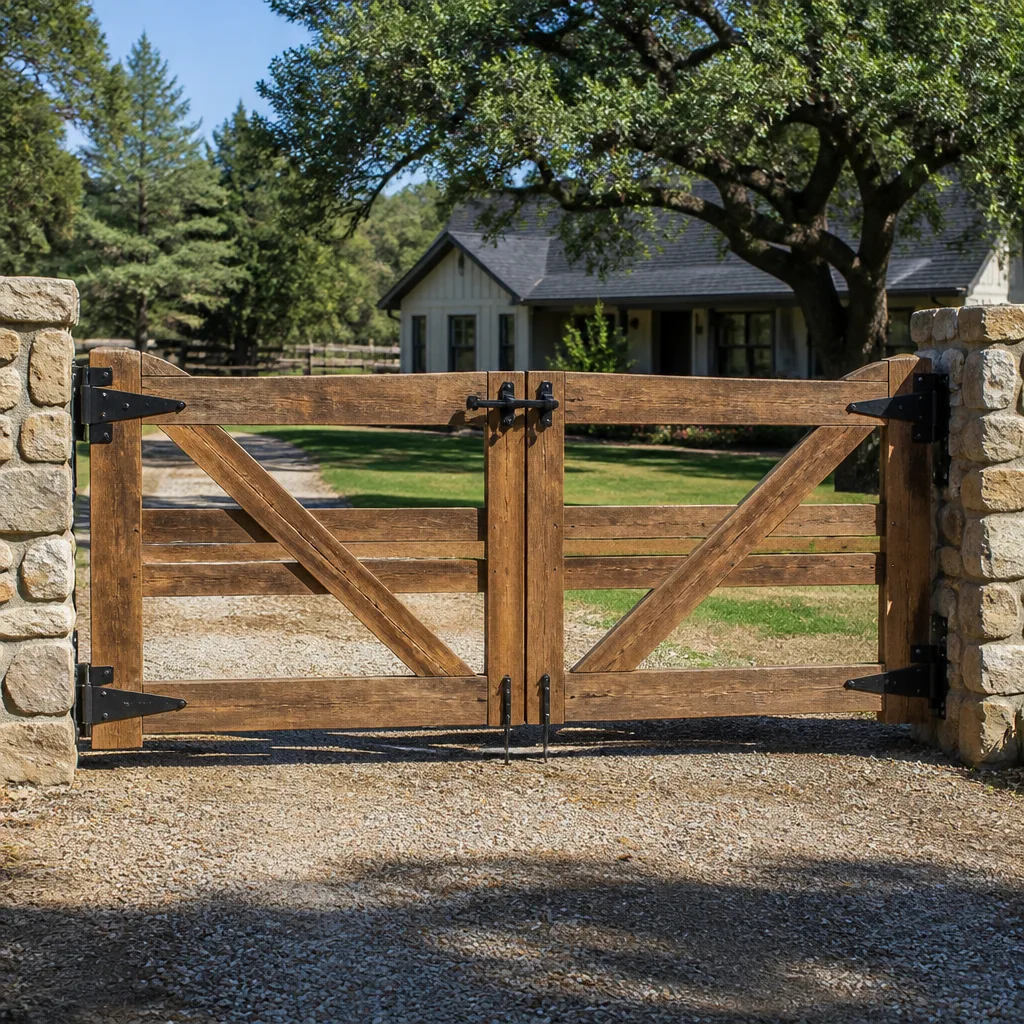 Farm & ranch
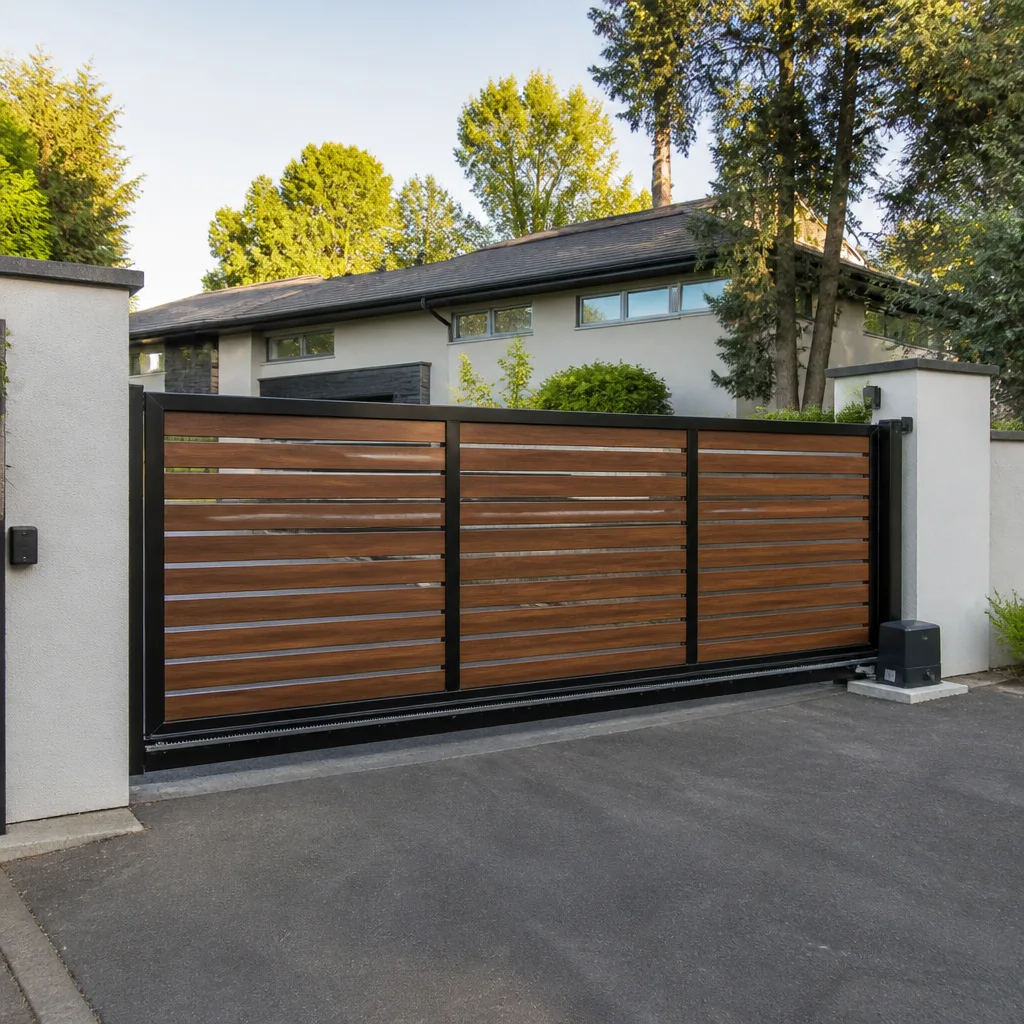 Sliding driveway gates
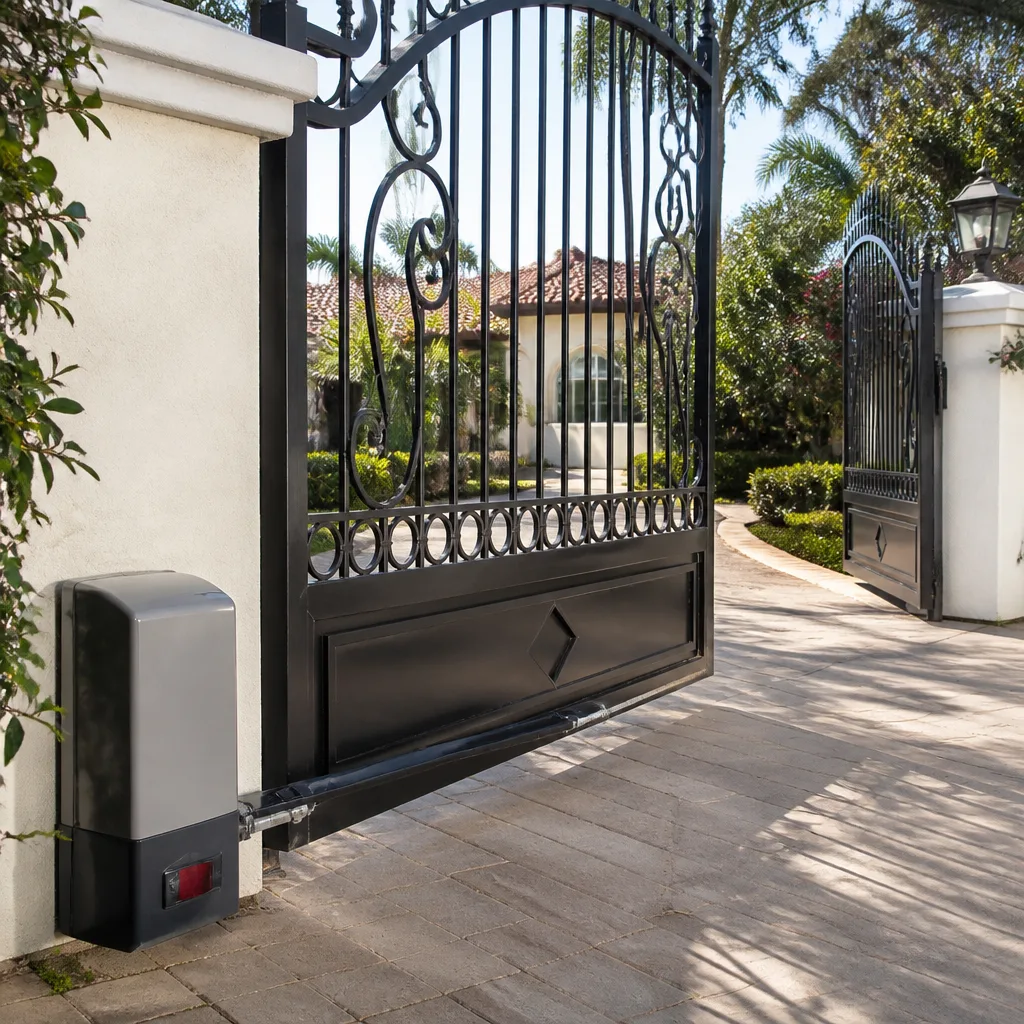 LiftMaster operators
Free on-site gate assessment - hinges, posts, and your LiftMaster or Nice gate operator checked before anything is quoted
The assessment is free and the quote is the invoice.
Get your free estimateThe Complete Guide to Gate Repair in San Diego
The most expensive gate repair call in San Diego isn’t the midnight emergency when a car is trapped in the driveway. It’s the quiet afternoon call where a technician replaces hardware that only needed a $40 adjustment because nobody diagnosed the root cause first. That distinction, between diagnosis and replacement, is where thousands of dollars get saved or lost every year across San Diego properties. This guide maps the full decision tree for gate repair in San Diego, so you know exactly where your situation sits before you spend a dollar. For a deeper look at pricing, see our Gate Repair Cost Breakdown: The San Diego Homeowner’s Reference for 2026.
Quick Answer
Gate repair in San Diego spans three distinct failure categories, mechanical, electrical, and structural, and the right fix depends on which one you’re actually dealing with. A sagging manual driveway gate is usually a hinge and post problem costing $250 to $500, while a gate that won’t open often traces back to a failed control board or loop detector, not the motor itself. The smartest first move is a diagnostic call from our Gate Repair services to identify the root cause rather than defaulting to replacement.
Styles & brands we work with
Table of Contents
- The Three Failure Modes: A Plain-Language Diagnostic Framework
- How San Diego’s Coastal Microclimates Shape Gate Failures
- Gate Specialist, General Handyman, or Automation Installer: Who Should You Call?
- Repair vs. Replacement: A Cost and Life-Expectancy Table
- What a Legitimate Gate Repair Visit Should Include
- Electric Gate Repair: Control Boards, Loop Detectors, and the Parts Handymen Skip
- Manual Gate Repair: Hinges, Posts, and the Sag That Sneaks Up on You
- When Installation Makes More Sense Than Another Repair
The Three Failure Modes: A Plain-Language Diagnostic Framework
Before calling anyone, run through this simple framework. Gate problems in San Diego fall into three buckets, and knowing which one you’re in changes who you call, what you pay, and how fast it gets fixed.
Mechanical failure
This is the physical hardware wearing out. Hinges grind, wheels bind, chains stretch, and gates sag until they scrape against the driveway. You’ll see it with your eyes, a gate that leans, a wheel that no longer touches the track, a latch that won’t catch. Mechanical failures on a manual gate are the most common issue in older San Diego homes, particularly in neighborhoods like Clairemont and Allied Gardens where original 1970s and 1980s gates are still in service. These repairs are usually the least expensive, often $150 to $600 depending on parts.
Electrical failure
The gate has power but won’t respond correctly. The motor hums but nothing moves. The gate opens halfway and reverses. The keypad blinks but the gate sits still. Electrical failures live in the operator, the control board, the safety sensors, the loop detector, or the wiring between them. This is where a gate specialist earns their fee. A LiftMaster operator with a dead capacitor and a LiftMaster operator with a blown control board produce nearly identical symptoms but carry very different repair bills. We work on the gate you have, which means we diagnose the specific component rather than replacing the whole operator because it’s easier.
Structural failure
The post is shifting, the concrete footing is cracked, or the gate frame itself is rusting through. Structural problems are the most expensive and the most ignored. A gate post that leans two degrees today will lean six degrees next year, and by then the gate won’t close at all. In San Diego’s clay-heavy inland soils, post movement is common after winter rains saturate and then dry the ground around the footing. Structural repair means resetting posts, pouring new concrete, or reinforcing the frame, work that costs $800 to $2,500 depending on size and access.
Here’s the framework in numbered order for a gate that won’t work correctly:
- Look at the physical gate. Is it level? Are the hinges intact? Does anything scrape or bind? If yes, you’re likely looking at mechanical repair.
- Check for power. Does the operator have a lit display or indicator? Do the safety sensors have power lights? If no, it’s an electrical supply issue, possibly a tripped breaker or GFCI.
- Try a different input. Keypad first, then remote. If one works and the other doesn’t, the problem is that input device, not the operator.
- Listen to the motor. A humming sound without movement suggests a capacitor or gear problem inside the operator. Clicking with no hum often points to the control board or a safety sensor loop.
- Inspect the ground around the posts. Cracks in the concrete or visible lean mean structural movement is at play.
This five-step check takes ten minutes and tells you which category you’re in. It doesn’t tell you the exact fix, but it tells you what kind of technician to call and what questions to ask.
How San Diego’s Coastal Microclimates Shape Gate Failures
San Diego isn’t one climate. It’s a patchwork of microclimates that corrode, crack, and wear gates differently depending on where your property sits. This is local knowledge that national gate repair chains don’t have, and it changes the practical diagnosis.
In Del Mar, La Jolla, and Coronado, salt air is the dominant force. Steel hinges and gate frames corrode at a rate that surprises homeowners who moved from inland areas. We regularly see gate hinges in coastal San Diego that have rusted through in under five years, especially on lower-grade hardware installed by original builders. The failure pattern is surface rust first, then pitting, then a snap under load. Coastal homeowners should expect to replace hardware more frequently and should insist on galvanized or stainless components when repair work is done.
Head inland to El Cajon, Santee, or Lakeside, and the story reverses. Summer heat bakes the grease out of wheel bearings and hinges, creating a dry-metal squeal that eventually becomes a bind. The soil also matters. El Cajon sits on expansive clay that swells with winter rain and shrinks in summer drought. That cycle works gate posts loose over years, producing the classic leaning gate that suddenly scrapes the driveway in March after the ground dries out.
Rancho Santa Fe and other inland estate areas combine both forces without the salt. Wide temperature swings, occasional Santa Ana winds, and clay-heavy soils mean gates there fail in a pattern of gradual post movement plus dried bearings plus dust-clogged tracks. Different failure profile, different repair priorities. If you’re in Rancho Santa Fe and dealing with a stuck or sagging gate, our Gate Repair in Rancho Santa Fe page covers the specific patterns we see in that area.
Knowing which microclimate you’re in helps you understand why your gate failed and what parts should be upgraded when the repair happens. A hinge replacement in Del Mar should always use marine-grade stainless. A post reset in El Cajon should always involve a deeper footing than the original. These are exactly the details that get skipped when a general contractor treats every San Diego zip code the same.
Gate Specialist, General Handyman, or Automation Installer: Who Should You Call?
Gate repair in San Diego gets done by three types of people, and they’re not interchangeable. Knowing which one your situation calls for prevents wasted service fees and botched repairs.
General handyman
A handyman can replace a manual gate latch, tighten a loose hinge, or weld a broken picket. That’s mechanical work, and for small jobs it’s fine. But handymen are not gate specialists. They don’t stock gate-specific parts, they don’t know operator wiring, and when they encounter an electrical or structural problem they’ll often patch it, collect the fee, and tell you it’s fixed. Six months later it fails again. For anything beyond a straightforward hardware swap on a manual gate, a handyman is the wrong tool.
Automation installer
These are the companies that install electric gate openers, access control systems, and intercoms. They’re fluent with operators and control boards, often certified by a specific brand like FAAC or BFT. The catch is that many automation installers are brand-locked. They’ll tell you your existing LiftMaster operator is “not worth repairing” because they’re trained and stocked for Viking or DoorKing. That’s a sales position disguised as diagnostic advice. We’re trained on at least nine gate and operator brands, LiftMaster, FAAC, BFT, Linear, Viking, Ghost Controls, DoorKing, Elite, and Mighty Mule, which means our recommendation is driven by the gate’s actual condition, not a dealership quota.
Gate specialist
A gate-only specialist works on the gate you have, whether it’s a manual 1970s driveway gate or a two-year-old FAAC automated system. The difference is scope. We think in gates all day, every call, every tool, every stock part. That narrow focus means faster diagnosis, because we’ve seen your exact failure pattern dozens of times. It also means accurate pricing, because we know what the part costs and how long the job takes. Cambridge Gate Repair operates as a gate-only specialist serving San Diego, which means we’re not fitting your gate repair between a bathroom remodel and a fence job.
For electric gate problems specifically, the automation installer and the gate specialist overlap. The distinguishing question is brand neutrality. Ask whoever you call: “Do you repair the operator I currently have, or do you recommend replacement?” If the answer defaults to replacement without a diagnosis, you’re talking to a salesperson.
Repair vs. Replacement: A Cost and Life-Expectancy Table
The decision to repair or replace a gate comes down to a simple calculation: does the repair cost less than the remaining life of the gate is worth? For help deciding, read our DIY vs Professional Gate Repair: The San Diego Homeowner’s Decision Guide.
| Gate Type | Typical Repair | Repair Cost Range | Replacement Cost Range | When Repair Makes Sense |
|---|---|---|---|---|
| Manual steel driveway gate, single | Hinge replacement, wheel swap, sag correction | $150 – $600 | $1,200 – $2,500 | Gate is under 20 years old, structure is sound |
| Manual steel driveway gate, double | Hinge and post adjustment, latch realignment | $250 – $800 | $2,000 – $4,500 | Posts are solid, only hardware has worn |
| Electric slide gate | Track cleaning, wheel bearing replacement, limit switch adjustment | $200 – $700 | $3,000 – $7,000 | Operator works, mechanical parts are the issue |
| Electric swing gate | Hinge replacement, arm adjustment, sensor realignment | $250 – $750 | $2,500 – $6,000 | Frame is intact, motor functions properly |
| Gate operator (motor and control board) | Control board replacement, capacitor swap, gear replacement | $300 – $900 | $1,000 – $2,500 per operator | Operator is under 10 years old and parts are available |
| Wood gate, pedestrian or driveway | Board replacement, frame repair, hinge re-seating | $200 – $600 | $800 – $2,000 | Less than 30% of boards are rotted |
These are San Diego market ranges based on the work we quote and perform across the county. A few notes on how to use this table. First, structural repairs are always evaluated separately. If the post needs resetting, that cost adds to the repair column before you decide. Second, age matters. A steel gate in coastal San Diego that’s pitted with rust has a limited future no matter what you spend on hinges. Third, these prices assume a gate specialist doing the work. Handyman rates run lower, but so does the durability of the fix.
The general rule we apply: if the repair costs less than 40% of replacement and buys at least three more years, repair it. If repair exceeds half the replacement cost on a gate over 15 years old, replacement starts looking smarter, especially for electric gates where component failures cascade. Get a diagnostic quote before deciding. Estimates from Cambridge Gate Repair are free, and we’ll tell you honestly when repair isn’t worth the money.
What a Legitimate Gate Repair Visit Should Include
You’re paying for diagnosis, not just labor. A legitimate gate repair visit in San Diego should follow a structure that protects you from vague pricing and unnecessary replacement. Here’s what to expect and what to insist on.
- A systematic inspection. The technician should check hinges, posts, track alignment, wheels, operator function, safety sensors, loop detectors, and wiring connections. This takes 20 to 40 minutes on a typical San Diego property. If someone quotes you a repair after looking at the gate for two minutes, get a second opinion.
- A clear diagnosis. You should hear a specific cause: “the right-side hinge has sagged three-eighths of an inch and the wheel is binding on the track,” not “this thing is old and needs work.” If the technician can’t name the specific failure, they haven’t found it.
- Written scope and price. The quote should list parts, labor, and a line-item breakdown with dollar figures. It should be quoted and agreed before any work starts. You should never receive an invoice bigger than the quote unless you approved a change order in writing.
- A repair-or-replace recommendation with numbers. A legitimate professional will tell you what the repair costs, what replacement costs, and what they recommend based on remaining life. They won’t push replacement without a diagnostic basis.
- Documentation of the work. After the repair, you should get a summary of what was done, what parts were used, and what to watch for. For electric gates, this includes sensor alignment verification and safety reversal testing.
If you’re in Rancho Santa Fe and dealing with an automated gate problem, our Electric Gate Repair in Rancho Santa Fe page walks through what a full diagnosis looks like for motorized systems specifically. The same standards apply everywhere in San Diego: specific diagnosis, written price, agreed before work starts.
Electric Gate Repair: Control Boards, Loop Detectors, and the Parts Handymen Skip
Electric gate repair is the category where homeowners lose the most money to misdiagnosis. That’s because the visible symptom, a gate that won’t open, has at least eight possible causes, and only two of them involve the motor itself.
Control boards
The control board is the brain of the operator. It receives input from keypads, remotes, and sensors, then tells the motor what to do. Control boards fail from power surges, moisture intrusion, and simple age. Symptoms include: gate opens but won’t close, gate closes but won’t open, keypad accepts the code but nothing happens, gate opens and immediately reverses. A replacement control board for common brands like LiftMaster, Linear, or BFT runs $250 to $600 installed, far less than a new operator.
Loop detectors
Loop detectors are the buried wire loops under the driveway that sense vehicle presence and tell the gate to stay open or close after a car passes. They fail from wire breaks, poor installation, or ground movement. When a loop detector fails, the gate either won’t open for an approaching vehicle, won’t close after one passes, or cycles erratically. Loop detector replacement often requires cutting a small channel in the driveway and re-embedding the wire, work that runs $400 to $900 depending on driveway length.
Safety sensors and photo eyes
These are the small devices mounted near the gate’s path that detect obstructions and send a stop-and-reverse signal. They get knocked out of alignment by wind, dirt, or an accidental bump from a car. The fix is usually simple realignment costing $100 to $200, but some homeowners get quoted a full operator replacement for this exact issue because the sensor is misaligned and the gate “won’t close.” A gate specialist checks sensor alignment before suspecting the motor.
The motor itself
Motors fail from gear wear, capacitor failure, or winding burnout. It’s the most expensive electrical component to replace, typically $800 to $1,800 installed depending on brand and gate size. The crucial point: a competent diagnosis rules out the control board, sensors, and loop detector before condemning the motor. We’ve seen operators with blown capacitors get quoted as full motor replacements because the capacitor costs $40 and the motor costs $1,200. That difference is what a specialist’s diagnosis protects you from.
For automated gate systems in Rancho Santa Fe, where properties often run networked access control across multiple entry points, the diagnostic scope expands to the access control system itself. Our Electric Gate Repair in Rancho Santa Fe page covers that in more detail.
Manual Gate Repair: Hinges, Posts, and the Sag That Sneaks Up on You
Manual gates get ignored because they don’t have electronics to fail. But they fail just the same, slowly enough that homeowners don’t notice until the gate is scraping a groove into the driveway.
The classic sag
A single swing gate exerts constant downward force on its hinges. Over years, hinge pins wear, the post moves slightly, and the gate drops. The first sign is increased resistance when swinging. The second is a visible lean. The third is the gate digging into concrete. At that point, the fix is no longer a simple hinge swap. The post usually needs adjustment and the gate needs realignment, labor that runs $300 to $600 in San Diego. Caught early, a sagging gate is often a $150 hinge replacement. That’s the cost difference between annual maintenance and a repair call.
Wheels on slide gates
Slide gates run on wheels along a track. Wheel bearings wear out, especially inland where dust works into the grease. A gate that jerks instead of sliding smoothly is telling you the bearings are shot. Replacement wheels run $40 to $100 each, and most residential slide gates need two to four wheels. The track itself may also need cleaning or realignment. Full slide gate mechanical service typically runs $300 to $600.
Post deterioration
In San Diego’s coastal zones, steel posts rust from the inside out. In inland zones, clay soil movement shifts concrete footings. Both produce the same symptom: a post that’s no longer plumb. The gate still works, but it’s stressing every other component. Post replacement or resetting is the most labor-intensive manual gate repair, often $500 to $1,200 depending on access and footing condition. The longer a leaning post goes unrepaired, the more damage it does to the gate itself.
Manual gate repair is straightforward work when done right. The key is catching mechanical wear before it becomes structural movement. A quick annual check of hinges, wheels, and post alignment costs nothing and usually prevents the expensive version of the repair.
When Installation Makes More Sense Than Another Repair
Sometimes the honest answer is that your gate has reached the end of its functional life. Not because a single component failed, but because the cumulative effect of years of San Diego weather, soil movement, and patch repairs has left a gate that will keep failing one part at a time. Calling a repair technician every six months for a new hinge here and a new wheel there is more expensive than replacing the gate once.
The triggers that push a gate toward replacement include: multiple structural repairs in a short period, frame rust that’s compromised the gate’s integrity, a post that’s shifted so far the footing needs re-pouring, or a design that no longer serves the property. In these cases, a new gate installation with proper footings, correct hardware for the microclimate, and a warranty makes financial sense. Gate Installation in Rancho Santa Fe gives you a picture of what a properly done installation involves, from post setting to hardware selection.
We also install new gates for San Diego properties where the existing gate was never right from the start, undersized wheels, improper post depth, hardware never suited for coastal conditions. A correct installation eliminates the repeat repair cycle. The decision between repairing and replacing should always come from a diagnostic assessment, not a sales pitch. Browse more guides & resources to stay informed. If you’re uncertain, a free estimate and honest evaluation from Cambridge Gate Repair will tell you which direction makes sense.
Common Mistakes to Avoid
- Skipping the diagnosis and ordering a new gate. Many San Diego homeowners replace an entire gate when a $300 control board or a $150 hinge would have solved the problem. Get a diagnostic visit before any replacement quote.
- Using a handyman for electric gate work. Handymen don’t stock gate-specific control boards, don’t know operator wiring, and often leave safety sensors disconnected or bypassed. Electric gate repair is specialist work, and a gate that reverses into a car or a child is not worth the savings.
- Ignoring a gate that closes but scrapes or jerks. Mechanical wear compounds. A $150 hinge replacement caught early becomes a $600 post reset when ignored for two years.
- Choosing hardware based on price alone in coastal areas. Standard steel hinges in Del Mar or La Jolla rust through fast. The cheap part is the expensive part when you’re paying for labor to replace it again in three years.
- Accepting a verbal quote. A legitimate gate repair quote in San Diego is written and line-itemed. Verbal quotes are how you end up with an invoice bigger than you were told.
- Replacing a brand-locked operator instead of repairing what you have. Some automation installers will quote a FAAC replacement when your existing BFT operator just needs a control board. Brand-agnostic diagnosis saves real money here.
- Waiting for total failure before calling. A gate that’s intermittent today will be dead next week. The emergency call costs more than the scheduled repair.
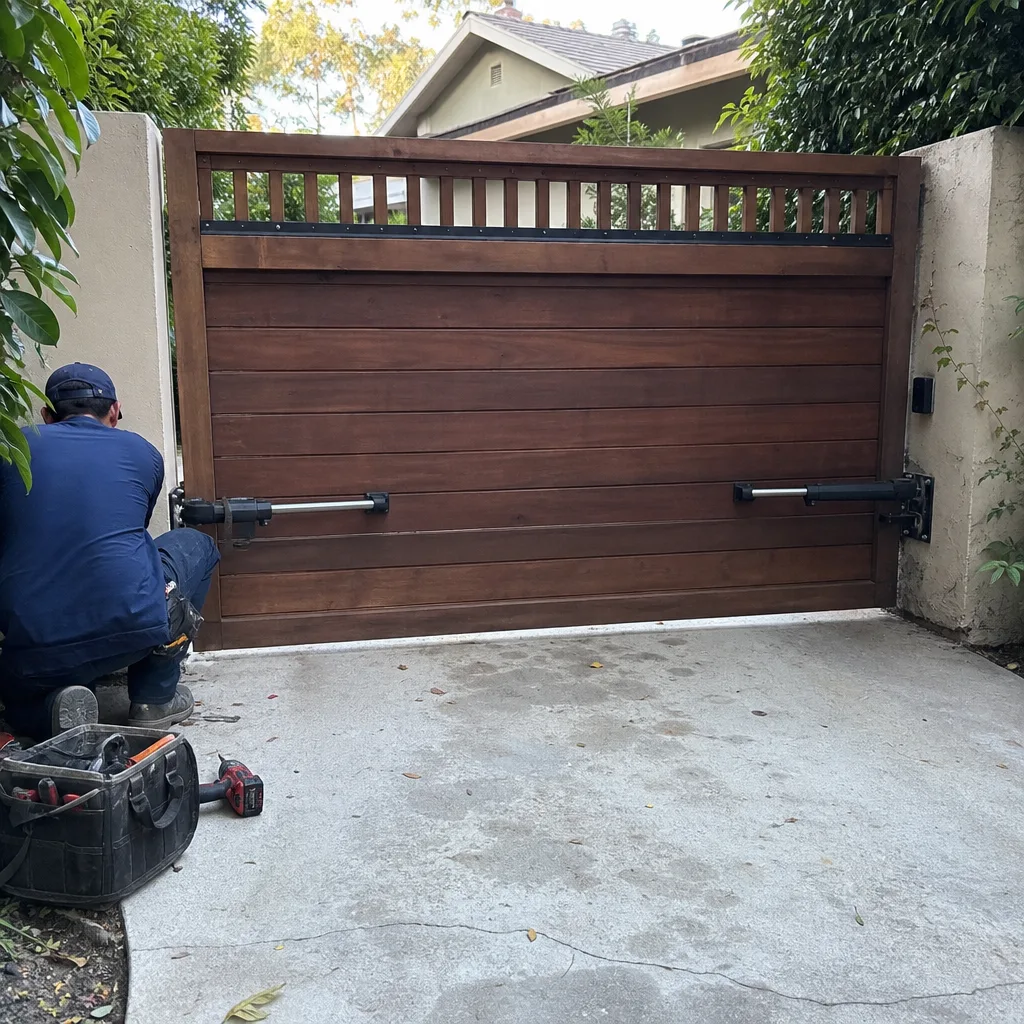
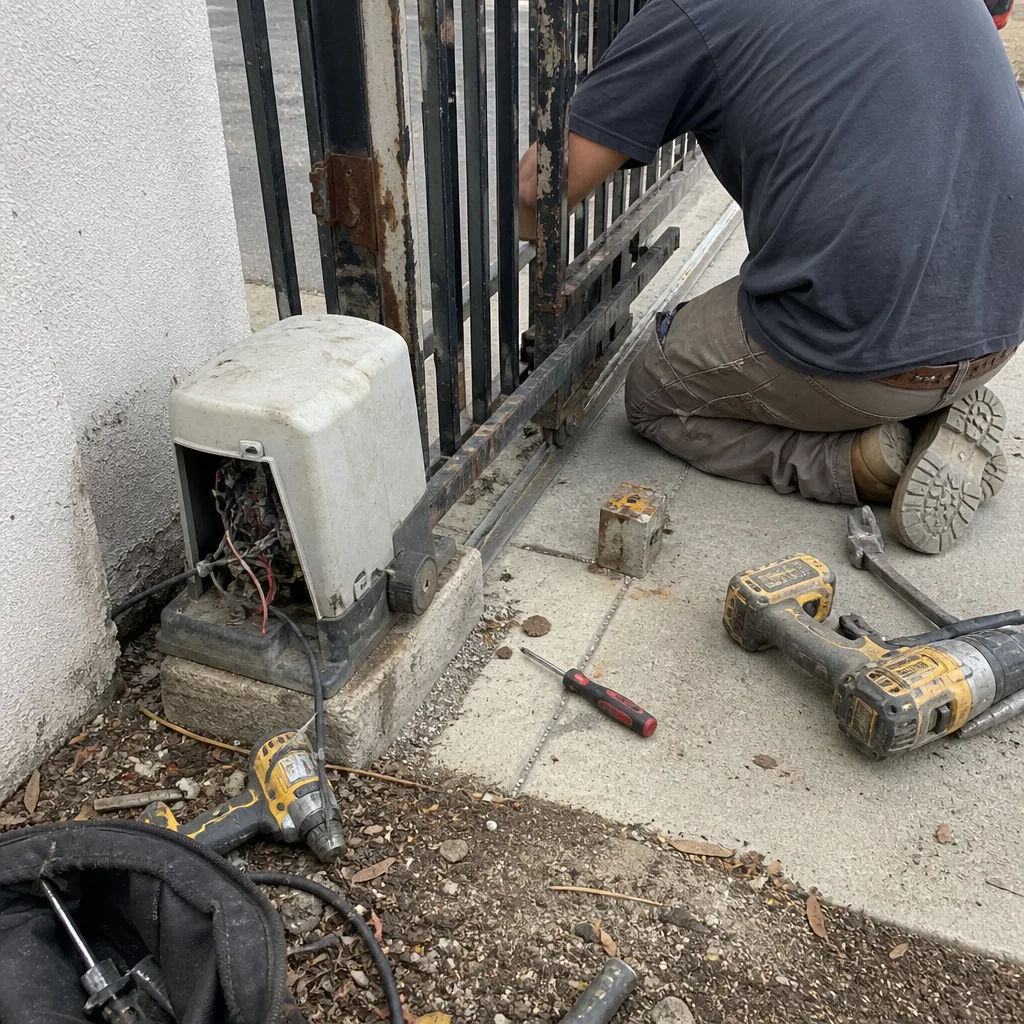
See the difference
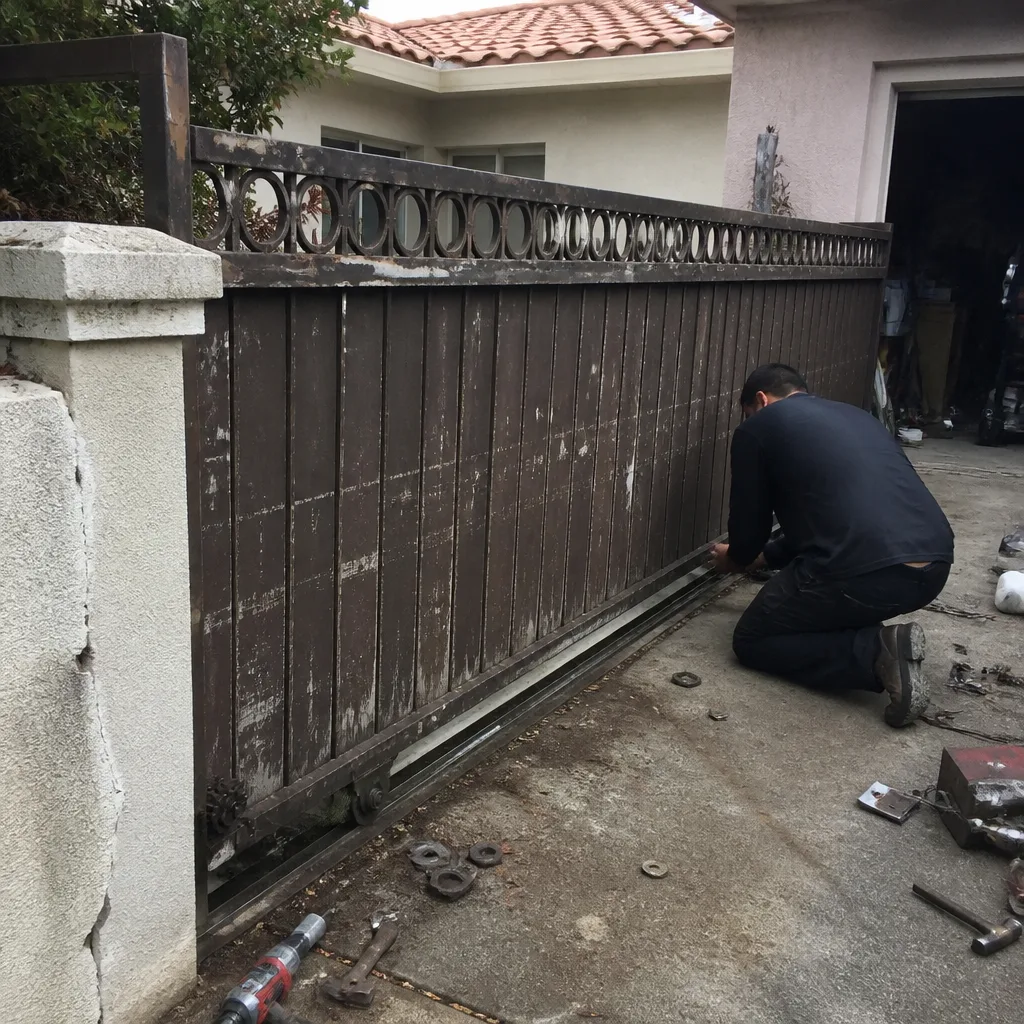 Before
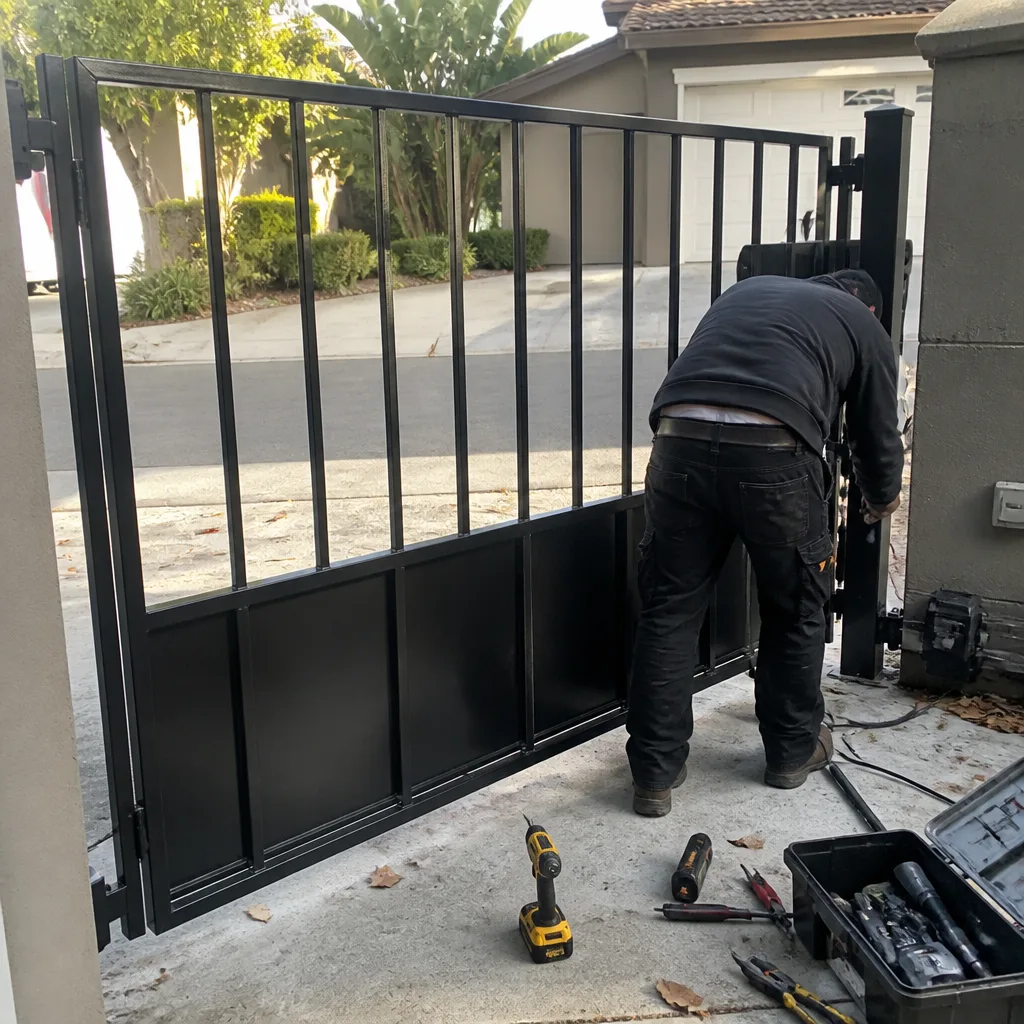 After
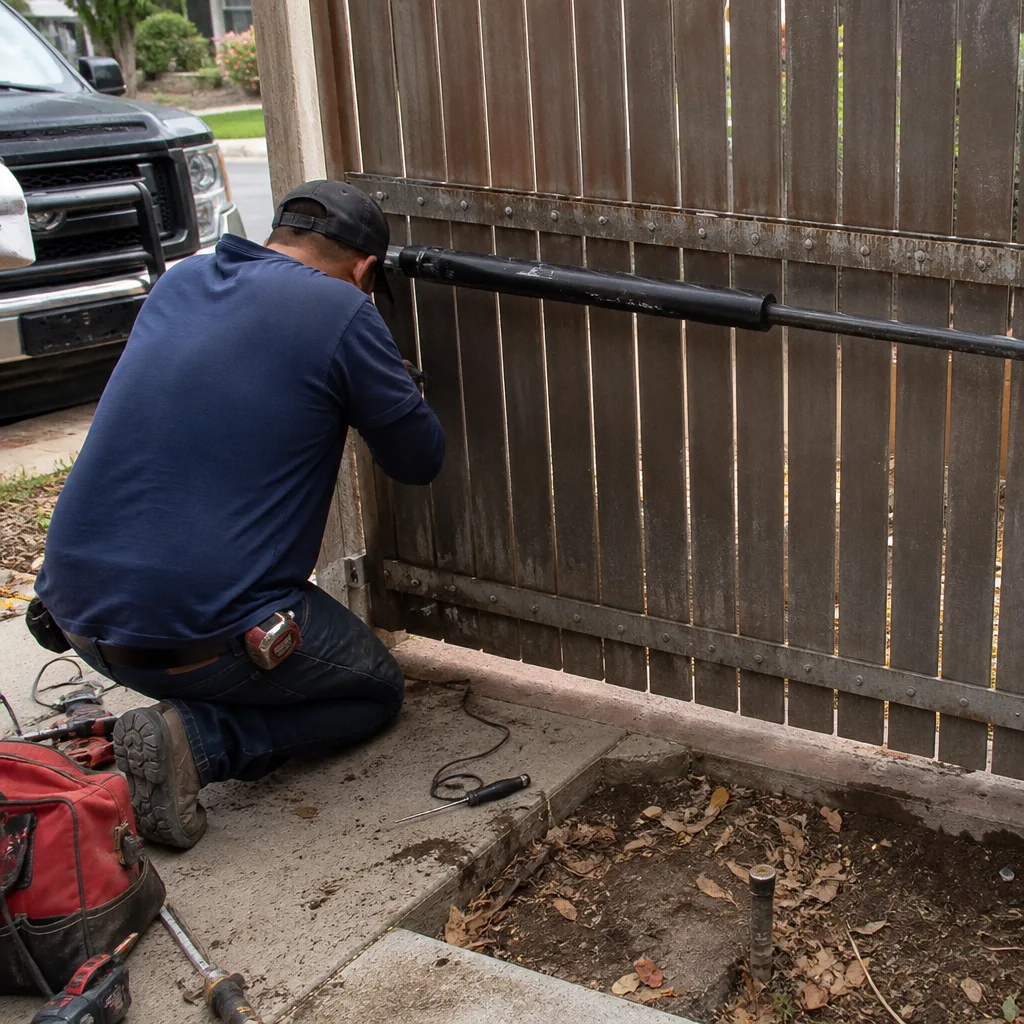 Before
 After
 Before
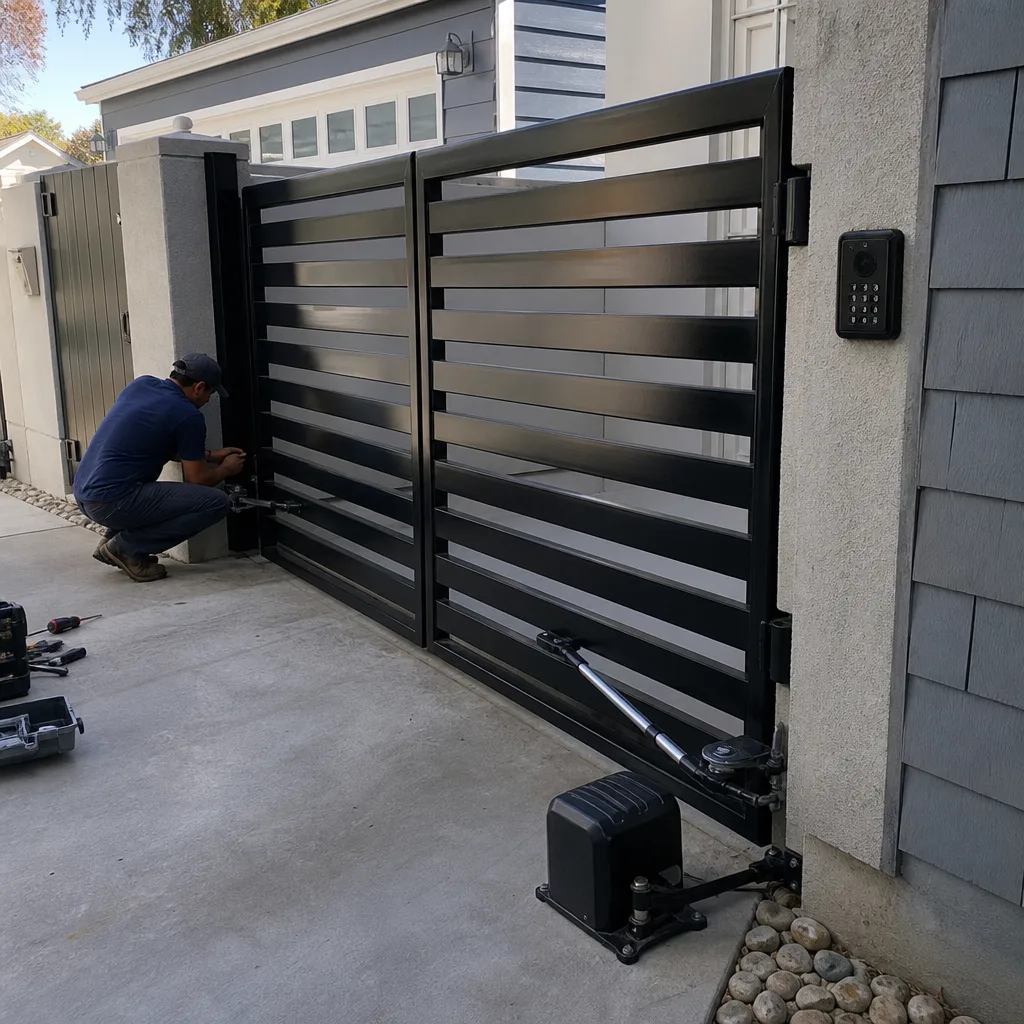 After
When to Call a Professional
Call a gate specialist when your gate scrapes, sags, jerks, hums without moving, opens halfway and reverses, or stops responding to keypads and remotes. Call when a post is visibly leaning or a hinge is rusted through. Call when a gate has hit a vehicle, a fence, or anyone standing near it, that’s a safety sensor failure and a sign of broader system problems. And call when you’ve already had one repair attempted and the problem returned, because that means the root cause was never found. Cambridge Gate Repair offers free estimates in San Diego, call (833) 589-8195 and we’ll diagnose what’s actually wrong before any work is quoted.
Frequently Asked Questions
Most gate repairs in San Diego fall between $150 and $900 depending on what’s failed. Simple hinge or wheel replacements run $150 to $400. Control board replacements run $250 to $600. Post resets and structural repairs run $500 to $1,200. Full motor replacements top out around $1,800. Call (833) 589-8195 for an exact quote, estimates are free.
For mechanical and many electrical repairs, same-day or next-day service is usually available in San Diego. Emergency calls for a gate stuck open or shut are a standard part of what we do. If you need a gate repaired quickly, call (833) 589-8195 and we’ll tell you our current availability.
An electric gate that opens but won’t close almost always points to a safety sensor problem, not the motor. A misaligned photo eye, a dirty lens, or a faulty loop detector will prevent closing because the system refuses to move while it thinks something is in the path. This is usually a $100 to $200 fix.
A properly diagnosed and repaired gate with correct San Diego-appropriate hardware typically lasts three to five years before the next component wears. The key variable is whether the root cause was fixed or just patched. A hinge replaced with galvanized steel in a coastal area will outlast a cheap zinc-plated part by years.
Yes. We’re trained on LiftMaster, FAAC, BFT, Linear, Viking, Ghost Controls, DoorKing, Elite, and Mighty Mule. We repair the operator you have rather than pushing a replacement, and our brand-agnostic approach means the diagnosis is based on your gate’s actual condition.
Repair addresses a specific failed component, hinge, board, wheel, sensor, and costs a fraction of the gate’s value. Replacement means installing an entirely new gate structure or operator system, typically $1,200 to $7,000 depending on size, material, and automation. The right answer depends on the gate’s age, condition, and the specific failure, which a diagnostic visit will clarify.
The Bottom Line
Gate repair in San Diego comes down to diagnosis. The gate you have is probably fixable, often for far less than replacement, but only if someone identifies the actual failure before recommending a fix. Mechanical, electrical, and structural problems each demand a different approach, a different skill set, and a different budget. San Diego’s microclimates add another layer, coastal salt in Del Mar, clay soil in El Cajon, wide temperature swings inland, that affect what fails and what parts should be used. A gate specialist who works across all nine major brands and repairs what you have, rather than pushing replacement, is the difference between a $350 repair and a $4,000 install.
If your gate is struggling, start with a diagnostic call. You’ll know exactly where you stand before any money changes hands. Call (833) 589-8195 for a free estimate anywhere in San Diego.
Written by the team at Cambridge Gate Repair, serving San Diego since 2014.